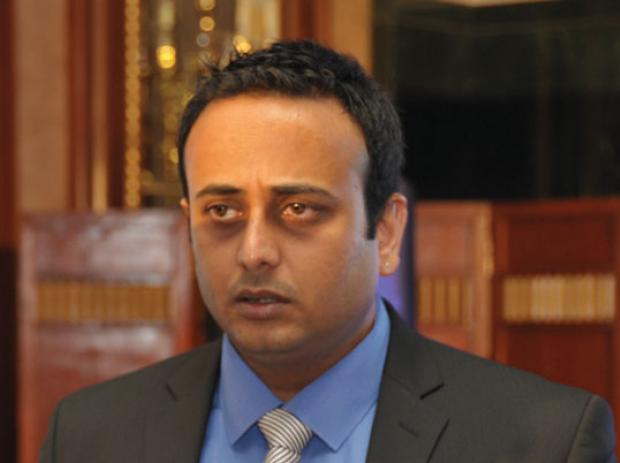
 ZeeQ, the edutainment channel from the Zee network, has recently initiated an on-ground initiative ZeeQ on-Wheels to interact with children and parents. The ZeeQ van will visit 20 cities across the country with the aim of connecting directly with its TG. In an exclusive interaction with 4Ps B&M, Anuj Katiyar, Head – Marketing & Research, ZeeQ, talks in detail about the initiative and answers why his channel is a one-stop content platform for every child’s growth & development. Excerpts:
What kind of research was carried out before the launch of ZeeQ in October 2012?
We conducted two sets of research studies through two different agencies where we spoke to roughly 5,500 mothers, teachers and kids across 16 cities. The study included their views on the current education system, parental fears for their kids, kids’ television watching behaviour, their content preferences and so on. The expertise in the education field that Zee Learn has gained over the last 18 years combined with the research results played a pivotal role in the formulation of the strategy for the channel.
What things do you keep in mind while deciding the content?
Does localisation really matter?
TV trends show viewers’ preferences for local and homegrown programmes. Owing to cultural differences, the concept of a ‘universal’ live action programme does not exist. Animation, however, can be seen as the exception to the rule. Cartoon representations are naturally less culturally specific than ‘real people’ and voices can be dubbed in local languages and even accents without disturbing the viewing experience thus making them “appear” local. My view is that both work very well. However, I think that the international content should be animated and the live action needs to be locally produced. The trick is in figuring out the right mix or ratio for your channel keeping in mind the viewers preference and the channel’s budget.
Complete digitisation of TV market in India will mean far more segmentation of both channels and programming than you see currently? What’s your take? And how does digitisation affects a media company like yours?
Digitisation is an opportunity for all broadcasters. For ZeeQ it’s crucial, as we are only available on digital platforms. Post digitisation, the whole universe will be available for sampling. Markets will be mapped better, accurate ratings will be available and analysis of content performance will be instant. ZeeQ is available only to 1 million+ market as of now. Post digitisation we will be available to many more. ZeeQ has the added advantage of being a digital channel since inception versus others who will now have to restructure their offerings from analog to digital to cover all markets that are less than 1 million +. This is a great opportunity especially for all niche channels as now consumer demand will supersede the cable operators’ push.
How do you plan to deliver education while entertaining the TG? And what differentiates ZeeQ from its peers?
ZeeQ has the advantage of providing quality edutainment without putting the children’s mind off by being preachy. All our shows are entertaining in nature but have educational elements embedded in them. It’s a proven fact that children learn better through visuals rather than theories. Keeping this in mind, our content is designed in such a manner that even if kids emulate what they watch on TV it would be a desirable behaviour. For example, SID the Science Kid helps increase scientific enquiry, Babar inculcates problem solving, Daniel Tiger helps encourages children to think positively, and Vitaminix introduces them to benefits of eating healthy and so on.
Today, businesses are leveraging social media to market themselves in a big way. What about ZeeQ? Are these platforms of any use to you considering your TG hardly knows about social media?
ZeeQ is not banking on social media to target 4-14 age group kids. Instead, we will be using these platforms to target parents who are on a constant lookout for elements that can improve their child’s future. Since the world is heavily dependent on the Internet and social media, a presence in these platforms will certainly help us in understanding the needs of parents and in turn improve our offerings.
Creating awareness is a challenge that every brand faces, especially a new brand. How do you plan to overcome this hurdle?
Coming from the Zee Group, awareness is not a challenge. The challenge is to tell the people how we are different from the existing players and then win the consumer’s confidence. We are confident about the product, and are sure that any parent who experiences it will definitely be hooked on.
Do you also plan to initiate some BTL activities to engage the consumers and to reap in on the buzz you have created?
We are currently doing a 20 city mobile van activity, where in we have devised certain games for children and parents which will not only entertain them but also teach them in a disguised manner. These mobile vans will be present in each city for 4 days and will be parked at various locations where parents and children are likely to be together, like schools, parks, markets. Apart from these we are doing school activities where in we are reaching out to around 3.5 lakh children through the Zee Learn network (Zee Learn operates 1000 preschools, 110 schools and 500 brain cafés). Our major focus is on the cities featuring in the phase 2 of digitisation.