World’s No.1 Ad Company is on its way
The merger between Omnicom Group and Publicis Groupe SA has shaken the advertising world. The union between the world’s second and third-largest ad groups will create the largest advertising firm globally, worth more than $35 billion. If the merger goes through, the combined company would account for nearly 40% of the US ad industry, twice as much as their nearest competitor, WPP. The combination has been approved by the boards of both companies but remains subject to regulatory approval in both the US and Europe, and to a vote by shareholders of both companies. The combined company will be called Publicis Omnicom Group and be jointly led by Omnicom CEO John Wren and Publicis CEO Maurice Levy as co-chief executives. The new powerhouse will have annual sales of around $23 billion and will bring together Publicis brands such as Saatchi & Saatchi and Leo Burnett with Omnicom’s BBDO Worldwide and DDB Worldwide. Collectively, the conglomerates represent some of the world’s largest brands, including AT&T, Visa and Pepsi at Omnicom and McDonald’s, Coca-Cola and Walmart at Publicis.
 M&S looks to revive its fashion mojo with a new campaign and autumn collection
Marks & Spencer has recruited leading female figures such as Dame Helen Mirren and Tracey Emin to front a campaign for its much-heralded autumn collection. The campaign, which will encompass print, online and outdoor, will feature successful British females who have “broken boundaries and created visionary artistic work”. Other ambassadors in the campaign include Olympic boxing champion Nicola Adams, pop star Ellie Goulding and former ballerina Darcey Bussell. According to Patrick Bousquet-Chavanne, Executive Director – Marketing and Business Development, Marks & Spencer, “The British have a history of being creative and pioneering and these women represent just that. As the nation’s biggest retailer, we too have broken boundaries…to bring together this remarkable group of people.” The M&S autumn/winter range holds special significance for the retailer, which has been struggling at general merchandise sales. In July 2013, it had reported that general merchandise sales, including the brand’s fashion ranges, suffered an 8th consecutive drop in quarterly sales.
 Brands make the most of the Premier League
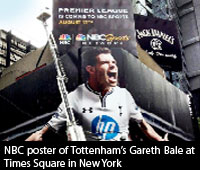
The English Premier League’s allure to brands and its international presence grows with each passing year. Over the summer, Liverpool played in front of a record-breaking crowd of over 95,000 in Melbourne, Australia. Stadia in countries such as Indonesia, Japan, Malaysia, Thailand and Vietnam have also been packed to get a glimpse of visiting English teams. Even in US, the League has secured a $250 million, three-year deal with broadcaster NBC, and major brands such as carmaker Chevrolet have already invested in deals worth hundreds of millions of pounds. The exposure will certainly help EPL to attract more US brands because, unlike the NFL or Major League Baseball, the Premier League has genuinely global coverage. And in spite of the recent scandals involving Terry and Liverpool star Luis Suarez, brands flock to the League in the hope of exploiting its global prominence.
 Reebok to revive its India business
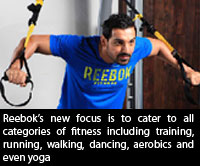
German shoemaker Adidas has announced two new brand ambassadors for Reebok in India: Bollywood actors John Abraham and Nargis Fakhri. The development comes a year after Reebok had filed an FIR alleging Rs.870-crore fraud by its former MD, Subhinder Singh Prem, and COO, Vishnu Bhagat, for which investigation is still going on. The new brand ambassadors will be part of Adidas’ three-year plan to revive the Reebok brand in India and leave behind the financial and goodwill losses it suffered as a result of the alleged commercial irregularities. According to the plan, Adidas is working to first reposition Reebok as a fitness brand, rather than just another sports-shoemaker in India. The new strategy is in line with the company’s thinking that fitness consciousness is on the rise in India, and people are imbibing healthy habits in their lives with an objective to look better and feel better. As such Reebok has decided to take a three-pronged strategy to growth in India- continuous innovation through products, a strong marketing campaign wedded to the ‘Live with Fire’ theme, and a whole new retail environment where consumers will get experiential fulfillment of their fitness needs.
 Panasonic on a Marketing Drive
Panasonic India plans to invest Rs.1,500 crore over the next three years on an advertising and marketing drive in the country. The company, which has invested Rs.1,200 crore ($200 million) since 2012 on its six manufacturing facilities across India, is targetting to increase the market share of air-conditioning products from 9% in 2012-13 to 15% this year. According to the company’s Managing Director Manish Sharma, the country’s western region contributes 35% to overall sales in India, and the company is expecting to increase its market share in Gujarat from 11% in 2012-13 to 18% this fiscal with its new range of Viera TV. For the second consecutive year, the company continued to be No.1 in Gujarat in terms of sale of split air-conditioners whose market is growing 80-100% per annum. Panasonic India’s sales were Rs.7,400 crore in 2012-13, and expects it to cross the Rs.20,000-crore mark over the next three financial years. Panasonic, which is betting on India and Brazil to drive growth, wants to become India’s largest electronics company by 2018 by toppling Samsung. The company, which has just completed a manufacturing plant in Haryana, is now planning another plant to manufacture business-to-business products such as energy solutions and HD video conferencing solutions
 Sachin’s farewell …in Big Style!
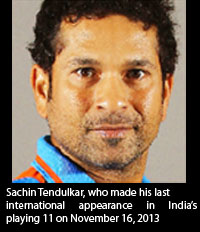
Much talk has happened over Sachin’s retirement from International cricket. Fans, commentators, current players and almost everyone who’s had anything to do with the game of cricket – have discussed the Little Master’s exit from the game. Days after Sachin announced his retirement, hoardings and banners and what not sprang up all over Mumbai with messages that saluted the sportstar and bid him farewell. The brands that Sachin endorsed too haven’t been quiet. They did their bit. Sporting goods and apparel brand Adidas launched the ‘SRT Forever’ campaign during the two tests against West Indies to celebrate Sachin’s service to Indian cricket. While Aviva Life Insurance announced the conclusion of its ‘What’s your big plan’ ad-campaign after Tendulkar’s retirement, others like Toshiba and Royal Bank of Scotland conducted short ad-campaigns that ended on November 16, 2013 – the last day Sachin walked on to the cricket field as an official member of India’s playing eleven. Even the title sponsor of Sachin’s last test series, Star India, got into the pay-the-tribute mode by launching a ‘Cheer for Sachin’ campaign. Much alike his career, his last days in cricket were cheered by all. Fare thee well…Little Master. We’ll miss you. So will the brands!
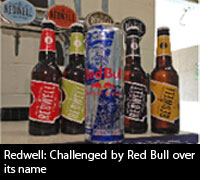 Red Bull versus Redwell
Multinational soft drinks maker Red Bull has challenged a UK-based microbrewery Redwell over its similar-sounding name. The microbrewery, which makes lager and ale, registered the Redwell name as a trademark within the drinks category, which includes energy drinks. The soft drinks giant has sent a solicitor’s letter to Redwell in order to tell the brewery it is happy for it to use its name as long as it did not use it for energy drinks. A Red Bull spokesman said: “Red Bull has long been willing to allow Redwell to maintain its mark for beer so long as they do not use it for energy drinks. Redwell’s solicitor has agreed to this.” According to Patrick Fisher, the microbrewery’s owner, “Our name is different, our branding is different. We don’t make energy drinks and we’re not planning to move into Formula 1 or send a man skydiving from space very soon.”
 Google for Indian Women?
In late November, Google India announced the launch of a new media campaign to achieve an ambitious task – get 500 lakh women in India to use the Internet by end-2014. As per Google, the initiative is meant to not only educate the fairer gender in the country about the Internet, but also to empower them through digital literacy. Only 1/3rd of Internet users in the country are women – Google wants to change this. Google has roped-in Intel, HUL and Axis Bank as partners for the project. In the first stage, the company will launch a media campaign targeted at women and promote www.hwgo.com – a website designed to teach Internet basics to women. The pilot program for this digital literacy project was recently concluded in the villages of Bhilwara (Rajasthan) where 100,000 women were taught how to use basic applications on the Internet.
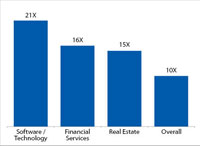 Numbers Game
Smartphone traffic has grown 10 times more quickly than desktop traffic over the past year. According to a study, which looked at web traffic for more than 5 billion web pages across 6,000 brand customers, smartphone traffic grew by 125% between the H1 2012 and H1 2013, compared to 12% growth for desktops
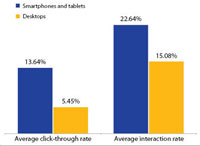 Video Campaign Engagement Rates, Mobile vs. Desktop
The average click-through rate (CTR) for video campaigns in Q3 2013 was almost three times higher on smartphones and tablets (13.64%) than on desktops (5.45%). While desktop CTRs have been rising quickly over the past year (up about 150%), the average CTR for mobile campaigns have more than tripled from 3.73% in Q4 2012.
 “We are the oem for major helmet producers globally”
Your company is known for its helmets. How long has it been in this business and what is its vision?
Rajeev Kapur: The company was started by my father Subhash Kapur in March 1964. We are approaching 50 years of our corporate journey and are proud of the fact that our Steelbird helmet is known for its superior quality that even surpasses the ISI standards. Our vision is to successfully create unique concepts in the field of helmets/pannier boxes/visor/sling bags with a mixture of modernity and tradition. When I joined the company in 1989, we were producing 3,000 helmets a month. Today we make 11,000 helmets a day. The rise in production has been achieved without any compromise on quality. One can literally bang the helmet on to the floor to check for its safety and strength. Our helmets feature unique designs and come with buckles that conform to the highest quality standards.
With so many brands of helmets available in the market, is there anything special about Steelbird?
RK: We keep on innovating and keep adding new products to our portfolio and targeting new markets. We not only cater to the youth and adults but also have designs especially tailored to suit women needs. For instance, we recently launched ‘Eve’ helmets, especially designed for women. There are also Zoro helmets which come with double flip-up visors (white and coloured) for better visibility during day and night travel. We have a range that starts at Rs.1,000 and goes up to Rs.13,000 for carbon fiber helmets. Steelbird offers a great variety to choose from, viz shutter on the top of helmet for cooling effect and also for minimizing the fog effect on the visor during winters. All the designs are patented as our aim is to remove piracy and beat competitors who offer similar knock-off designs at a lower cost, thus compromising on safety features.
There is a perception in the market that Steelbird helmets are costly. Do you think it affects your sales in a price conscious market like India?
RK: Buying a Rs.1,000 helmet was a big deal till some time back but now the consumer wants safety first and foremost. We are happy that we have an extensive product range across various price points to suit the tastes and needs of different customer segments. We are also the OEM to major helmet producing companies in the world. We also supply safety buckles to major helmet producers globally like BMW and Schuberth, which cost upwards of Rs.70,000. But we realise that affordability is a major issue for the domestic market. That is why we have products for the entry level market too. We have two types of helmets, which are non-painted and cost Rs.810. They might not be very appealing to the eye but then again there is no compromise on quality and safety features. Very soon we will be coming up with one more range to further expand our reach in the entry level segment. We have our R&D team whose job is to come up with innovative products with the right price range.
What has been the company’s growth rate so far and what are your targets moving ahead?
RK: The company was started with a capital of Rs.3,000 and it currently operates on a group capital of over Rs.30 crore. Over the last decade, we grew at more than 100% but this year it has come down to 50%. This is because of the severe slowdown in the economy and the resultant sluggishness in the two-wheeler market. However, thanks to our diversified business activities, product lines and exports, we have not been so severely affected as the automobiles industry has been in recent months.
As told to Anirudh Raheja
Forbes magazine up for sale
Forbes Media LLC, the family owned publishing group run by Steve Forbes, is said to be contemplating a sale. The New York-based publisher of Forbes magazine, which is best known for its annual billionaire and power lists, has even announced the hiring of Deutsche Bank AG to examine a sale after receiving interest from potential buyers. The brand hopes to generate about $400 million through the move. This announcement from the 96-year-old brand follows years of dwindling profits as the founding Forbes family tried to stabilise its fortune by selling a stake in 2006, raising money through asset sales including its Manhattan headquarters building, and moving aggressively into digital publishing. In the US, while Forbes’s print advertising pages fell 34% from 2008 to 1,834 last year, advertising revenues were down 19% year-on-year to $275 million last year. In fact, it’s not just Forbes. The past few years have been quite rough for print media around the world. While Washington Post was acquired by Amazon.com Inc. Founder Jeff Bezos $250 million, Boston Red Sox owner John Henry paid $70 million for the Boston Globe. Interestingly, the family got a $400 million buyout offer from fashion publisher Conde Nast Inc. in 2004, which it turned down because it wasn’t high enough.
Movements [People + Accounts]
Malcolm Mistry has been roped in by Maharashtra-based English daily DNA as its new CEO. Mistry has more than two decades of experience in the print industry and has worked across Indian Express and India Today Group. Mistry had quit the India Today Group in 2012 and began his own entrepreneurial venture named Ushta Te HR Consultancy Services to provide recruitment solutions across key verticals like media, advertising and luxury.
Monojit Ray has been brought on board by Contract Advertising to head its Bengaluru office. He will replace Anitha Krishnan, who led the Bengaluru office for the last three years. Ray, who has been appointed as General Manager and Vice President, Contract Bengaluru, joins from Vitamin C Brand Solutions. He will be responsible for recruiting key people and growth of the agency in South India.
Apollo Tyres has named Mindshare as its global media agency of record (AoR). The agency won the account on the back of a multi-agency pitch that took place in Apollo Tyres’ global marketing office in London. ZenithOptimedia is the outgoing agency, which was servicing Apollo Tyres in India.
Ricky Ow has joined Turner Broadcasting as APAC President. Ow joins Turner after a 14-year career at Sony Pictures where most recently, he was designated as EVP and GM for Sony Pictures Television Networks Asia. Based in Hong Kong, he will lead Turner International’s portfolio in the Asia Pacific region.
R. Venkatraman has been roped in by TBWA India as Creative Director for Mumbai. In his new position, Venkatraman will report to Parixit Bhattacharya, Chief Creative Officer of TBWA India. With eight years of experience in advertising, Venkatraman has worked at Grey Worldwide, Creativeland Asia and BBH India.
Manu Prasad, erstwhile head of social media with online retailer Myntra.com, has joined GroupM social media practice as Head, South India. Based in Bengaluru, Prasad will report to Karthik Nagarajan, National Head for social media. Prasad comes with almost a decade of experience in traditional and digital brand management, having worked on consumer (WorldSpace) and media brands (MidDay, Times Group) and handled all aspects of brand communication.
Prism Cements, the cement division of Rajan Raheja Group, has appointed Soho Square as its creative agency. The agency won the business after a multi-agency pitch, which began in mid September. Soho Square’s Mumbai office will handle the business. The creative requirements of Prism Cements were earlier handled by its internal team.
Contract Advertising has been appointed as the creative agency for Sugar Free, the sweetener brand by Zydus Wellness. Contract will look after Sugar Free’s sub brands – Gold, Natura and Herbvia – and its low calorie beverage, Sugar Free D’lite and will support the brand with creative strategy across all media including TV, radio, digital, out of home and print.
Sambit Mohanty, the former Executive Creative Director at McCann Erickson, Delhi, has joined DDB Mudra. Mohanty will be Creative Head, North, and will report to Sonal Dabral, Chairman and CCO, DDB Mudra Group.
Isobar India has been appointed as the digital media partner of Kent RO Systems. The mandate is to handle 360-degree digital communication for the brand. The account will be handled out of Isobar’s Delhi branch.
Rediff.com has appointed StrawberryFrog for its creative duties. In the past, BBH India has worked on this account.