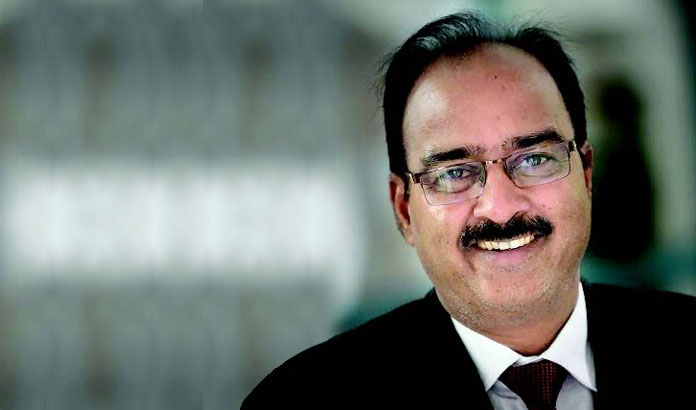
Q. What has been your journey like as a HR professional?
A. I started my career in 1992 with Raymond Limited. My role was more focused on routine HR functions like maintaining set HR systems and processes, employee welfare and industrial relations. However, that was also a decade marked with a deep desire for change in the whole HR approach and a need to increase its role in business planning.
Thus soon the conceptual focus on competency building, commitment building and culture building by HR professionals started emerging. This brought about total transformation of HR and it emerged as a strategy partner playing a crucial role in the success and failure of the business.
Q. What is the biggest challenges faced by HR personnel today?
A. One of the critical functions of HR is aligning employee’s aspirations and their personal goals to business goals. I believe this is a real challenge for HR professionals and applies particularly in the case of Gen “X” employees. More often than not, due to this gap, organisations often face situations of high employee attrition.
Q. What are the challenges HR faces in the new era of the ‘digital age’?
A. The evolution of the digital age has inspired exponential use of technology at the workplace and calls for fundamental changes in the leadership and talent attributes of HR personnel to be able to successfully embark on this digital journey.
The digital age is moving at a very fast pace and it is transforming the way organizations operate, be it in the private or the public sector. HR professionals need to develop new ways of thinking about service delivery that influences the way operating models are designed. They also need to adopt new approaches to manage people.
The key challenges which one can face could be:
• Attracting and retaining talents who are digitally savvy and are hands-on in usage of modern day digital tools like social media, mobile apps etc., who wish to work in a business environment with more freedom and less control or bureaucracy.
• Training the existing workforce and increasing their proficiency on usage of digital and technological tools.
• Aligning a multi-generational workforce. One which is a first generation digital citizen and another who is trying to upgrade its skills to become digitally savvy. This digital disruption is putting pressure on business models to bring about drastic changes.
Q. Any advice you would like to give on how to manage people/teams as the workforce becomes more diverse, and the ways of working change?
A. In today’s world, businesses have become dynamic and diverse. They require constant innovation and new strategies to remain competitive in their own segments. Therefore, it is imperative that HR leaders focus on creating empowered employees and teams.
This is possible by creating an atmosphere of mutual trust and compatibility with focus on respect for human dignity. In addition constantly providing people with opportunities for innovation in their domain of work will help in making jobs much more meaningful and free from monotony.
As the workforce becomes more diverse HR policies need to be conducive to accommodate the needs of the different employees.
Q. How effective and how important are rewards and recognitions in strengthening employee engagement and retention?
A. Suitable and competitive reward and recognition programmes play a very crucial role in strengthening employee engagement and retention. Engaged employees value, enjoy and have pride in their work. They are more willing to help each other and the organization succeed, take additional responsibilities, invest more effort in their jobs, share information with other employees and remain with the organization through ups and downs as compared to employees who are less engaged. Like any other investment the reward and recognition mechanism should be also looked upon as investments which pay dividends to organizations in the long run. The employees’ personal goal and aspirations should also be linked to the reward and recognition program the organization has to offer. This leads to strong engagements and reflects how much the organization values its people. This helps in strengthening the employer brand which further helps in attracting good talent and retaining them.
Q. How can a company attract the best people?
A. The ability to attract the best talent or people to an organization depends to a large extent on how its employees and ex –employees perceive it as an employer brand. Organizations need to very consciously create brand ambassadors who talk good about the organization and it’s value systems. One of the best brand ambassadors are employees who have left the organization. After separating from the organization if they speak about it with pride and positivity it creates a tremendous goodwill and makes the organization attractive to others. Secondly when they move to other organizations the contributions of the previous organization in shaping up their talent is visible. This also helps in creating a strong employer brand and helps in attracting the best talent into the pool.
In addition to this, giving your employees the opportunity for career growth and innovation, the existing leadership and its expertise are other factors that contribute a lot in attracting the best people.
Q. What is the secret to hiring the right candidate?
A. In my opinion the following points must be considered for hiring the right candidate for any given job opportunity:
• Cultural fit: The prospective employee should be able to adapt himself or herself quickly in the new organization’s culture. A candidate coming from a very professional structured and process driven company may not immediately fit into an organization which is not very structured and process driven.
• Be objective: While interviewing one should be objective in asking questions. The focus should be on discovering the candidate’s current ability and competence to perform the role rather than exploring what he did in the past.
• Listen more speak less: It is important to listen to the candidate more in detail while discussing a particular topic. Allowing him enough time to explain a particular situation and trying to understand how he approached the problem and resolved it will provide very valuable insights about his overall attitude and specifically his attitude towards problem solutions.
• Structured interview: As far as possible one should conduct a structured interview with the support of an interview panel. This will help in selecting the right candidate more objectively without personal bias.
• Prepare for interview: Preparing before interviewing a candidate is equally important. Coordination during interview among panel members is an absolute must for objectivity.
Q. What advice would you give to young candidates if they want to stand out and get noticed during an interview?
A. Firstly, candidates need to have a clear understanding of their strengths and their career objectives. They should have the passion to excel in their chosen area. Often it is seen that they get influenced by their peers or their parents when they start their career which can very often lead to dejection.
Secondly, the young candidates need to be realistic in their career progression. They should also be able to convince the interviewer that they will be stable in the new set up. They should do their homework and have information about the organization before applying for the position.
Lastly, candidates need to be honest while replying to questions during the interview.