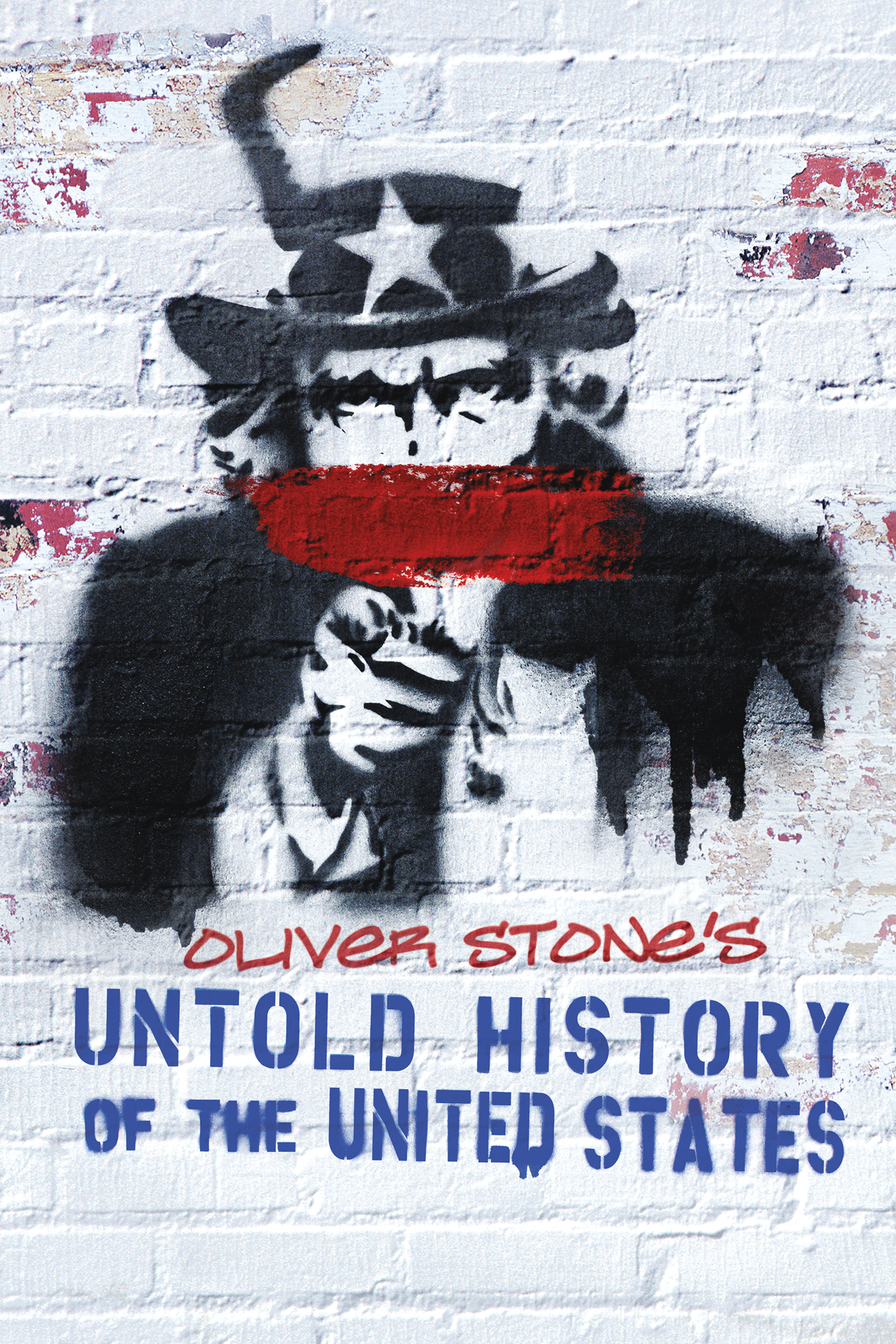
 There are some inherent problems in narrating the history of the United States. And especially when it has to be done in an academic environment. In other countries, the years of infamy and shame are mitigated by centuries of glory and triumph. But if your history is limited in two-and-a-half centuries and you have spent a century of it doing acts that are not particularly worth remembering, you hide behind the facade of comfortable history. And that has remained the biggest tragedy of the US.
Months ago, when American film director Oliver Stone announced that he is collaborating with academician Peter Kuznick to write a revisionist history of the USA and then mount it as a documentary, tongues started wagging immediately. Here was a maverick leftist director collaborating with a revisionist historian, trying to malign this “great nation”. Satraps of the extreme right, particularly those of the Fox News persuation, immediately pounced on the book and used a mixture of misinformation and misattribution to discredit this work. However, since a large part of the audience saw who the protesters were, the book actually got legitimacy very soon.
The Untold History of the United States brings a lot of new things on the table. But don’t mistake it as a book that narrates “untold incidents” and delves into conspiracy theories. Readers with an appetite for such fares will definitely be left unsatisfied. It is not about telling people what happened. It’s about how it happened. And while doing so, it lays bare the official American narrative.
The book is divided into several chapters starting from World War I and ending with the Obama administration. The approach is very top-down and it is through big historical personalities that the history of the time is told. However, unlike the official American historical narrative, it does not ignore the popular movements as aberrations. And that is why it is not an easy read, particularly for a population fed on lies through generations. However, those with open minds will rely on the facts presented and see the real picture emerging.
Take for example the case of Henry Wallace, the 3rd vice president to FDR. It is fascinating how warmongers among the Democrats tried every trick to stop him from running for president. His progressive views and his willingness to cooperate with the Soviet Union did not go down well with the belligerent Democratic leadership. The book asks what would have happened, especially on the Cold War front, had he been elected President instead of Truman, who authors suggest was the worst president in US history.
In fact, several chapters hover on US-Soviet relationship describe at length how there were several occasions that this relationship could have been remarkably improved. One interesting chapter deals with the little known 1934 Nye Commission hearings, led by Senator Gerald P Nye. The hearings laid bare the influence of arms manufacturers, military industrial complex and banks in pushing the US into World War I and making a handsome profit in the process. The book explains how this hearing led to a brief period of anti-war sentiment among middle-class Americans. The sentiment vanished totally after World War II and the same interests drove the US to wars in the Korean peninsula and Vietnam.
Also, for the first time, a mainstream history book has shown the courage to admit that the US played only a minor role in winning World War II. It admits without inhibition that it was the Soviet Union that defeated Hitler and also paid a far greater price than anyone else with over 25 million Russians dying. To put this in perspective, the book asserts that “more were killed during both the Battle of Kiev and the Siege of Stalingrad than the US lost in the entire war.” It also sees the Soviet creation of satellite states in Eastern Europe as a buffer zone between it and Germany and justifies it as a part of the post-war paranoia.
Another interesting take is on the infamous Molotov-Ribbentrop treaty that is used by the West against the Soviet Union to discredit their win over Nazi Germany. The book suggests, and with the help of massive primary and secondary sources, that the USSR desperately tried to strike a deal with the US, Britain or/and France. However the responses from these countries were largely cold and the corporate right publicly empathised with Fascism. For example, General Motors and Texaco, among others, sent massive help to Franco during the Spanish Civil War.
It is through these small revelations that this book scores its victory. Indian readers will do well to familiarise themselves with this aspect of the US before singing another round of Kumbaya.
Author: Oliver Stone & Peter Kuznick
Publication: Ebury Press (A Random House Imprint)
Edition: Paperback
ISBN: 978-0-091-94930-3
Pages: 784
Price: Rs 700