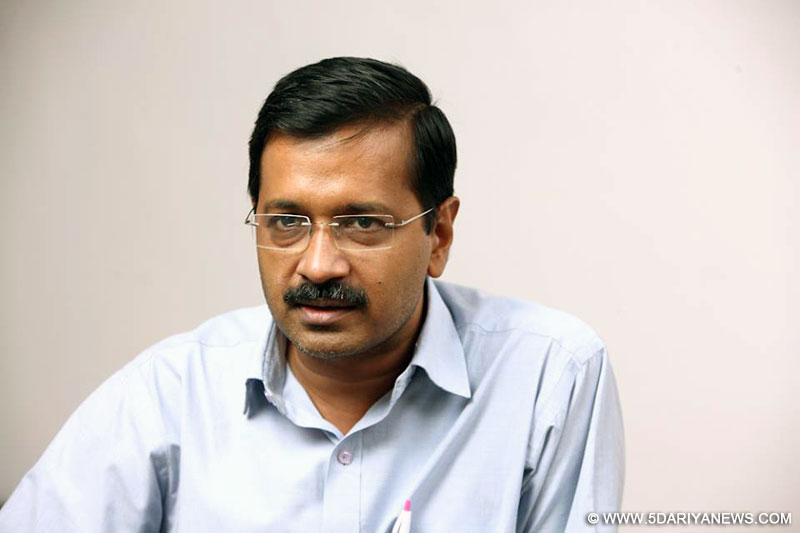
 On a bustling Monday afternoon in the heart of New Delhi’s Connaught Place, an unusually long queue of visitors throng a little house waiting to get in. At first sight the house on Hanuman Road may resemble a famous temple in the vicinity but it is in fact the headquarters of the Aam Aadmi Party (AAP). The milling crowd has a one-point agenda: to meet its president Arvind Kejriwal. It is by no means unruly; standing in a single file are people who Kejriwal meets in groups; the process begins early and goes well into evening. There are those who come with problems, there are others who walk in to express solidarity and support, and there are still others, among them old people, who just pop in to bless Arvind. Lawyers, university teachers, committed middle class supporters, down to the jhuggi dwellers are the staple. One thing is clear from the display of popular goodwill: if mainstream political are taking Kejriwal and his men lightly, they could in for a rude shock.
Neither is the AAP alone. The Delhi assembly by-elections scheduled in a few weeks time is going to be one hell of a scrap, with a multitude of heavyweight political parties certain to influence the ultimate electoral outcome. The SP, BSP, JD (U) and just about every other political outfit, are planning to make it that more difficult for the Congress and the BJP in the 70-seat Delhi Assembly.
Delhi has traditionally supported one of the two parties and even a one or two percent swing could change the fortunes of the country’s two main parties in the national capital. In 2008, the Congress won 43 seats and 40.3 percent of the popular vote; the BJP which garnered 36.43, about four percent less than the Congress, won 23. If this vote bank is to be split into further parts, a radically new situation could emerge later this year.
 Take AAP. It is contesting all the 70 seats on display, with names of 60 odd candidates already announced. It has consistently raised issues relating to the common man and is thought to be in sync with their aspirations and promises to emerge as a third alternative. Well known psephologist and AAP member Yogendra Yadav-led Cicero Associates has conducted what it claims is a survey of the Delhi election scene. According to its findings, 47 percent of Delhi favours AAP, 41 percent back Kejriwal to be the next chief minister as compared to 20 percent who wish to see Sheila Dixit back in office with BJP’s Vijay Goel placed a poor third with 14 percent.
If this survey is to be believed, the BJP stands to win 31 percent of votes followed by AAP 27, Congress 26, BSP 7 and independents nine percent of total votes cast. Points out analyst Manoj Mishra: “AAP has led a powerful anti-corruption movement and can garner a lot of the anti-incumbency votes. This could hit the BJP. In addition, it has raised issues related to slum dwellers, daily hawkers, water, electricity and other civic issues getting the approval of the depressed classes. These have been the traditional vote banks of the Congress, so it is likely to eat into them as well.’’ In sum, he believes that AAP is likely to hit BJP more than the Congress.
Muslims who constitute an important vote bank of Delhi, their numbers having gone up considerably in the last decade or so, have traditionally backed the Congress. In at least 10 assembly constituencies, they will affect the fortunes of candidates. In constituencies like Matia Mahal and Seelampur, they constitute 50 percent of the voters while in Okhla, Muslim vote percentages hover around the 40 percent mark. Add the strong 40 percent Purabiya or voters from east India (read UP and Bihar), traditional Congress supporters largely instrumental in Sheila Dixit’s three consecutive wins in Delhi.
This time around, two regional parties, UP’s SP and Bihar’s JD (U), will vie to take a slice off this constituency. The appointment of JD (U) Rajya Sabha member Shabbir Ali as head of the Delhi unit of the party is a pointer in that direction. According to sources, several Bihar ministers have been deputed to campaign in Delhi and Nitish Kumar’s rally at Ram Lila Maidan was a step in that direction.
 Dalits, who constitute 17 percent of the capital’s vote, have 12 reserved assembly constituencies; in addition they could influence decisions in 18 others. Another traditional Congress vote bank, these votes are now set to be seriously challenged by BSP and Mayawati. Of the reserved Dalit seats, nine are with the Congress, two with the BJP and one with the BSP. In 2008, the BSP had contested on all seats, winning about 14.50 percent of the total vote and two assembly seats. In the 2012 municipal corporation elections, the BSP bagged 17 seats securing 10 percent of the total votes and that has whetted its appetite for more. Says a party leader: “After the UP defeat, Mayawati is spending more time in Delhi and taking a lively interest in proceedings here. She believes there is potential in the capital and that her party can play an important role in government formation.’’
In Delhi, conventional wisdom dictates that the educated youth is under Narendra Modi’s spell but the danger to this BJP vote bank is coming from none other than the AAP. If Sheila Dixit’s anti-incumbency vote shifts in Kejriwal’s favour, then the BJP can expect huge damages. All in all, it is very difficult to predict a winner at this stage and like most poll analysts, even political parties are keeping their fingers crossed.