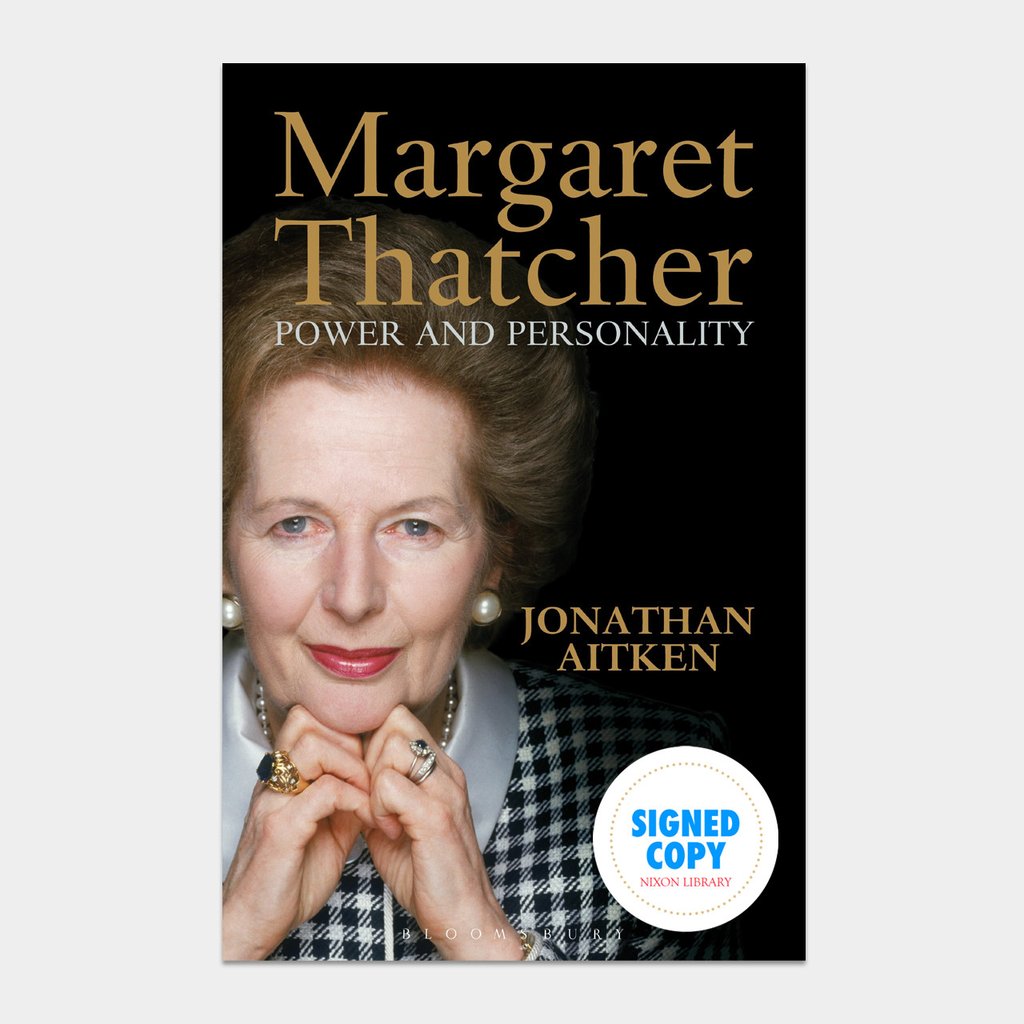
 Somewhere in Jonathan Aitken’s close-to-800 pages leviathan on Margaret Thatcher, there is an interesting anecdote. Immediately after she was forced to quit as Prime Minister Thatcher and her family decided to spend a part of their summer vacations at the mansion of Lord Pearson of Rannoch in the Highlands. When the Thatchers reached there, it was revealed that the house breakfasted at 9.30 am, substantially later than 7 am when Thatchers breakfasted. Since these matters form the core of British snob value, a bargain ensued. Margaret Thatcher agreed for a compromise of 7:15 am. No less.
That’s Margaret Thatcher for you. I vigorously disagree when people say that she was a divisive figure. She wasn’t. She was almost uniformly hated by people of every ideological stripe.
Her death early this year brought several biographies.Many were planned beforehand. Some were hastily put together.
There’s one by Robin Harris that was panned. Robin Renwick’s take was sickly sweet. Gillian Shephard also came out with her take. However, the version that caught everyone’s attention was Charles Moore’s definitive account, which attracted the most reviews and debates. However, the book is tedious. And the second volume is still under production.
In comparison, Margaret Thatcher: Power And Personality can be adjudged as the most interesting take on the life and times of the heroine of conservatism. Jonathan Aitken, himself an old conservative hand in British political space, has a couple of advantages over others. First, as a rising conservative politician, Aitken was briefly taken under her wings by Thatcher. And second, and most importantly, he also dated her daughter for over three years. Consequently, he has a treasure trove of anecdotes and private diary entries to share to the readers. More than anything else, it helps reader form an overall opinion of Thatcher.
It can be safely said, however, that Aitken is not easy with Thatcher. He takes her to task at every opportunity on offer and does not give quarters easily. Whatever bias that one finds in the biography stem from the fact that Aitken himself is conservative and has certain opinion on things. It has nothing to do with his personal relationship with the lady. And before you start assuming that this is barely a cobbled together sheet of anecdotes, let me add that Aitken has interviewed as many as 90 people, which includes Mikhail Gorbachev.
Aitken focuses on Thatcher’s foreign policy substantially and describes her take on some of the most important events of her time. Take for example her decision to go for Falklands War. Aitken reveals that she singlehandedly overruled not only her entire cabinet and the party but also President Ronald Reagan and his aides, to her better judgement. Similarly, it was she who convinced Reagan that Mikhail Gorbachev was a man to be trusted to break USSR apart.
But she was also delusional. She always maintained that it was she who won the Cold War and that the US played second fiddle. Also, she took Soviet newspapers’ description of her as “Iron Lady” a tad too seriously. Her advocacy for the Gulf Wars, her love for Apartheid regime in South Africa and her steadfast support for dictators like Augusto Pinochet and General Suharto, brought lifetime infamy for Great Britain.
Her performance on the domestic front was disastrous and Aitken agrees as much. Seumas Milne once mentioned in Guardian that “across Britain Thatcher is still hated for the damage she inflicted — and for her political legacy of rampant inequality and greed, privatisation and social breakdown.” And he was not off the mark. Aitken concedes that her contempt for the working class, especially the factory workers and miners whose life she destroyed, cost conservatives close to a two decade exile from 10 Downing Street.
Aitken also reveals that she was especially cruel to people who were close to her and that is why when the young Tories engineered a coup against her after the Poll Tax debacle, absolutely no one came to her rescue. She took it too far when she started criticising John Major behind his back at every given opportunity. She relished what she herself termed as the “backseat driving”.
On the foreign policy front too, she relied more on her personal chemistry with foreign dignitaries than political acumen. She had a set of people she liked and a set she abhorred. She liked Reagan but not Carter, Mitterrand but not Kohl. However, she delivered results and that made strong both inside and outside her party.
Margaret Thatcher: Power And Personality is probably the most interesting take on the lady so far. Moore’s take is definitely more scholarly. But Aitken sure takes the cake with his no-holds-barred account.
Author: Jonathan Aitken
Edition: Hardcover
Edition: Hardcover
ISBN: 978-1-4088-3184-7
Pages: 790
Price: Rs 799