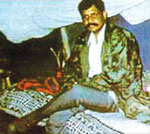
The story of Assam is such that no sooner does one militant group join the government-sponsored peace process that another springs up, nullifying and scuttling the previous attempt at drawing in more groups at the peace table. If nothing else, some militants float a new organization and bingo, the terror industry continues unabated in forever new avatars.
In such an explosive environment, kidnapping and extortion are the norm with a host of militant groups calling the shots in their respective areas of influence. Outfits like the United Peoples’ Democratic Solidarity (UPDS) of Karbi Anglong, one faction of the Dima Halom Dauga (DHD) led by Dilip Nunisa, the other by Jewel Garlosa, the Bodo Liberation Tiger (BLT) led by Hagrama Mahiliary and the Arbinda Rajkhowa-held section of ULFA have joined the so-called ‘peace process’, even though on ground there are no signs of reaching any accord or agreement.
But just as a beleaguered state government is helplessly tying itself in knots, Maoist militants have started rearing their heads in the tea garden-dominated Upper Assam. Police has raised the level of alert after the recent arrest of a heavily-armed suspect, who revealed that he was supplying the ‘goods’ to certain people in Upper Assam. A little earlier, four young men, all suspected Maoists, were reportedly killed in army operations in the same area where the Left radicals are now beginning to gain a foothold, well placed sources say.
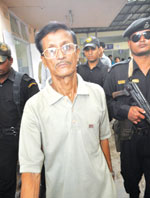
A few months ago, a central committee leader of a Maoist organization, Aklanta Rabha, was arrested in Guwahati’s Jorabat area. Another central committee leader Anukul Chandra alias Pareshji, who figures high on the Andhra Pradesh police’s most wanted list of Naxalites, was held from Silchar. At the time of his arrest, he was hiding at a local hotel.
According to Assam’s police officers, Maoists are feeling at home near the tea gardens, where labour is not just cheap but ill treated, turning it into a fertile recruitment ground. Says leader of the tea community: ‘‘Our people are treated as labour. Their living conditions are unhygienic and wage revision long delayed; this when private tea gardens are earning huge profits. People are backward because they are no proper schools so picking up arms becomes a lucrative option.’’
 It is also important to remember that inhabitants of tea gardens are mainly from Odisha, Jharkhand and Chhattisgarh. Most Maoist leaders belong to these areas as well so there is an emotional connection. The poor uneducated youth is attracted to the Maoist ideology. Given the forested terrain, it becomes a launching pad for many.
Says Assam’s Inspector General of Police (IGP) law and order, SN Singh, ‘‘More than 150 Maoist cadres are active in the state. They seek to create bases in Assam and the hilly areas in North East India. They are doing it with the help of groups like ULFA, Peoples Liberation Army (PLA) of Manipur and the Garo National Liberation Army (GNLA).’’
But inside the police department, there appear to be contradictory views. Points out Khagen Sharma, additional director general of police (ADGP), Assam: ‘‘The problem of militancy has decreased in last six to seven years. At the moment, these militant groups are without any base in the society, so there is no place to hide. There was a time when people use to provide sanctuary and security to militants, but today they are handed over to the police. Militants engaged in extortion are treated similarly. We cannot say that the Maoists are not trying to create a base, but common people know that militancy cannot bring them peace or progress.’’
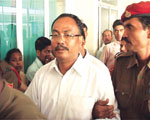 Meanwhile, after the massive blow delivered by Arvinda Rajkhowa when he decided to accept the state government’s offer to join peace talks, the other faction led by self-styled commander in chief Paresh Barua is trying to get a better toehold in the region. Already, according to some reports, some youth from Upper Assam have left for training at designated camps.
When questioned about the new ULFA membership drive, IGP S N Singh said that ‘‘Some senior leaders close to Paresh Barua have evinced interest in joining the mainstream of political life. Accordingly they have communicated this to some senior police officers. But let us wait.’’
But ULFA’s anti-talk faction has denied Singh’s claims. Through an e mail, they told the media that the police were trying to mislead the people and that they continued to oppose any talks with the government.
Points out senior advocate Nekibur Zaman: ‘‘Militancy cannot be solved by armed forces. It is related to problems faced by common people. North East has always been neglected by Delhi. As a result of this discrimination, people have become restless. There is another problem. Both the central and state governments pay no heed to democratic movements; they believe democratic movement can be dominated by arms. Look the example of Iron Sharmila in Manipur. She has been on hunger strike for the last decade, but the government does not pay any importance to her fast. Then what is the solution? I personally do not favour militancy but I believe it is created by the government itself.’’ Indeed, these are some of the existential questions that Assam has traditionally faced; they just keep rearing their heads from time to time.