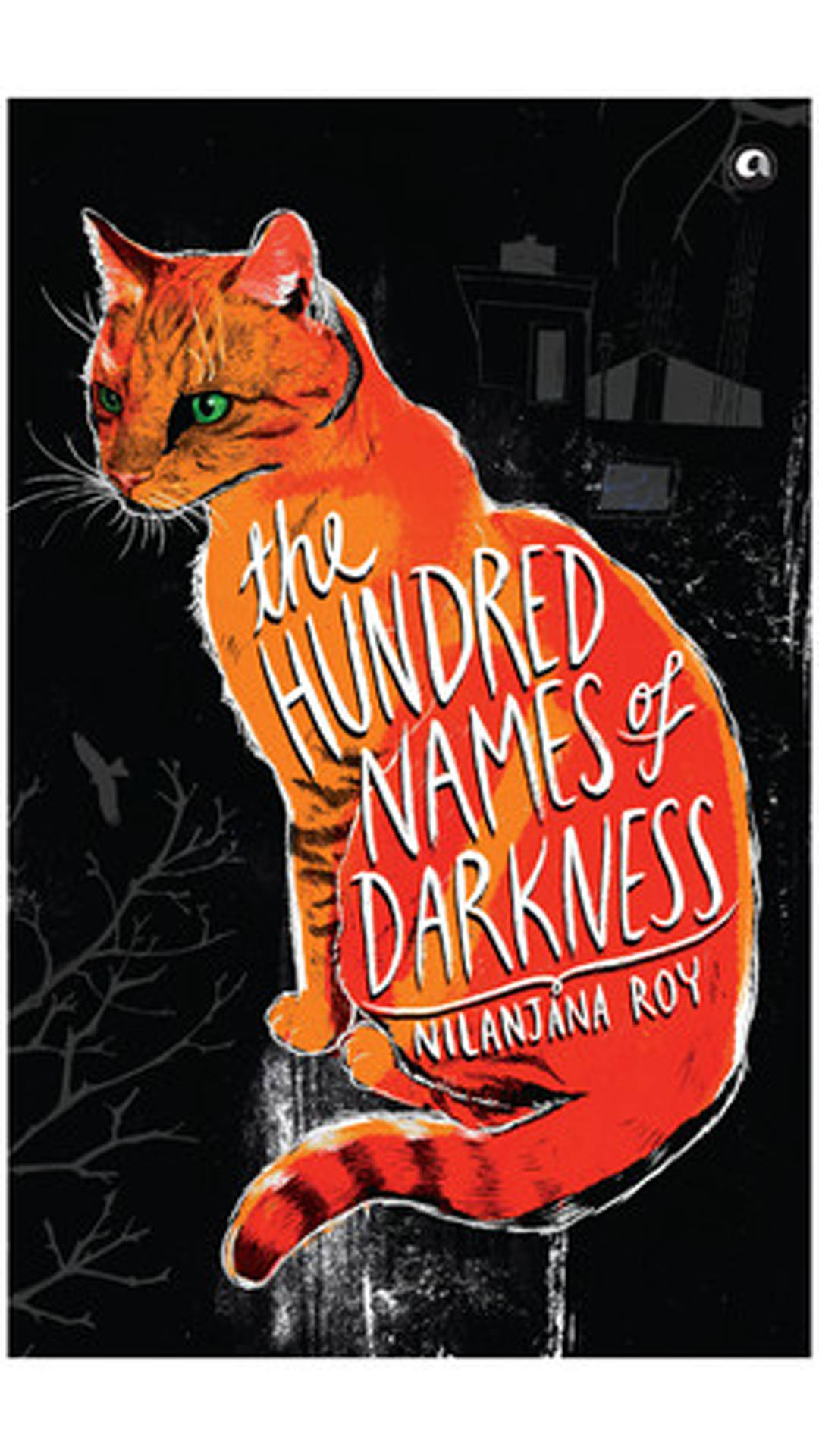
 For readers that were mesmerized by the adventures of the stray cats of Nizamuddin in Nilanjana Roy’s debut novel (The Wildings), it can only be good news that the much anticipated sequel is out not all that long after they put down the first book. It has only been a year or thereabouts.
And for even those that haven’t yet read The Wildings, the publication of The Hundred Names of Darkness offers the opportunity of reading the two books in one go – an exercise that is bound to be doubly delightful because they can plunge from one to the other without a break.
The Hundred Names of Darkness, which, like The Wildings, is supported by the evocative strokes of Prabha Mallya’s illustrations, is just as riveting. The dreamscape had been created to perfection the first time around; the writer is now free (like her feline characters) to venture forth with greater repose and assurance than before.
Keeping in mind that some readers might not have been exposed yet to the world of these stray cats and other animals in the chaotic and danger-filled urban setting of Delhi, Roy devotes a while to bringing them up to speed. As a result, The Hundred Names of Darkness is decidedly less brisk in its pacing.
But it also has a wider sweep and an air of melancholic introspection. It moves back and forth between the playful and the serious-minded without the effort showing. The density of the narrative detailing is fabulous, and the reader is quickly pulled into the universe of these incredible feline creatures and their many friends and foes.
In the world that the likes of Beraal, Katar and Southpaw inhabit, life-threatening risks lurk at every corner and the strays are under constant pressure to stay out of harm’s way. It takes them all their wiles and loads of luck to evade the onset of sudden annihilation.
The stage for the repeated life-and-death battles is set in the prologue itself with the ‘Sender of Paolim’ Magnificat’s pre-emptive attack on a vicious snake on the roof of a crumbling Goan house. “The snakes of Paolim and the cats who patrolled the fishing boats and launches of Chorize had hunted each other for generations in a deadly dance of predator and prey, where the roles could change in a second,” writes the narrator.
Paolim is a many, many miles away from the alleyways of Nizamuddin, but little Mara, the principal protagonist of The Hundred Names of Darkness, can transport herself (in her sleep) right across the Indian landmass to coastal Goa because she possesses magical whiskers that have more power “than all of the Senders of Delhi combined”.
All the cats that survived the bitter struggle to stay alive in The Wildings are back here. While the earlier book tracked their fierce combat with the feral cats led by Datura, this one centres on the threat that they face from human encroachments in Nizamuddin, which imperil their very survival.
The focus of this is largely on Mara, the orange-furred, green-eyed kitten who, after much prodding, steps out of the confines of a human home to discover the world outside. She of course is blessed with special gifts but is ridiculed for “never getting her paws dirty with the mud and soil of our world”.
This story of Mara taking her role as a Sender seriously enough to eventually break free from her “fear of the outside” has numerous outstanding descriptive passages that conjure up vibrant images that one can almost see before one’s own eyes as if on a movie screen. Taken together, The Wildings and The Hundred Names of Darkness can yield a remarkably entertaining motion picture.
The sequel has a fascinating gallery of characters that serve to add layers to the narration. The most memorable has got to be Doginder Singh, the abandoned canine who is every inch a Delhi ‘bloke’ – brash, loud, full of himself and yet adorable. And, of course, there are the mouse Jethro Tail, the peacock Thomas More, the irascible tiger Ozzy (abbreviated from Ozymandias), the cheels Tooth and Hatch and the Viceroys, a group of goats who put in a cameo.
The troubled relationship between the cats and Bigfeet is best exemplified by what Mara thinks of them. She ‘links’ to a human mind only to figure out that “it was like falling from the roof and rushing at extreme speed into the swirling rapids of a turbulent river”.
Her endangered world isn’t quite as much of a ‘maelstrom’, but it has just enough turmoil and action to lend this out-of-ordinary story the kinetic force that it requires.
Author: Nilanjana Roy Aleph
Edition: Hardcover
ISBN: 978-93-822-7777-4
Pages: 313
Price: Rs 495