The global economy is yet to shake off the fallout from the crisis of 2008-2009. Global growth dropped to almost 3 percent in 2012. What it indicates is that about a half a percentage point has been shaved off the long-term trend since the crisis emerged.
This slowing trend will continue with the growth of the global economy for the remainder of 2013 remaining a mix of a cautious improvement in economic conditions in mature economies and a stabilization of the slower growth rates in major emerging markets.
It is expected that overall the global growth rate will end up at a disappointingly low 2.9 percent for the year, about 0.3 percentage points below the global growth performance in 2012.
Meanwhile the debate rages over when – and whether – the G20 can move from being a crisis committee to becoming a role model for global governance. The disparate group of member countries in G20 gives the grouping the potential to become a standing world economic governing board. This possibility is remarkable in itself, though whether it will become a reality still remains an open question.
Nevertheless stringent criticism against G-20 has been expressed publicly; it has been dubbed as a ‘junket’ which involves a colossal waste of money and time. Each G20 junket it is estimated cost more than two billion Euros, squandering taxpayers’ hard-earned money.
As the global growth looks slow and slippery this criticism became obvious a fortnight after the G-20 Summit at the St Petersburg in Russia on September 6. Prime Minister Manmohan Singh and his sherpa, deputy Chairman of Planning Commission Montek Singh attended the G-20 Summit from India.
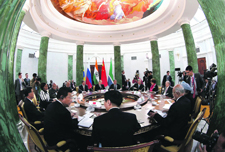 What brought G-20 into focus? It was the 2008 global financial crisis that brought the G20 to the centre of global economic governance. G20 owes pre-eminence to its quick, effective and coordinated response to the financial crisis resulting in the designation of the G20 as the premier forum for international economic cooperation among its members.
Why is it doomed to fail? As leaders and heads of government grappled with sensitive issues, sherpas, finance finisters and governors of central banks dealt with difficult and technical issues.
Moreover leaders who make promises abroad are often unable to fulfill them back home because Parliament retains autonomy over regulation. To make things worse, many G20 countries have weak executives who preside over a fragmented polity. This makes implementing policy extremely difficult.
Unlike many multilateral institutions G-20 cannot boast of any communiqué after eight summits it has held so far, commitments are neither binding on members and nor is there any secretariat to enforce them.
Further, G-20’s cause has been weakened by animosity, shifting loyalties and traditional blocs and consensus on crucial issues have been conveniently forgotten.
Presenting a paper at a seminar organised by ICRIER entitled ‘Governance and Development: Views from G20 Countries’, Heribert Dieter, senior research associate, The German Institute for International and Security Affairs, Berlin, reasoned as to why G-20 is not able to move forward with reforms necessary to prevent future financial crisis. “Despite the mantra-like repetition of memorandum of understanding, trade ministers of the G20 have not been able to surpass their conflicts of interest and reach a settlement in the Doha Round of the World Trade Organization (WTO). What are the reasons for this failure,’’ questions Dieter.
 He adds: “Although the G20 managed to prevent a revival of protectionist measures on a broad front in the midst of the crisis, there is a large gap between the announcements of the G20 and quantifiable results in trade policy. There is not one final communiqué lacking a clear statement stressing the importance of the World Trade Organization (WTO) and the necessity to conclude the Doha Round. Nonetheless, the reality of trade policy looks very different. All the states that are preventing the conclusion of the Doha Round through their veto are members of the G20,’’ Dieter adds.
However given its track record, G20 is now moving from a temporary crisis bailout mechanism towards a permanent organisation of global economic governance. Considering the range of complex issues confronting the world economy, and the persistent weak recovery, it is important for all countries that G20 continues to be successful.
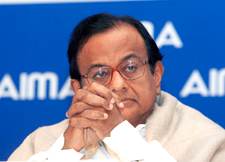
Addressing the ICRIER seminar, Union Finance Minister P Chidambaram pointed out that there are inherent challenges facing the G20 going forward. “It is critical that G20 find ways to develop strong links of coordination and cooperation and take up issues of importance to emerging economies as otherwise, it may evolve as a loose forum instead of a powerful steering wheel of global governance. To be able to play a meaningful role in the global governance, the G20 agenda should be sharper, and focused only on those issues on which it can make a distinctive contribution particularly on economic and financial issues, as the premier forum for international economic cooperation,” he pointed out.
The finance minister also explained how unwillingness of developed economies to push IMF quota reforms has hampered the credibility of G20 and makes it difficult to make progress on other issues as well.
The key issue, according to Union Commerce Secretary S R Rao, is how India reorients its labour force to the emerging global value chain. “Imports have continued to raise, exports are stagnating at $300 billion. So there is necessity of second wave of reforms as we call it in regulated areas. India would have been better off doing free trade agreement s with itself as India is not an integrated market; instead it is 35 fragmented markets,” he said suggesting that India is nowhere near implementing the GST which would have given a level playing field to exporters. This makes India one of the few countries exporting taxes.
Usha Titus, joint secretary (MR), department of economic affairs, in her presentation pointed out that infrastructure development in India has a major role to play in global recovery. Big banks that constitute the biggest share of the GDP unfortunately indulge in profit making. Access to credit individuals and small enterprises that will create a majority of new jobs becomes an issue that G-20 has to grapple with.
But India’s former chief statistician and country director International Centre, Pronob Sen, believes that this country needs to look at small and medium enterprise to rejuvenate its growth story. Sen argues it is possible to achieve and maintain growth rates of above 7 percent per annum without any significant improvement in the global economy, relying mostly on the dynamism of the Indian entrepreneur and the creation of financial space through government fiscal correction. “During the corporate-led growth process of 2003-09, increased revenues of the government permitted expansion of both public infrastructure investments as well as SME investments. However, when the global crisis occurred, the corporate sector in India cut back sharply on its investment activities. Conversely, however, the SME sector actually expanded its investments in GDP quite significantly. Thus the resilience of the Indian economy in the first two years after the crisis owed almost as much to the small and medium entrepreneurs in the country as it did to the government’s fiscal expansion. It appears that the corporate sector is much more sensitive to global developments than the SME sector which seems to be more attuned to the dynamics of the domestic economy”, he stted.
Apart from skilled programmes, Sen also advocates changes in banking rules in a manner that for certain categories of lending, banks shift from a “project appraisal” approach to an “actuarial” approach. “This is not a new idea at all, but banks simply do not have the capacity to adopt this model in most cases. In the period while banks develop the technical capacity to adopt this approach for building their loan portfolios, two methods can be adopted. The first is to permit insurance companies to issue credit default swaps (CDS) against bank loans to SMEs, and the other is for banks to partner insurance companies in determining joint customers,’’ he explains.
With Syria dominating the summit, only a handful of matters of economic consequence were discussed at the recently concluded G20 summit in St Petersburg – measures to curb tax avoidance via exchanging relevant information automatically by 2015 and a BRICS currency reserve pool worth $100 billion to steady currency markets among them.
New hope has been rekindled with Australia leading the G20 beginning new year. Australia’s presidency comes at a critical time for the high-profile organisation. There is a view while the group worked reasonably well in responding to the global financial crisis, it has yet to prove its worth as an ongoing institution. The global economy remains fragile. There are tensions among various blocs within G20. There are also tensions between the domestic agendas of the G20 countries and their claim to competency in managing the global economy.
H K Holdaway, general manager policy division G20 in the Australian Treasury who was in the capital to attend the seminar, summed the up vision of Australia, which is to formulate a tangible action to rejuvenate the global economic growth. “We have high ambitions. We want G20 to work. To make most of the forum we want to invigorate it, it would be leader-led, it will indulge in a two-way communication with stakeholders and an agenda that is relevant to all of us and finally focuses on tangible action,” Holdaway explains.
But the key question is this: should India wait for action to stimulate it growth or take steps to boost its farm sector and as well as small and medium sector enterprises to record and maintain high growth? That is the main issue that confronts the UPA 2 in the long and short term. Given its domestic compulsions, it would take a lot to make India’s voice a relevant one in the context of G20. At the moment, with elections on the anvil, local compulsions rather than global trade top its agenda.