Much to the embarrassment of UPA II apologists, the Indian economy is in shambles thanks to high current account deficit and domestic inflation, steep high commodity prices, rupee depreciation, ‘policy’ and ‘decision’ paralysis.
These are not mere ramblings by self-appointed experts: these are home truths delivered by the Prime Minister’s Economic Advisory Council (PMEAC) last week in its Economic Outlook, 2013-14.
Pointing to more than a dozen factors that have compounded the litany of woes facing the Indian economy, the report said: “The performance of the economy over the past two years has been disappointing.”
In continuing with this trend, the PMEAC pruned its earlier estimate of 6.4 per cent in April to 5.3 per cent on last Friday. However this is faster than the 5 percent growth rate in the previous fiscal year.
The 98-page report prepared by the PMEAC under its chairman, top economist C Rangarajan, also a former Governor of Reserve Bank of India, also listed the reasons behind the lower estimate.
“It is primarily two fold. First the current related disruptions that broke out in June 2013 and is continuing to date, has undercut the momentum for recovery in many ways-on the policy front, the balance sheet effects corporate, banks and financial institutions and capital markets. Second is the trend of decline of margins and profitability of corporates which have bottomed.”
Equally important: since January, the rupee has weakened by 13.39 percent and is the worst-performing Asian currency at the moment.
Can India recover? As with economist Prime Minister Manmohan Singh’s recent statement in Lok Sabha which expects growth to kick off with a good monsoon, the PMEAC’s line is similar. “The pace of economic growth in the first in the first quarter of 2013-14 was quite weak, at 4.4 per cent. The second quarter should be stronger. However, if overall economic growth for the year has to top that of the previous year, growth in the second half has to show distinct improvement. Can it? The answer is a qualified yes,” the council asserts in its report.
Pointing out that PMEAC’s forecast is on expected lines, leading industry chamber Confederation of Indian Industries (CEI) too expects that the second half of the year would see some early signs of recovery. However the industry body sounded a word of caution and wanted the government to take pro-active measures. “The PMEAC’s projection is on expected lines and does not come as a surprise. However, that is not to undermine the need for continued policy interventions to revive growth. While the cabinet Committee on Infrastucture (CCI’s) action on expediting the clearances is appreciable; there is further need to ensure fast implementation of the cleared projects by removing the
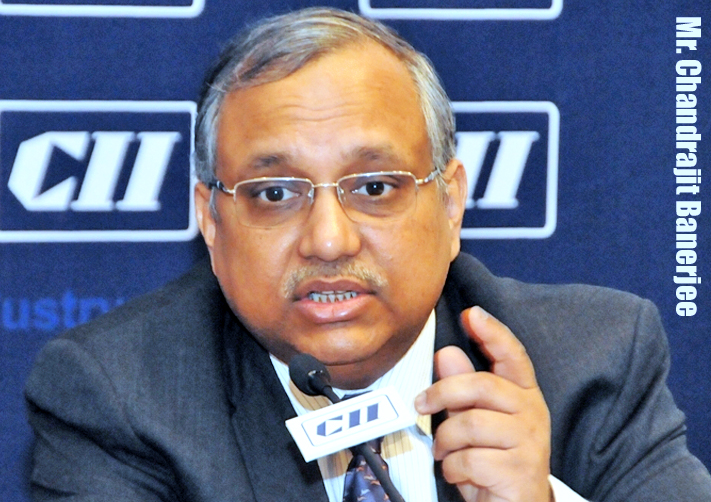
remaining procedural bottlenecks. Similarly, promoting competition in the mining sector, ensuring coal supplies to the power sector, utilizing excess funds of some PSUs for capital investment and speedy implementation of DMIC and freight corridors would go a long way in reviving investment”, pointed out Chandrajit Banerjee, director general CEI.
No wonder the Council has listed several recommendations (see box) for the government to act across several sectors.
However not everybody is comfortable with the bullish forecast predicted by PMEAC. They argue these are not in tune with the macro-economic ralities of the day and they see no signs of recovery in the second half of the current fiscal. “I do not agree with the PMEAC’s projection of FY 14 growth at 5.3 percent. I see growth at 4.3 percent in current fiscal. I don’t see a recovery in the second half as investment is down and there are no signs of it coming up. Even the services sector is doing badly,” Rajiv Kumar, Senior Fellow at the Centre for Policy Research pointed out.
 Echoing similar sentiments D K Joshi, Chief Economist at Crisil notes: “Our projection is a little lower; we see growth at 4.8 percent in current fiscal as investments will not pick up significantly.”
In the first quarter of the current fiscal, the Indian economy grew 4.4 percent compared with 5.4 percent in the year-ago period. After the announcement on the first quarter gross domestic product (GDP) data, several brokerage
 houses cut their 2013-14 growth projections for India to 4.2 percent and 4 percent, respectively. But Rangarajan believes that there is no case for down grading India as only China has a better growth rate than India among BRICs nations.
The reason why Manmohan Singh and his PMEAC are bullish over the growth story is that they are banking on a bumper harvest. Predicting a 4.8 per cent growth story for the farm sector on back of a good monsoon as compared 2.7 for manufacturing sector, the PMEAC highlighted how the value of the crop sector has declined and value of output from horticulture, animal husbandry, poultry, fisheries, termed High Value Agriculture, has risen accounting for nearly 63 per cent of agriculture GDP.
Too boost agriculture that is labour-intensive and employs women in large numbers, the council has called for several initiatives -post-harvest management, improved credit availability, processing facilities, cold storages, market linkages and improve the supply chain.
Tough prescriptions have been advocated by the council for policy makers that will be hard to toe in a crucial election year. Rangarajan said the government would have to reduce non-food subsidies, especially after the implementation of the Food Security Bill.
A good performance in agriculture will have a moderating effect on food inflation while depreciation of the rupee may increase pressure, Rangarajan said, adding that wholesale price inflation would remain contained at 5.5 percent.
Expressing concern over the erosion of saving rate from 38 per cent in 2007-8 to 30 per cent in 2011-12,the council has recommended that for a revival of the growth momentum, the government should contemplate an increase in income-tax exemption for investments in long-term financial assets from Rs 1 lakh currently to Rs 5 lakhs.
Interestingly the high savings rate in those years enabled the Indian economy to grow at more than 9 percentage points during 2005-08. It also suggested that exports be exempted from service tax.
Before the General Elections to Lok Sabha is announced and held in 2014, more reports and state of economy will be published. But the question is two-fold. First whether the UPA II can act and revive the economy? Secondly does it have the time to implement the decision it takes?
On the first score the government is taking several steps like CCI fast-tracking 209 projects and improved investment policy regime in some sectors after months of inaction. The task now is whether it can undertake reforms like reduction of subsidies, insurance and pension sector reforms, eliminating bureaucratic red tape and implementing Goods and Services Tax (GST). Everyone including the prime minister and his team know this well. “These are not low hanging fruit and need political consensus. We will need to ensure that the fundamentals remain strong so that India continues to grow at a healthy rate for many years to come. That we will ensure. We are no doubt faced with challenges, but we have the capacity to address them. It is at times like these that the nation shows what it is truly capable of”, the prime minister said recently. But with time running out for the Congress-led UPA II, the Manmohan Singh government would have to awake, arise and act before it is too late. Unhappily for the Congress, the elections are too on the anvil and no one is more aware of it than the Congress president. Party leaders say madam is watching.