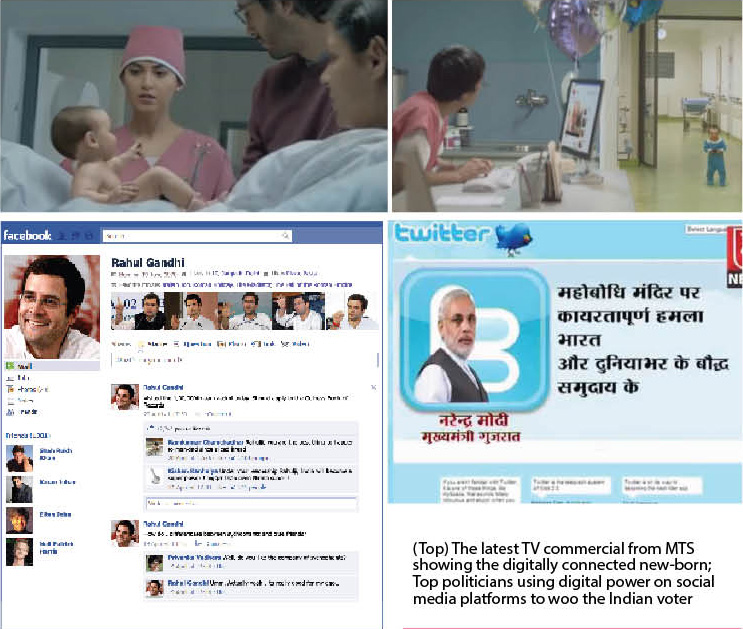
Thirty Lok Sabha candidates are seeking divine intervention through Vedic chants, the fee for each of which is several lakh rupees. And while traditionally people hang ‘petitions’- stamp paper carrying their wishes – at the temple gate of God of Justice in Kumaon, a former union minister too filed his appeal after he was denied a ticket to contest the upcoming General Elections. Whether such an invocation to God would work or not, but wooing the voters successfully will certainly help. Speak of voters and here we have a new kid in the town – 736 million Indians aged under 30, a generation that is best depicted in the latest TV commercial from MTS telecom services provider with the tagline ‘Born for the Internet’.
If you have not seen it already, here it is: The ad opens in a labour room where the newborn’s hand pops out from under the cover and gestures to everyone. Next instant, he starts exploring the internet and further goes on to perform a series of tasks, such as cutting his own umbilical cord with the help of Google to snapping a selfie with the nurse on Instagram. Apparently the Midnight Generation has to concede space to the Satellite Generation born after 1990.
An estimated 150 million voters out of a total 814 million will be eligible to cast their vote for the first time in 2014. This cohort cannot really conceive a world without satellites positioned in outer space manipulating their lives through TV, mobile, internet, or virtual social networks. So while it is alright for a national level candidate to publish comic books dedicated to him and organize rath yatras through 401 trucks in the state of Uttar Pradesh, he also not misses to woo the digital generation by sending personalized letters using special software to digitize electoral rolls and dig out information from the Election Commission’s database. This campaigner has engaged all social platforms – Facebook, Youtube, WhatsApp, Twitter, Blogs – to muster support. This digitally connected candidate is seeking voters’ views on how to improve Bangalore and has extensively employed Google Adwords to ensure that he is visible on any website accessed from any Internet protocol address in Bangalore.
Out of these new voters, in each constituency nearly numbering to 90,000 between 18-22 years of age will be voting for the first time. Around 43,000 of these are merely 18-19 years old. This figure is quite significant because in 2009 General Elections in the 226 constituencies, the winning margin was pretty less than this. They along with million others booked to Twitter and Facebook have forced even the likes of Lalu Yadav to show up on social media. Politics has one of the highest scores on this platform since people not only discover interesting content across political spectrum but they can also connect, discuss, and debate with others. These young voters, importantly, come with no ideology polluted psychology; they can think beyond caste, creed, religion, or region. But can they, really?
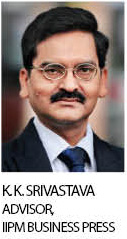
The present generation has energy, outrage and comfort of reasonable affluence, giving them the power to protest against venal politics, corruption, injustice and sexual abuse. The new social discourse of the digratti has its own amalgam of style, substance and attitudes. Social media, as against traditional communication, provides the likes of Kejriwal and Modi (intriguingly Rahul has no personal presence on this platform) opportunity to communicate in a sober way and influence just the right set of voters from diverse backgrounds. A recent study by Kairos Future Group found that Indian youth has societal concerns like criminality, pollution, corruption, etc. His trust in democracy is intact. He is not mirrored by the Amitabh Bachchan of Deewar – the confused, helpless, and gloomy youngster of 1970’s. Nor does Aamir of Rang De Basanti represent him who too lacked a lawful resolution of an illegal treatment meted out to him. Rather, the liberalized youth are clear about both the problem and its resolution. They do not want to live on government sops; issues like poverty, reservation or even agitation politics or an archaism don’t translate into vote. Though they can easily organize protests and air their views, there is no Arab Spring here. Indian youth does not wish to overthrow the system; he merely wants to overhaul it. Reform and not replacement is the aim.
The flip side is, however, that until now youth has not acted as cohesive group, unlike special interest groups defined around religion & caste. Their voting preferences thus have been along the traditional lines of caste, creed and religious affinities. So the identity of this lot as the ‘the young voter’ merely on age basis is rather tenuous. Political parties also engage these youngsters not on issues that are of direct concern to the segment. But 2014 may be a watershed year as the emergence of aspirations can probably disrupt this pattern. Recent voting patterns in Rajasthan, Madhya Pradesh and Delhi did witness a visible collapse of conventional voting paradigm. To win them over, political parties must fight their battles on the social platforms. Indeed, a war for votes hearts, minds and ideologies is being waged there aggressively. Facebook with nearly 100 million users has become the place for political gatherings and Twitter mirrors the new Town hall. Social media is being used to run propaganda, bash rivals and promote own candidatures among these voters with fingers on hot buttons.
So how to win wars on the new battleground?
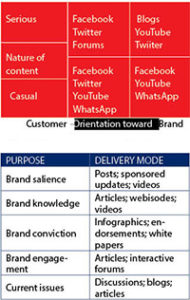
Using videos, podcasts, blogs, social bookmarks, status profiling, and even article directories on vehicles like blogposts, audio feeds, video casts, status message, etc can be generated. The key mantra is to build a rich proprietary content or a platform and then circulate or may be interlink it across various media touch points in multiple formats to enhance reach, conversation scope, and viral searches. This is likely to generate further buzz, even more inbound links, searches, and scale. Unlike creating fragmented contents for multiple platforms, such a strategy will yield better results to the political parties and candidates of course the individual platform choices should be decided based on twin parameters of nature of contents and orientation of message. (Fig-1)
Thus, brand centric serious content is best delivered through blogs, YouTube while casual customer centric does well on, say, Whatspp. Blogs become ideal platforms to propogate ideologies whereas twitter helps in generating debates on various events.
Similarly, the purpose of campaign or message should predetermine the delivery mode (Fig- 2)
Finally, how do you measure the success of your social media campaign? Well, the campaigner can map preset metrics against the campaign objectives (awareness, influence, conviction, conversion) to determine the success. For example, influence (have the voters’ perception and attitudes changed favourably?) can be assessed through favourable comments made by them while their level of engagement (Is the voter interactive?) can be determined through forwards, comments, etc. Likewise spread and action orientation can be measured.
So where as donning different headgears may denote authority and leadership, it also communicates a sense of local connect, the real connection will be established through the social media if the target voter is the youth of today. Use it wisely and reap the dividend.