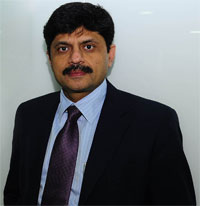
 B&E: According to your company what are the biggest problems in the Indian power sector?
Nikhil Pathak (NP): The biggest problems plaguing the Indian power sector are the increasing power deficit and poor power quality. Power deficit: India faces 10% of demand supply gap in power generation. Over time we have made progress in reducing transmission losses but now the challenge is to take the transmission and distribution (T&D) infrastructure to the next level where they will be at par with some of the advanced countries in the world. A report from the Herald Net pointed out that transmission and distribution losses in some states are as much as 50 percent. On the distribution side, the challenge is twofold: upgrading the existing infrastructure, and installing state-of-the-art distribution systems.
B&E: And the growth of cities is further worsening this problem of deficit on the supply side.
NP: Yes. With the growth of cities and also due to new and proposed industrial areas, new infrastructure will have to be created. Many such projects will be in the PPP (Public Private Partnership) mode. The challenge will be to get the right policies in place to make these projects viable. With increasing IT adoption and advancement in digital technology and power electronics, customers are demanding high quality power. Complaints on poor power quality are increasing every year amongst customers.
B&E: What besides power cuts are the deep rootes problem in the power sector at present?
NP: Voltage sags, surges, spikes, transients and power cuts are identified as main power quality problems that cause large financial losses and currently the economic impact of power quality in India is estimated round Rs.200 billion/p.a. In particular, organisations in technology, healthcare, semiconductor fabrication, transportation, water, oil and gas and energy all rely heavily on uninterrupted power for mission-critical processes. To overcome these problems, an entire industry of back-up power and power conditioning solutions has evolved. The challenge is to match up to the customer’s demand of high availability (typical expectation is 99% uptime). These demands evolve continuously and the industry’s challenge is to keep pace with it. Integration of renewable energy into the grid is an area that the Indian power sector needs to look into.
B&E: What special needs in the Indian market does your company meet?
NP: Two of the biggest concerns for Indian businesses are rising energy costs and availability of energy. Customers need to find ways to do more with less – whether that means lowering overall energy usage or just finding a way to procure energy from different sources to stay within budget. Schneider Electric helps customers design and deploy a solution that keeps energy bills low while meeting availability and scalability targets in the shortest possible time. For example, in today’s data centers, an integrated management system is needed to ensure availability and efficiency is maximised on an ongoing basis. Schneider Electric takes pride in not only providing best-in-class Physical IT Infrastructure but we also work with our customers as their partners/advisors to monitor and manage the Data Center lifecycle. Backed by global expertise in optimizing business value through IT Physical Infrastructure, Schneider Electric is in a unique position to audit, assess and recommend alternatives for efficient data center management.
B&E: So what are the avenues of growth for a private player like Schneider Electric?
NP: With India poised to grow at a brisk pace, the private sector sees a huge growth opportunities. The trend sees a nationwide acceleration in income and it is expected that urban salaries will increase by about 9% average in the next 5 years. This has led to exponential growth of industries like retail, media & entertainment, etc. which have increased demand for data centers and power back up solutions. According to Schneider Electric, keeping with the industry demand, the Data Center sq ft area is expected to grow by 75% in the next 3 years. On the other hand while the Three Phase Power Unit, Cooling and Rack market are expected to grow by 12%, the Data Center Infrastructure Management Market (DCIM) is expected to grow by 13% by 2015. There is a steady increase in the Indian population split inclined towards urban areas at the same India is also witnessing a growth in rural aspirations. The penetration of the IT/ITeS sector in tier 2 and tier 3 cities and the computerisation initiatives of the Government in various departments will be key to pushing uptake levels. With power outages being a critical problem facing SMBs in rural markets, the importance of power back up has gained even greater significance.
B&E: What are your company’s plans to tap the tier 2 and tier 3 cities?
NP: Schneider Electric’s focus is to double the city coverage in India by 2014 as compared to what was in 2011. Schneider Electric is now concentrated on capturing opportunities in fast-growing second-tier cities and further penetrating mid-market segment offerings by boosting local sales force and local partners. Currently, we are present in approx. 450 + cities, via our consumer/commercial product offerings. Our target is to reach out to 550–600 cities through targeted geo expansion programs. The challenges with respect to customer service and reach are addressed by our services team and we are fully equipped to take the plunge into the next 100-150 cities within India to establish a strong footprint here, with the support of our channel partners. Our focus is to enhance channel relationships across the length and breadth of India. We are empowering our channel by giving them a wide and reliable product portfolio, comprehensive training, innovative incentive programs and timely post sales service back-up. Currently, Schneider Electric IT Business has engaged 8000+ channel partners across the country with an increased penetration in B & C class cities. Our global channel landscape program identifies the strengths of its partners and aligns their capabilities to customer needs. The penetration of the IT/ITeS sector in tier 2 and tier 3 cities and the computerization initiatives of the Government in various departments are leading to a growth for UPS market in Tier II and III cities. With anticipated growth in small towns with respect to geographical expansion we expect a lot of consumers / customers to focus on Remote management in the coming times in the 8-to-40 KvA space, and we are offering Remote management solutions as a part of our standard product offering, which is again unique to the industry.
B&E: Which verticals are you servicing at present?
NP: We have deep seeded penetration in key verticals like BFSi, IT/ITeS, Telecom, Government and industrial segments. We continue to engage with existing customers in their expansion plans and to increase our attach with new customers.
B&E: Technologically how are Schneider Electric products superior to those of the competing market?
NP: Schneider Electric IT Business, a global leader in critical power and cooling services, provides industry leading hardware, software, and services designed to ensure availability and higher energy efficiency across the residential, business network, data center, and manufacturing environmen