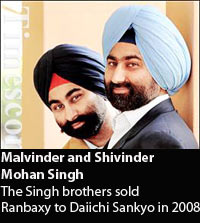
Ranbaxy has pleaded guilty to the criminal charges brought against it by the US regulatory authorities of manufacturing and distributing certain adulterated drugs manufactured at its two Indian facilities. The firm will pay $500 million as penalty, which makes this the the largest false-claims case involving a generics drugs maker in the US. Under the terms of the final settlement agreement, Ranbaxy and its affiliates have agreed to settle alleged civil violations of the False Claims Act with the US, all 50 states and the District of Columbia. Separately, a US subsidiary, Ranbaxy US has agreed to plead guilty to a criminal information charging violations of the Food, Drug and Cosmetic Act. Ranbaxy’s payments related to both the civil and criminal settlements total $500 million in aggregate. But now that Ranbaxy has admitted that good manufacturing practices were overlooked, questions are now being asked if the erstwhile owners of Ranbaxy sold a lemon to Daiichi Sankyo in 2008? Did the Singh brothers (Malvinder and Shivinder) make full disclosures? The buyer doesn’t think so. “Daiichi Sankyo believes that certain former shareholders of Ranbaxy concealed and misrepresented critical information concerning the United States Department of Justice and FDA investigations. Daiichi Sankyo is currently pursuing its available legal remedies and cannot comment further on the subject at this time,” Daiichi Sankyo said in a statement posted on its website. Malvinder Singh, the elder of the brothers, insists that the FDA charges were all in the public domain, “Daiichi Sankyo’s due diligence took place over months, and all allegations of impropriety are wrong.” In fact, he says that he just wanted a partnership with Daiichi Sankyo but the Japanese company wanted more and more of Ranbaxy as it carried out the due diligence. That’s how talks moved from selling a minority stake to a full sell-out. Maybe the investment bankers involved in the deal could throw some light on this.