 Democratically elected village heads are again under attack in Jammu and Kashmir. The latest victims are an old man and a middle-aged woman, both inhabitants of north Kashmir’s Sopore town, bailiwick of Hurriyat hardliner Syed Ali Shah Geelani and a place once considered a militant hot-bed as well as an important point of infiltration for Pakistan-sponsored terrorists.
On January 11, three unknown assailants shot dead 70-year old Habibullah Mir, a village sarpanch when the public representative was conducting an inspection of developmental works at his Bhumie village in Sopore.
A day later, Zoona Begum, 45, a panch in a neighbouring village was shot at in her home. Zoona, now in the intensive care room of the Sher-i-Kashmir Institute of Medical Sciences (SKIMS) in Srinagar, has lost her left eye.
Muhammed Ramzan Kumar, Zoona’s husband, recalls the deadly story. “I heard a knock at the door. When I opened, I found a masked man with a pistol in his hand. He asked me where Zoona was. Before I could reply, my wife came out. The attacker fired at her at short range and escaped. She was lying in a pool of blood. It all happened in less than a minute,” he narrates. So fast, that Kumar is unsure whether this was an attack by militants or someone else. The panchayats are a sign that despite the Hurriyat and other militant and anti-India groups in the Valley, people have opted for local elections rather than bow down to diktats issued by extremists to stay away from casting their vote. So the attack on legally-elected panchayat members are, in a way, at attack on Indian symbolism itself.
The killing of Habibullah Mir has taken the death toll of panchayat members to six in the last two years. The latest round of attacks has come after a three-month lull.
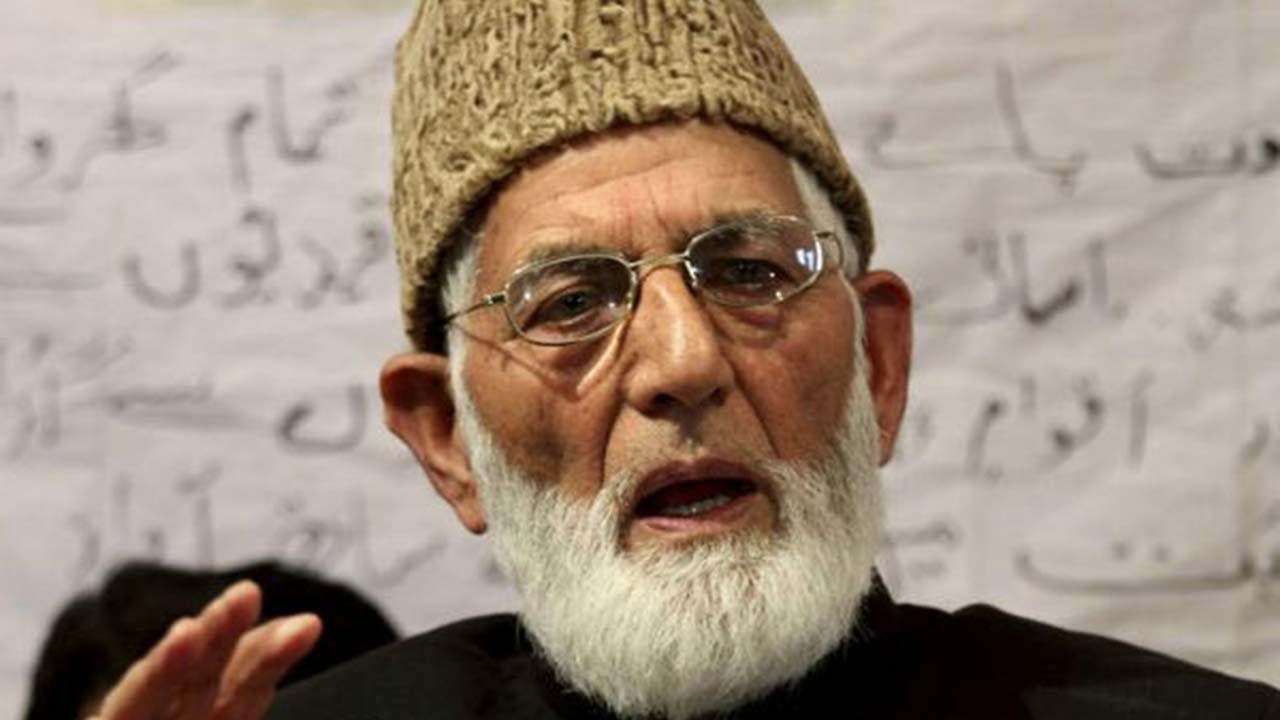
Geelani, who has branded the panchayat members as enemies of the ‘freedom movement’, has termed these attacks on the village heads as ‘mysterious’. “The killings of sarpanches have created doubts. So far no investigation has proved a militant hand. Neither has any militant outfit claimed responsibility for the attacks,” he said in his statement after the Sopore attacks.
But local police investigations have revealed extremists as behind the shootouts. Sources told this magazine that police has identified three local militants of the Hizb ul Mujahidin (HuM) as main suspects.“Though we have examined all aspects, including personal rivalry and criminality, we are sure now that these assaults were the handiwork of HuM militants,” a top police officer, who did not want to be named, told TSI.
The state government too believes that the attackers wre militants. “These are heinous crimes and cowardly acts by militants. The police have been told to speed up investigations and identify culprits. We are concerned about the safety of the panches and the sarpanches and we will take every possible step to protect them,” Ali Muhammad Sagar, state Law and Rural Development Minister told this magazine.
On January 13, a day after Zoona was shot, more than two dozen panches and sarpanches, including several women appeared in Srinagar’s press colony – where most newspaper offices exist – to announce their disassociation from the grassroot level representative body. “As the government has completely failed to give us protection, I do not want to become a scapegoat. I want to live my own life, so I am coming out of this mess, ” Rafiq Mir, one of the group, told TSI.
According to newspaper reports, dozens of scared village heads, mostly belonging to Sopore, have left their homes to guard against possible attacks. The assault on panchayat members started soon after the successful local elections in 2011, in which more than 70 per cent voters exercised their franchise ignoring a boycott call from militants and the pro-Pakistan Hurriyat faction headed by 84-year-old Geelani. Panchayat elections in Jammu and Kashmir were held after 30 years. Amidst unprecedented enthusiasm, 29,719 panches and 4,130 sarpanches were voted to offices in 4,128 panchayats all over the state.
 Since then, these newly-elected public representatives have been demanding security from the government. The police claims it is doing every thing it can to create a secure atmosphere for the panchayats. “It is not technically possible to provide security to each and every elected panch and sarpanch in every nook and corner of the state. Neither will the heavy deployment of forces be appreciated by common people. However, we are assessing the situation in different areas and at different levels to evolve a strategy for everyone’s protection,” Ashok Prasad, Director General of Police (DGP) Jammu and Kashmir, told TSI in an exclusive interview. But panchayat members are not impressed. “The government and the police are least bothered about our security. Look at me. I am target Number 1 for militants because I head the association of panchayat members and have always opposed militants. I am not being provided security despite repeated requests,” Shafiq Mir, president of the All Jammu and Kashmir Panchayati Conference (AJKPC), told this magazine.
The success of panchayat elections in Jammu and Kashmir is seen by Pakistan as yet another symbol of the state’s amalgamation into the Indian mainstream, a fact of life they are not too comfortable with. Syed Sallah-ud-Din, chief of the United Jehad Council (UJC), an amalgam of terror outfits based in Pakistan, has openly threatened the panchayat members saying ‘they will be attacked’.
“Panches and sarpanches are exploited by India to project Kashmir as pro-India, and as such, they will continue to be targeted. No matter how much the government tries to secure them, they will be attacked,” Sallah-ud-Din told an Indian magazine in an interview last November.
Other militant orginisations like Lashkar-e-Taiba (LeT) and Jaish-e-Mohammad (JeM) too have issued death threats to the elected representatives from time to time, directing them to resign from their posts. Handwritten posters from terror groups have been found in mosques and other prominent places across the Valley during the last two years.
In what is turning out to be a farcical situation, apprehensive panchayat members have now directly appealed to the militants not to attack them. “Syed Sallahudin issued a threat last year. We appeal to him to reconsider his threat. We are part of a democratic process meant for empowerment and development. It has nothing to do with the larger Kashmir issue, we are not politicians. We work under block development officers and are like government employees. We should not be treated as stakeholders in the Kashmir issue,” Shafiq Mir said in an unprecedented appeal to the UJC boss, a much wanted man, on January 17.
Much of the problems confronting the institution of panchayats stem from political instability and brinkmanship. It is common knowledge that the National Conference (NC)-Congress coalition which rules the sensitive state, have in an attempt to take credit for holding elections after a gap of 30 years, ‘annoyed’ the militants by calling the successful elections a ‘defeat’ for the latter.
“Panchayats are meant for grassroot level development. Unfortunately the government has linked these elections to the resolution of the Kashmir issue. Panches and sarpanches are being forced to participate in public meetings of ruling front politicians. It sends out a wrong massage,” Nayeem Akhtar, spokesperson of the opposition Peoples Democratic Party (PDP) told TSI.
Panchayat members say their key demands – apart from security – have been overlooked. Two years after winning elections, they are yet to receive functionary powers. Their long-standing demand that the 73rd amendment of the Central Panchayat Act be put into place in the state, has been put on the backburner. The amendment will enable village heads to intervene with government departments and the administration at the grassroots level.
While Congress supports the 73rd amendment, the NC has categorically refused to introduce it in the state on the grounds that implementing a central law in the state will dilute Jammu and Kashmir’s special status accorded to it in the Indian Constitution.
The Panchayati Raj system, a grassroot level democratic institution, is under grave threat. Apart from security, empowerment is a big issue. What’s worse, the gutsy elected members are being dragged into a vortex of local and even national politics. It will certainly need the state government and the centre to work this one out so that all the good effort and sacrifices do not go in vain.