What the Internet revolution has done in India goes much beyond a tier III youngster owning a pair of Nike floaters purchased from Jabong.com or Red Tape boots from bestylish.com. It has brought structural changes in the fabric of capitalism in the country. Suddenly, you have traditional retailers wondering: “Where did all the money go?”
If you go by the manner in which Internet penetration in the country is growing (currently, we have 150 million in India as per IAMAI and IMRB growing at a CAGR of 41% as per Assocham and comScore), there is much suffering and regret left to be heard from the brick-and-mortar players. In 2012, online portals earned a topline of $14 billion. It is expected that by 2015, the e-commerce business in India will rise to $34 billion. Selling ‘everything’ from a smartphone cover to an air ticket, there are over 100 e-commerce portals waiting to serve the needs of buyers in the country. Talking of air tickets, allow us to fasten your attention to the most preferred preparation on the e-commerce menu card – travel portals. Proof to our claim? These websites today account for 83% of all online sales in the country (in 2012; as per eMarketer and comScore). Among travel sites, India Railways leads with a market share of 19.2% (September 2012), reflecting the increase in count of tech-savvy middle class. US-based Expedia is a fast growing brand in this space. Though at a low #8 in terms of count of unique online monthly visitors (market share of 2.9%), behind the likes of MakeMyTrip.com, TripAdvisor, Cleartrip et al, it is fighting hard to get heard in a crowd by working on brand recall. Common knowledge suggests that travel portals are finding it hard to differentiate themselves. Given such a situation, Expedia’s efforts to get itself heard through an ad-campaign may produce favourable results and help drive a bigger percentage of online visitors to its site in the coming months.
But why now? With the arrival of the summer season (and summer holidays), the airlines versus railways battle on the pricing front has just begun. Consequently, an online travel portal like Expedia feels that this is a good time to make merry. At present, Expedia offers booking services on 400 airlines and at over 200,000 hotels. Given such a huge basket of offering, it is only logical that the online brand invests in advertising.
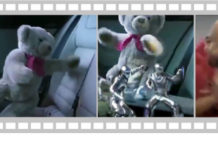
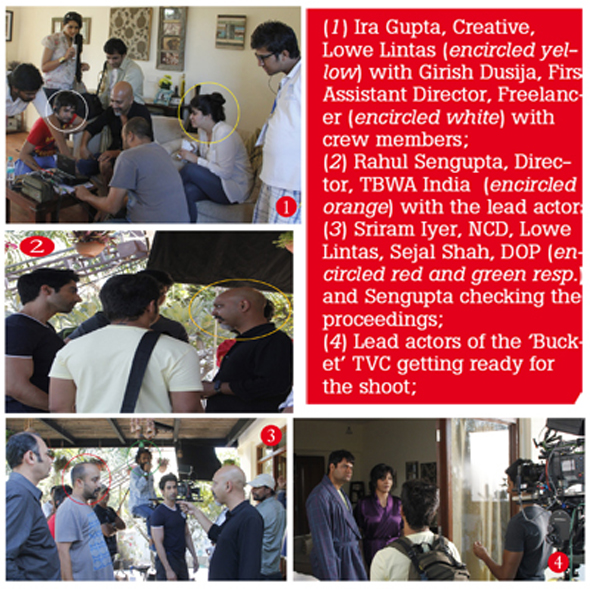
The portal’s latest 360 degree ongoing campaign highlights its offer of 18,000 deals to choose from, therefore promising to keep you out of the league of ‘the neighbour who never travels’. Of the total budget, 70% has been allocated to the TVC format, with creative duties handed over to Lowe Lintas. The sole attempt with the campaign is to connect with consumers. Talking about the key message that Expedia wants to out across through its campaign, Manmeet Ahluwalia, Marketing Head, Expedia India tells 4Ps B&M, “The variety of offers indicate the wide range that Expedia as a brand has always offered, both in terms of choices and prices, which is hard to match…” The TVC campaign comes in two parts – two 20-second-long films. The first TVC was launched on March 28, 2013 (titled ,’Dog’), while the second was launched on April 1, 2013 (titled, ‘Bucket’). Both TVCs were shot in a day at a bungalow at Madh island (near Mumbai).
In the ‘Dog’ TVC, a lady is shown handing over her dog to a couple (her neighbours). She informs her neighbours about her pet’s habits and tells them that since pets are not allowed on the holiday, she is leaving her pet in their care. The second TVC, ‘Bucket’, shows three young lads rushing off to a holiday, handing over two bucketful of clothes to their neighbour couple (the same protagonists who appeared in the first TVC). One of the boys requests the couple to ensure that when their domestic help arrives, she does the washing properly.
 That the TVCs were shot on the same day shows. And it does not reflect well on the producers or the brand! Imagine, both protagonists (the neighbour couple) are shown wearing exactly the same outfits in both TVCs. The lack of fresh faces as protagonists and sets for filming kills the freshness in the TVCs. Our argument is – the idea wasn’t new. There is nothing in the TVC that makes you go “Wow!” Perhaps a new face, a new set, a longer TVC would have been appreciated more by viewers in the second TVC. What Expedia has done (rather, what Lowe Lintas has done for Expedia) appears simple 20-second fillers before the main message from the portal hits TV screens! And it is hard to imagine what Sriram Iyer, Creative Head, Lowe Lintas, tells 4Ps B&M in the name of hard work invested in the conceptualisation and execution of the TVCs. He says, “The entire process from concept to execution took us one month, and interestingly, it was a funny experience to get a dog to act.”
The ads score low on all parameters – creativity, levity, originality of idea, and cinematography. Harsh it may sound, but true it is – in the first TVC, the main character that wins attention is the pet dog, and in the second, well, viewers are left counting the number of buckets.
The last five seconds of the TVC however does try to make up for the dry humour in the first 15 seconds of the films (that fails to amuse most). But as expected, even clear and well-placed messages following the tagline (‘Be the neighbour who travels’; like ‘Goa hotel rooms upto 50% off’, ’48 hours sale. Online’ and ‘10,000 free hotel rooms’) fail to make the TVC worth investing on. In terms of brand recall, there is no much worth remembering, given the clutter of brands stealing spots on the idiot box. Expedia will need a more wholehearted and perhaps humour-laden (recall the last time you bumped into a TVC of one of its competitors like GoIbibo.com, Yatra.com et al) shot at brand recall the next time, if it is to get its market shares in the double-digit mark by the time 2014 ends. For starters, it could rope-in a known face for a brand ambassador!