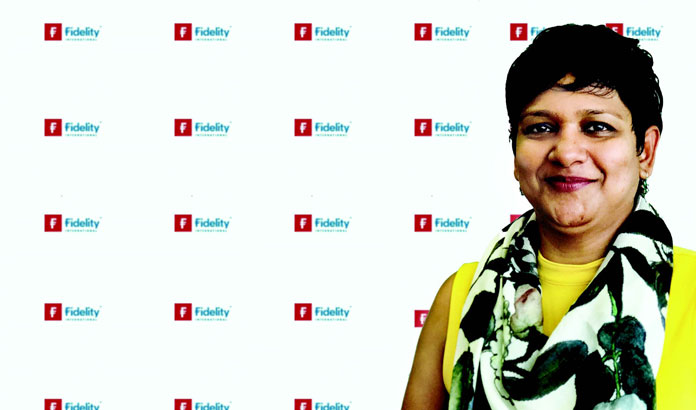
Q. Tell us about your HR journey?
A. I vividly remember the day, almost two decades ago when I told my father (over the phone) that I would be specializing in HR. There was silence on the other side and I could hear him think of ways to dissuade me without discouraging me. I also met a couple of seniors and once again did not get a very encouraging response. The one common reason all of them gave me for not opting for HR was that everyone in the company believes they know your job better than you. Hence, in an HR role you never get a seat at the strategy table. However, during my journey over these years I was blessed to work with some brilliant managers and exceptional business leaders, in great companies and learnt a lot during both good times as well as tough times … but those initial conversations are still etched in my memory. I don’t know if it was luck or destiny, but most of my career learning has been in growing those phases of a businesses where one is required to think dynamically and yet come up with sustainable solutions. From setting up a function from scratch, implementing HRMIS at a time when not too many people knew about it, setting in the new paradigms of culture change to defining talent strategy, it has been a very rewarding journey. One approach that has always worked for me is fixing the cause side of the problem rather than giving symptomatic (or what you call killing the noise) solutions. That is where you add value and it will definitely get you the seat at the strategy table.
Q. What were the biggest challenges you faced?
A. No matter what you do, overcoming obstacles and accomplishing various challenges is always the fun part of your journey to success. These challenges not only test your knowledge/abilities, but also define your strengths and capabilities to your stakeholders. So, I would say that the single biggest challenge is becoming a true trusted advisor, who can be an alter ego to the CXO. It is very tempting to align with “powers that be”, especially since by virtue of our function we get exposed to it early in our career and end up walking the often-treaded path.
As trusted advisors we need to not only think of the benefit to business, but also to the employees (remember we are pretty much the last line of defence for an employee). I clearly recall how terrified I was when I was objecting to a decision of a senior business leader during my very first year in the role. But I still went ahead, asked the question, told him to look again at his stance/decision and gave him a few alternatives. There were multiple outputs of that interaction:
a) the business leader was very thankful for my suggestion especially because it was going to cost someone their job and after that the business leader often started leveraging me as a sounding board;
b) my influence with employees jumped up overnight providing me a stronger handle on their pulse and
c) I certainly didn’t get killed as I had thought initially. The nature of the situation changes, but we come to such crossroads in our profession very often. Decisions of convenience are of course easy but that is where we lose our spot of being a trusted advisor to the business (both with the CXOs and employees).
Q. What are the challenges HR faces in the new era of the ‘digital age’?
A. The push into the digital age bringing with it new challenges for HR, in my opinion, is an overstatement. The challenge remains the same. It is finally the choice between resisting change or taking it positively and adapting to it. VUCA world is a hyper connected place with very little interpersonal connect and the cost of not changing is fatal. We need to change faster than ever before and hence need a very strong grasp of fundamentals, while working towards problems or objectives.
Q. Your thoughts on managing diversity effectively? Where does one start?
A. Today’s workforce is in a very interesting space. Today an employee’s approach to work and expectation from the employer is very varied as compared to the industrial age. The only trick that has worked for me from day one is to treat everyone individually for what they are especially when the team size is not running in hundreds. This takes care of any diverse view and approach to work. The inclusivity not only helps you to manage teams better but enables you to get the best from everyone… even when they leave the role/ company they are your ambassadors. In larger teams the key theme continues to be an inclusive culture that leverages trust, maturity and accountability of the team members.
Q. Coming to rewards and recognitions , how effective or important do you think is R&R in strengthening employee engagement and retention?
A. Rewards and recognition needs to be contextual, in time and with the right audience. Let me share an anecdote to make my point. In one of my previous organisations, one day an employee walked up to me with an escalation stating that his project got delivered, but he had not yet received the reward. He had planned for his expenses budgeting the award. When I checked out his last 12 months records of rewards received, I was surprised to see that the amount he had got worked out to nearly 4% of his annual salary. The manager too had followed the rule book while giving rewards. So the question was, where was the system going wrong?
Rewards and recognition currently get implemented in two extreme situations: at one end where managers are too demanding to say thank you and hence hardly reward anyone, at the other end there is overcrowding of rewards (with most managers citing the demanding new generation as the reason for giving away many rewards). While I am not a fan of the former state of work, the increased consumerism around awards in the latter scenario unfortunately leads to the same end result. Recognition is firstly a very important element for setting in the right culture and ethos of the organisation. It is the fastest way to communicate the definition of ‘great’ in the company. Eventually it does help in engagement and in retention of the right people.
Q. How to attract the best individuals into an organisation?
A. The best need the best to attract them. If you are perceived as a great organisation then the best talent will automatically be pulled towards you.
The key differentiator is the promise (often termed as Employee Value Proposition or EVP) you make to a potential talent and how much you keep that promise (say/do ratio!). If you really want to know whether you are the best in the business, I suggest you do a simple litmus test. Find out two things to begin with, how long the top talent remains with your company after you bring them on board, and second how long do they continue to be considered the best talent in the market after working with your company.
In my opinion enhancing talent is a socio-economic responsibility, which is not just about improving the company’s current productivity but about creating opportunities and eventually defining the market as showcased by many success stories in the industry.
If you desire to become a benchmark you have to be courageous and let go of the fear of the unexplored and that is when you will be able to attract the best.
Q. What is the secret to hiring the right candidate?
A. Just as every position is unique, every candidate is also unique and special. When we consider the matchmaking between the two, the ideal chemistry kicks in when the job can help someone grow beyond where they are and the incumbent can grow the job along with him/her.
Organisations that have been successful with it have historically been visionaries with strong career pathing, talent map and managerial acumen. With the pace of work increasing there is a strong need for effective communication as time and reach are critical. It is gradually less about hierarchy and level, and more about the impact the role carries.
Very often the most disappointing part while talking to candidates with a decade or two of experience is the realization that they stopped growing after the first nine or ten years of their career. When one stops learning and growing the mind starts aging. That is when the sides of the proverbial pyramid become holey. The foundation of this behavior is laid during that time of the individual’s career when the company begins to work on succession planning.
The right candidate at that time is the one who has not stagnated but continued to learn and develop and grow. He is the one who is most often noticed and he is the one who stands out as compared to his other colleagues who stopped learning. He is the one who is picked up and groomed for the next level of leadership.
In short, I am very particular about the learning/ development orientation in a candidate and that is the key differentiator for me.
Q. What advice would you give young candidates if they want to stand out and get noticed during an interview?
A. I would like to start with a cliché- ‘have a view’. This holds true especially when we are referring to young candidates. Unlike other profiles where one tends to factor in experience, specialization, demonstrated success history, the young talent largely gets selected on the basis of potential.
Meeting young minds gives one so much energy given their curiosity, fresh perspective, and the fact that they come with no political baggage. But when it comes to interviews/ formal settings, the same set of individuals become so scripted, so ‘me too’ that it is really very difficult to differentiate one from the other. At the early stage as a hiring decision maker we look out for youngsters with fire in their belly, zeal to learn, accountability and over those who just toe the line.