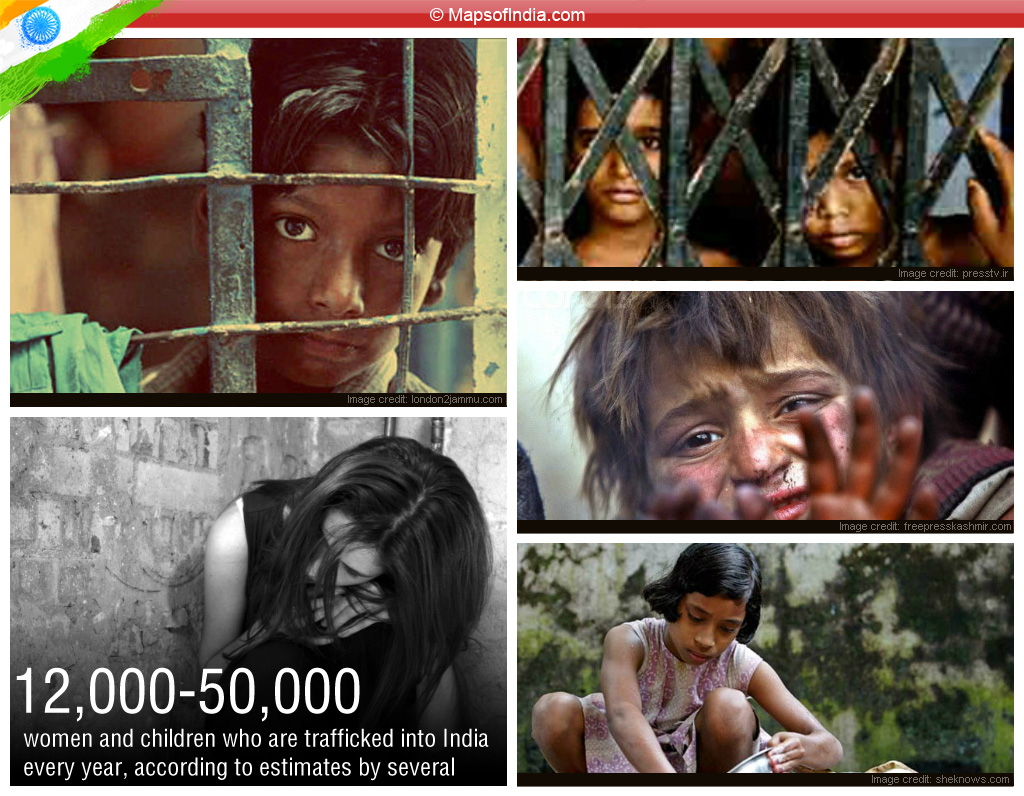
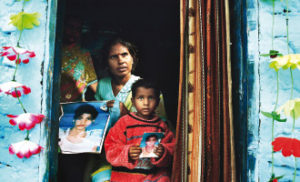
 Bittu is 14 years old and clings to his mother Sheila Devi for dear life. No matter how hard we try, it is difficult to make this reticent teenager talk. Hesitantly, with fear haunting his eyes, Bittu tells his story that started near his house in Sangam Vihar, Delhi about five years ago. Then about nine years old, Bittu was playing near his house when someone offered him a laddoo. The next thing he remembers is being mercilessly beaten and forced to clean utensils for a traveling theatre group. Once, his abductors branded a symbol of the deity Ganesha on his arm. Another time, he was so badly beaten that he lost an eye. Bittu says there were more than 50 kids like him who were working like slaves for the group.
Ever since he disappeared in 2008, his parents Sheila and Arvind, who originally belong to Bihar and are daily wage workers in Delhi, kept pleading with the police to help them find their missing son. After much pleading, an FIR was registered and that was that. As far as the cops were concerned, Bittu was just one of seven kids who disappear every day in Delhi. As far as the media was concerned, Bittu and his parents were too poor to waste their anger on. But Bittu was lucky. When he was in a train somewhere near Varanasi in October, 2012, Bittu escaped and managed to reach his village in Bihar. His parents brought him back to Delhi on November 12. Since then, a traumatised and brutalised Bittu is scared to step out of his house and clings to his mother. Of course, the cops have never bothered even once in the last five years to help the family. Says Shiela Devi, “The police has not come to visit us, or even call us for investigating the matter. If they had, maybe my son would have been rescued earlier.”
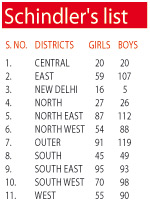
After the brutal gang-rape and murder of the 23 year old student recently in Delhi, the media and the chattering classes are loudly talking about how women in India, particularly Delhi are very unsafe. There are debates on castration and death penalty for rapists and severe punishments for crimes against women. In all this, we have unfortunately soft pedaled another equally important issue: the shocking number of young children who go missing every year in India, never to be recovered. A study conducted between 2008 and 2010 by Bachpan Bachao Andolan reveals that about 1,20,000 children went missing, an average of 60,000 a year. One out of every four child who went missing remains untracked even years after their absence was reported.
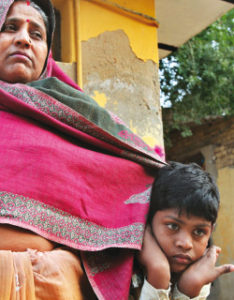 This correspondent chased this story way back in 2008 when nobody seemed bothered about this horrifying and shameful reality of Delhi and of Indian society. The story was indeed praised by some, but most sniggered at the decision of the editorial team to put this out as a cover story. While pursuing this story in 2008, this correspondent had met about two dozen families whose children had gone missing. In almost all cases, it was a familiar tale of police apathy, arrogance and cussedness. “A police officer asked for a bribe of Rs 3,000 to register an FIR and get a missing child ad printed in newspapers from me,” says Azhar, a resident of Jahangirpuri, C Block whose daughter Atika has been missing for more than five years. In almost all cases, the cops simply refused to register an FIR. In any case, the entire media was so engrossed with the murder of the upper middle class girl Arushi Talwar that nobody seemed to have any time for the missing children of the slum dwellers of Delhi.
But there are people in India who do care. A lot of activists joined the bandwagon and demanded justice for the families of missing children and at least some action from the police. Supreme Court lawyer HS Phoolka petitioned the Delhi High Court for directions and intervention in the matter. In September, 2009, the High Court directed that the police has to compulsorily register an FIR if a child is reported missing. That intervention has played a big role in helping these hapless families, though the cops and the media still tend to largely ignore such cases.
 In November and December, 2012, we tried to trace the families we had met in 2008. It is difficult to trace poor people who keep shifting in search of jobs. But we did manage to trace two of the families after a lot of leg work and pestering. One poignant tale is that of Rizwan who disappeared in October 2006. He was nine years old at that time and went missing even as he was playing outside in broad daylight. His father, a mason, kept doing the rounds of the police station without any success. He died about eight months ago. Rizwan’s mother Rabia Khatoon, now a widow, lives in Suleiman Nagar in outer Delhi. We try but fail to comprehend the loss and agony of this 50 year old lady from Samastipur district of Bihar who has lost both a son and a husband. “I do not have any hope left. As long as my husband was alive, he would follow this up. Since his death, we have resigned to our fate,” says she. There is another haunting case that troubled us. Guddi and Shripal discovered that their son Ashish was missing in June 2007 after he had gone for a morning run. The place: Prem Nagar in outer Delhi. Ashish was 13 years old then. Now, Shripal and Guddi can only wonder if their son is alive. The less said about the attitude of the cops, the better. In fact, Guddi was shell shocked to find that some journalist from some media outlet even remembered Ashish after four years and wanted to know if he had been found and returned to his parents. That speaks a lot about what the underprivileged of India think about mainstream media in this country. Some more horror stories: from Jahangirpuri slum, 11 year old Atika disappeared in 2008. Her father Azhar has lot all hope. Puja, the daughter of a push cart vendor Ram Kewat disappeared in 2008. She has not been recovered yet.
 We mentioned earlier that the orders of Delhi High Court has at least compelled the police to register an FIR in these cases. But are children being recovered? According to Zonal Integrated Police Network (ZIPNET), in 2011, there were 982 untraced missing children in the city of Delhi. That went up to 1,187 by 2012. This correspondent met dozens of families again while trawling through the slum areas of Delhi to find out more about more recent cases. The story was depressingly familiar. The kids are still not being recovered. And there is still no hue and cry about this disgrace. On May 11, 2012, 11- year-old Manish disappeared from Bharat Vihar in outer Delhi. The FIR was registered and stated that he disappeared while playing near his house. His parents, who are daily wage workers, say with a resigned nod that the police has not bothered to come even once to tell them about any developments in the case. They are not hopeful, though still praying, that Manish is at least safe wherever he is. Sobhran Singh is better off than Rabia Khatoon and Guddi. He runs a kirana store in Sangam Vihar, New Delhi. His four-year-old son Premjot disappeared from near the very gates of his house during Janmasthami in 2011. Sobhran has spent his entire life savings trying to trace his son. He goes every single day to the police station. “There are several other children from our locality who have gone missing,” claims Sobhran. The response: apathy. The cops can do worse than apathy. On June 7, 2012, two kids disappeared from Delhi. One was eight year old Mahesh, the son of a mason Sankar Boudhgiri who stays in a Tughlakabad Extension slum in South Delhi. He says that when he went to the cops with his complaint, they demanded Rs 20,000 before they would file an FIR. Since then, they have never turned up at his house with any information. The same day, from the same locality, eight year old Guddu too disappeared. His mother Farzana, a divorcee, works as a domestic help in and around the posh Alaknanda locality. The lady was not even aware that an FIR could be registered in such a case.
 Where are these missing children going? Research by activists and organisations reveal three clear patterns in this national shame. “The boys are kidnapped and used for forced child labour, begging and drug peddling. The girls are kidnapped and used for begging, bonded work and prostitution. There are also cases of smaller children being sold for adoption,” says Rakesh Senger, National Head, Raid and Rescue Operation, Bachpan Bachao Andolan. In 2009, a group of Sadhvis were caught using kidnapped children to beg in front of a temple in Madangir in south Delhi. The 15 kids recovered were kept inside the temple. Another Baba was caught in 2010 doing the same thing near Mehrauli in south Delhi. There is a jalebi chowk in Mongolpuri in outer Delhi. Four 12-year-old girls disappeared from here in 2009. Eventually, the police caught a gang of pimps in Alwar and recovered the girls who were being forced into prostitution. The girls were being injected with hormones to accelerate their growth. Sometimes, justice is done. The gang and the woman who were responsible for kidnapping these girls and forcing them into prostitution were convicted and sentenced to seven years rigorous jail. In yet another case, the crime branch of Delhi Police arrested a lady called Ranjeeta from Raghuvir Nagar in Delhi who was running a shelter for orphans. Seven abducted infants were rescued. Ranjeeta used to sell these kids for adoption.
But such success stories are very few and far apart. The fact is, despite interventions from courts and bodies like NHRC, 11 children still go missing every hour in India, most of them never to be recovered. The fact is, the middle class and the media has launched a debate about the safety of women in the country and the political class can no longer ignore it. But the fact also is, children and elderly citizens (see related story) are as vulnerable as women in this society. And as prone to predators and as susceptible to police and middle class apathy. During our field trips, in 2008 and 2012, our constant companion was an unknown activist called Dinanath Chauhan. He is one of the breed who dedicate their lives to a cause, however unglamorous. Dinanath tells me, “Anil Bhai, I get a lot of calls from journalists nowadays. But they keep asking me to give them stories about missing children from upper class families whose plight can become headline news in TV channels.” Even as he said this, I recalled the abduction of Anant, the son of the then CEO of Adobe India and how the media and the police treated the story. Perhaps Bharat and India are truly separate
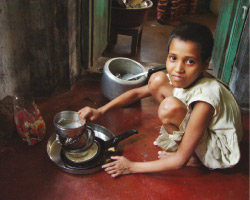 Placement agencies wreaking havoc
With a great number of people migrating from rural areas to the metro cities, the proliferation of placement agencies to provide maid servants has been palpable in last few years. This has also given rise to human trafficking on a big scale. Rising demands of maids to do household work in Delhi, has also given fillip to illegal placement agencies.
In 2012, several cases came to light in which children and women working as domestic help have been harassed by their employers.
In one such case, a doctor couple had locked up their 13-year-old domestic help in their flat in Dwarka when they were out of the country on a holiday. When this case came to light, the couple were arrested by the police and were tried in court.
Recently, on December 25, a team of Jharkhand’s Criminal Investigation Department rescued 84 people from Delhi’s Sukurpur area. Among those pulled out included 28 minors reportedly trafficked from eastern states like Odisha, Assam and West Bengal. The investigative team during its month-long endeavour, identified several trafficking agencies in Delhi and raided seven of them to rescue victims.
Going by the cases of human trafficking exposed in 2012, most girls are trafficked from West Bengal and Jharkhand, Chattisgarh, Odisha and five North Eastern states.
There are more than 2,000 such placement agencies, out of which 334 are located in Delhi and are registered under the aegis of Delhi Shops and Establishment Act; the rest operate illegally. In reality, no record of these agencies exist.
There are an estimated five lakh domestic helps working in Delhi. Several placement agencies have also been charged with sexually exploiting the girls they bring to the Capital in pretext of providing jobs.
Rakesh Sanger, national head, raid and rescue operation of NGO Bachpan Bachao Andolan says, “Most girls brought to Delhi by illegal placement agencies are minor and going by cases that have came to light, they are physically exploited by those running illegal placement agencies.” The need of the hour is to crack down on all illegal operations in the Capital and invoke strong penal provisions against the accused. So far, government agencies have been accused of not doing enough to put the brakes on the activities of such racketeers.