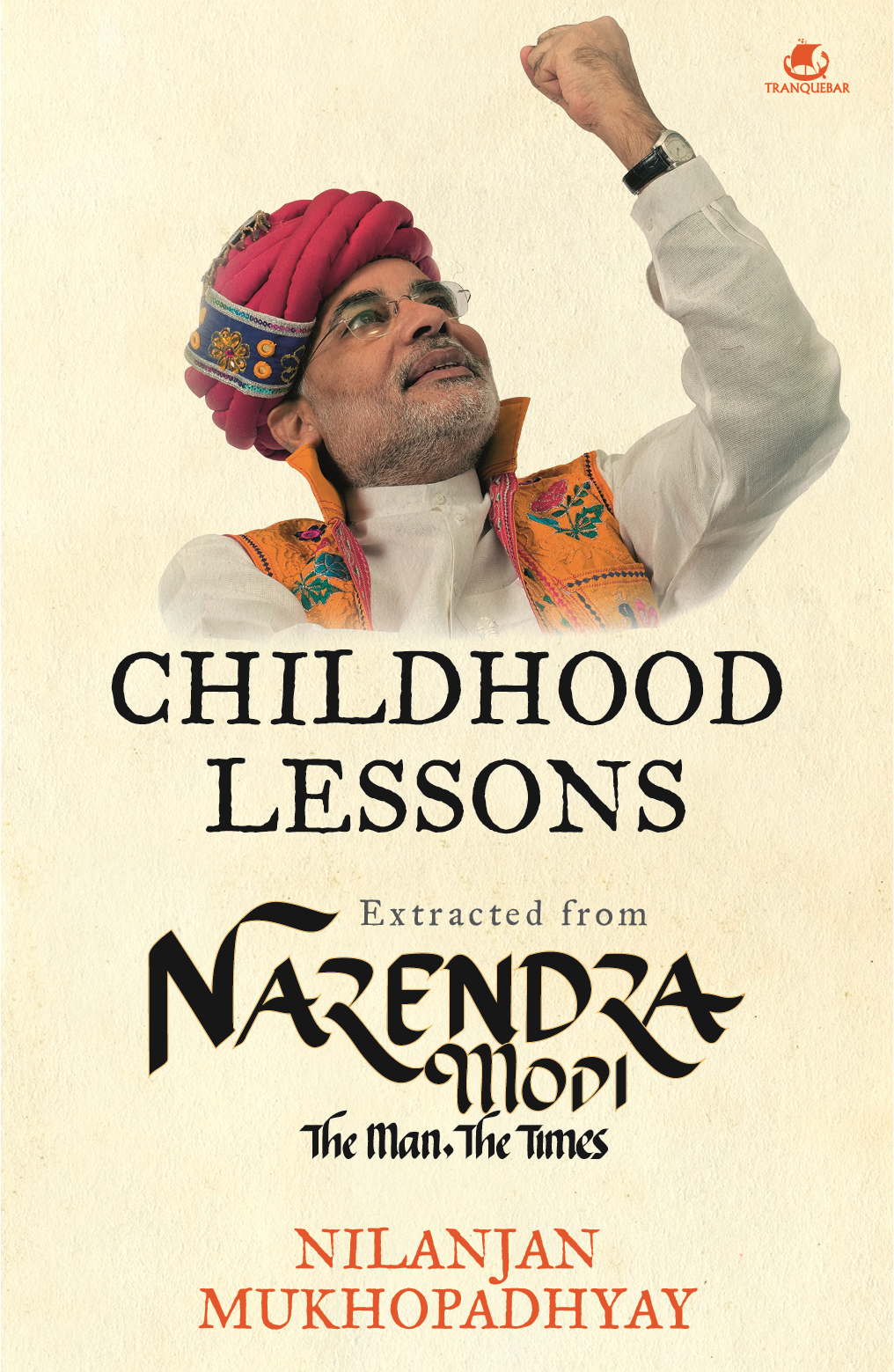
 At a time when global leaders are reaching out to Gujarat Chief Minister Narendra Modi after ostracising him for more than a decade for his role in abetting the 2002 riots in the western state he rules, a comprehensive biography of the man is more than the need of the hour.
Modi is either demonised as a “mass murderer” by his political rivals or is enthusiastically hailed as a “messiah” by those swayed by his ideology. Nilanjan Mukhopadhyay, a journalist for three decades, points out that such a description of Modi is flawed as both these extremes see the man either through the prism of the 2002 riots or through the model of development that he represents.
The book is also interesting in the context of the ongoing war of words over the BJP’s likely prime ministerial candidate with Narendra Modi throwing his hat in the ring. Naturally, the urge to know Modi gets stronger. Mukhopadhyay’s book fills this void about the man.
Of course, there have been books in the past that have portrayed Modi as a builder of a modern state. Unlike other books, this one explores and explains what went into the making of Narendra Modi and his rise.
The veteran journalist who authored The Demolition: India at the Crossroads undertook several in-depth interviews, meticulous research and extensive travel through Gujarat to unravel the persona of Modi. In doing so, he brings out unknown aspects of the Modi story. We learn that as a six-year-old boy in Vadnagar in Mehsana district, 80 kilometres off Ahmedabad, he sold tea to help his father, that he distributed badges and raised slogans at the behest of a local political leader, that he abandoned his family and his wife, Jashodabhai Chimanlal, in pursuit of successful public life.
The book tracks Modi’s initiation into the Sangh Parivar as a fledgling who ran errands for his seniors; his idea of Gujarati pride and Indian-ness and finally his meteoric rise which gave him a distinct identity post the 2002 Godhra riots. In his search for a definitive biography of a man who may have challenged the basic principles of a sovereign secular nation but emerged at its destination as an undisputed and larger-than-life leader, Mukhopadhyay weaves together the events, themes, trends and personalities from 1950 till the first decade of the 21st century and how each of them moulded the Modi we know and how he has responded and invented himself to emerge stronger.
Even as the 17 chapters in the book are interesting both from the academic and popular points of view, the chapter on The Modi Kurta that dwells on the leader’s preoccupation with his sartorial exterior will interest Modi-backers and baiters equally. Mukhopadhyay quotes an associate who has known the leader for long that Modi’s effort is always to look distinct and stand out in a crowd.
Taking this observation, the author has investigated Chauhan Brothers of Jade Blue who every year sell more than 10,000 Modi kurtas. The author notes that the kurta is no more a merchandise but has become a symbol of the man: “…the catchline is simple; see a half-sleeved kurta and Modi comes to mind.” May be the Modi kurta is in the tradition of distinctive dressing styles cultivated by Indian political leaders – Gandhi’s loincloth that represented millions of poor, a jacket named after Nehru, among others.
Also documented in the book is Modi’s weakness for the designer Mont Blanc fountain pens and designer watches. The favourite brand of the RSS pracharak-turned-chief Minister is Movado. For spectacle frames, he prefers mainly Bvlgari, notes the author.
Though obviously fashion conscious, Modi is a frugal eater and has simple eating habits. Mindful of his image, Modi has a significant presence in cyberspace and is there in Twitter, Facebook, Google Plus and You Tube.
Though Mukopadhyay, a journalist for three decades, managed to interview Modi for the book, as the book took final shape the subject became incommunicado. Nevertheless the book will remain a window on the mind of one of the most significant Indian political leaders of this decade. It is an objective assessment of Modi and not coloured by any ideology and personal whims and fancies of the author.
In his journey into Modi’s past and present and, of course, into his mind, Mukhopadhyay seems to be constantly guided by journalist and Noble laureate Ernest Hemingway’s words: “My aim is to put down what I see in the best and simplest way.”
Author: Nilanjan Mukhopadhyay
Publications: Tranquebar
Edition: Hardcover
ISBN: 978-93-82618-47-8
Pages: 420
Price: Rs 495