 B&E: Advertising through print and electronic platforms is a costly affair for e-commerce firms. Are you looking at social platforms?
Muralikrishnan B. (MB): The first priority of eBay is to expand the e-commerce market. Doing so obviously requires a marketing mix, which further fulfils the objective of communicating our value preposition. And marketing mix changes on the basis of what one wants to communicate. Irrespective of the platform, which can be anything, value proposition matters the most. Channels matter less, knowing your consumer matters more. Marketers need to know where the consumer is. Today, one out of every five minutes online is spent on social media. Hence, if the consumer is at social media, a marketer needs to be there.
B&E: The ‘Marketplace’ model has worked well for many e-tailers around the world. It has for eBay. Can you tell us why?
MB: In Asia, the largest e-commerce business in China is Taubau whose model is marketplace. Similarly, Japan and Korea’s biggest e-commerce businesses Rakuten and Gmarket respectively, have marketplace as their model. The Marketplace model can scale a lot more efficiently than other models, because a marketplace effectively makes an inefficient market efficient. Marketplace brings demand and supply together, which is true to our purpose of creating more opportunities together. When a merchant or an entrepreneur participates in a marketplace, the quality of the services that he offers significantly goes up. This further results in better prices, more variety, better experience for consumers et al. And that’s one of the prime reasons that the marketplace model for eBay has succeeded across the globe.
B&E: Most Indian e-tailers are making losses. Do you think this situation will improve in future?
MB: Business strategies and models vary for different firms. At eBay, we have a successful marketplace model operating. While we have our monetisation structure, we are focused on creating demand, investing in the platform and experience and the business is doing really well. We believe in having the right model to succeed. On the other hand, e-tailers in India can learn from the mistakes they’ve made so far. The point of utmost importance is that companies should have some way of sustainability. Short-term orientation will derail the e-commerce growth that India has witnessed in the last three-to-four years. Focus should be on innovative ways to do things right to make profits.
B&E: Online sales have not risen in proportion to the rate at which the penetration of Internet in India has. Why?
MB: That’s not the case. As per facts, 75-90% was the growth of the e-commerce sector last year and one can’t term it slow. Yes, I admit, there are hurdles and challenges in terms of logistics, coverage and consistency. But contrary to these challenges, in India, e-tailers are trying hard. Our payment gateways are getting better. Vendors, merchants and brands are increasingly showing their interest in e-commerce. While there are challenges, we are seeing positive changes. For instance, if people don’t have credit cards, they are using debit cards, net banking, cash on delivery et al.
B&E: What is eBay India’s strategy of growth at present?
MA: eBay’s focus is to present its customers with world-class services and product offerings without charging them a premium services. And it would be right to say that online retailing holds great promise.
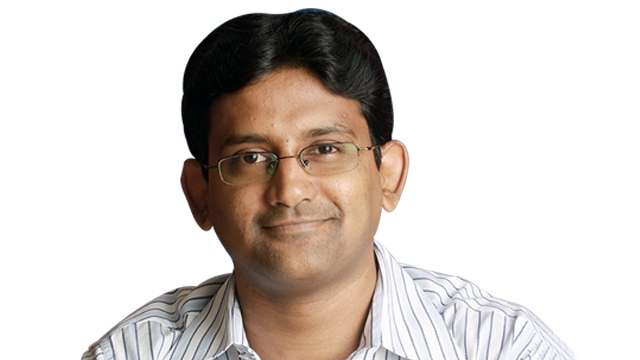
Muralikrishnan B, Country Manager, eBay India