The Theory of Inside’o’mania
The ‘Insider’ versus ‘Outsider’ question has for long been debated over. One school of thought claims that firms that train insiders gain because the Insider is simply not an Outsider and brings company-specific knowledge to the fore. The other recommends Outsider CEOs as he brings new energy and skill-set into the firm.
Studies in this respect are not hard to come by. Over the last few decades, researchers like Zajac (1990), Kesner and Dalton (1994), Wiersema (1995), Harris and Helfat (1997), Shen and Cannella (2002), Zhang (2008) and others have toyed with the idea of how the ‘Insider versus Outsider’ theory plays out when it comes to organisational outcomes. While a handful of Outsiders have made companies shine (and play ‘Rescue-Jack’) – like Ford’s Alan Mulally and Boeing’s James McNerney – that this superstar lot is a lot less immune to failure is a fact exposed. Classic failures – like Chrysler’s Robert Nardelli (brought in from Home Depot), GM’s Ed Whitacre (ex-AT&T), J. C. Penney’s Ron Johnson (ex-Apple), Supervalu’s Craig Herket (ex-Wal-Mart), HP’s Leo Apotheker (ex-SAP), Apple’s John Sculley (ex-PepsiCo), Xerox’s Richard Thoman (ex-IBM), Enron’s Jeff Skilling (ex-McKinsey), KMart’s Charles Conaway (ex-CVS), Yahoo’s Scott Thompson (ex-PayPal) – establish the validity of the argument that globally, it is the Insider who influences a spike in the value of a corporations.
Grow your own.
In this ‘Outsider-Insider’ soap, the science of succession planning – the practice of training ‘Insider’s for the top job – has already become conscience for many corporations. It isn’t shocking that companies today are focusing more on grooming talent indoors, getting high-potential employees laced-up to assume strategic decision-making responsibilities. Whether it be through ‘rigorous off-the-job training sessions’, ‘stretch assignments across work-units’ or simply ‘silent motivation’, high-achievers from within organisations are being rewarded for the promise they hold and the performance they deliver.
While last year, Booz & Co. had reported (in its 12th Annual CEO Succession Report) that of those CEOs sacked in 2011, 37.8% were Outsiders as compared to just 18% who were Insiders, its 2013 CEO Study (‘Time for New CEOs’), that analysed outcomes and events at 2,500 of the world’s largest public companies, reports that not only did ‘Planned succession’ account for 72% of all CEO turnovers in 2012, making it the highest in the past 13 years, of those who were made CEOs in between 2009 and 2012, 71-80% were ‘Insiders’, with 25% having worked at the same company for their entire career. This is a clear sign that companies today are increasingly betting bigger on ‘Insiders’ than they were in the past.
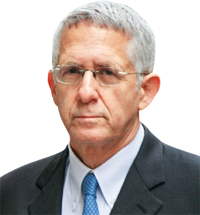
In this Cornell-IIPM Think Tank- B&E joint study, Prof. Samuel Bacharach, the McKelvey-Grant professor in the department of Organizational Behavior at Cornell University’s ILR School, brings to the table his three decade-long experience in leadership development programmes. He writes on why training ‘Insiders’ is important in a world where organisational commitment is a rare quality. Prof. Bacharach writes on how to identify high-potential employees and what should be the form and shape of good training programmes.
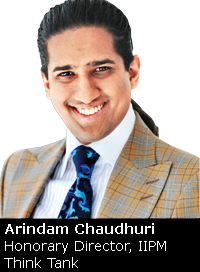 The second part is a joint write-up by two experts on management – Prof. Arindam Chaudhuri (Honorary Dean – IIPM Think Tank) and Prof. A. Sandeep (Group Editorial Director – Daily Indian Media). They blow apart the myth of the superstar ‘Outsider’ proving how successful corporations across the world – like Apple, GE, IBM, P&G, 3M, PepsiCo, Coca-Cola, Southwest, GM, Verizon, Cardinal Health and many others – are putting Prof. Bacharach’s theory of ‘Identifying and training high-potential Insiders’ into practice.
It is unlikely that there will be a quick end to this debate on ‘Insiders’ versus ‘Outsiders’. Perhaps, the future might see a change in perspective from these high-achieving corporations for whom the sole objective is only to glorify CEOs who honour and follow the commandment of maximisation of shareholder wealth. There could be a few Outsider faces that may influence the change in thought in times to come. But till then, it be better understood that accountability across employee ranks will only sink in deeper if Insiders are given the charge. Dig into this joint-study, and learn why.