What are your most powerful leadership techniques?
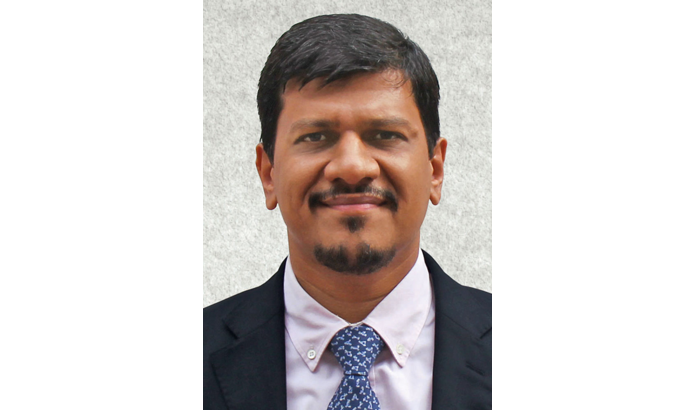
Ritum Jain (RJ): I believe that as a good leader, my primary role is that of a visionary who has to inspire and drive his people towards a collective goal. The “must practise” technique for a good leader is to become a people’s person.
“A good leader can’t get too far ahead of his followers.” Franklin D. Roosevelt US President 1933-1945
I believe in the following techniques:
* Leading by example and “Walk the Talk”
* Rewarding Talent to motivate and inspire people
* Making people accountable. Empowering them and letting them own their work.
* Effective Listening
* Looking at the “Big Picture” and making sure that employees are aligned with the company’s vision and mission.
* Involve everyone and communicate
These are my personal mantras of working. I believe that one should always look at a “win-win situation” for both the company’s goals and employee’s personal goals. If my team feels motivated and energized, it is more likely to becreative and productive and people will be highly unlikely to leave the company.
Aristotle once said -the hardest victory is the victory over self.
What are the self-mastery secrets that make you the world class leader that you are?
(RJ): The fast-paced growth in technology, global connectivity, increased awareness and the unified global economy means that rapid change is now the newnormal. Hence my biggest challenge was to break out of my comfort zone and embrace and ride the new wave of change by re-inventing and re-building myself.
Some of the ways by which I keep abreast of the changes and keep evolving are:
* Periodic Self-assessment and Opportunity Audit
I continuously assess my decisions, thoughts, beliefs, strengths and weaknesses to see whether I am still relevant and in with the times. A close analysis of trends, environments, fads and opportunities keeps me in a better place to predict and take early steps to leverage new opportunities.
* Constantly Play Devil’s Advocate
I firmly believe that before taking any decision one should look at all its possible implications and likely ramifications. This often uncovers gaps and holes in my thinking and helps in making better decisions while ironing out any unreasonable biases that appear in my logic.
* Regularlystimulate the brain
Great books are like food for the soul and a constant source of inspiration, ideas and new thoughts. Reading books and articles outside my area of expertise also help me see new ideas and possibilities andstimulate my thinking.
As they say:
“Becoming the best version of yourself will equip you to spark change in others.” -Thai Nguyen
What according to you is the one most important quality of a leader?
For a leader, it’s most critical to have a strong character and a “never die” spirit with an unquenchable thirst to succeed. A leader in my opinion is a coach who inspires, mentors and motivates his team to achieve a common goal.
“Outstanding leaders go out of their way to boost the self-esteem of their personnel. If people believe in themselves, it’s amazing what they can accomplish” – Sam Walton
Can we teach people to become better leaders?
(RJ): Everyone has the potential to be a great leader.However, most do not have the drive nor the discipline to see it through because it requires hard work, a lot of mental and physical energy and it does not happen overnight. Great leaders aren’t born, as some people suggest; instead, they are shaped over time.
How important is team work in achieving success? The secret to building a strong and efficient team?
(RJ): In business, as in real life, people will do their best only if they feel motivated to achieve something bigger than what they currently have. It can be done only if people work as a team where one complements/offsetsthe other’s strengths/weaknesses. A company can only succeed when its employees work as a united team.
It is most important to have a keen understanding of your people, their core strengths and pain points and what gets them excited and de-motivated. Management of people’s egos and their constant demand for attention and recognition is also very important.In essence it is the “art and science of people management.”
The key to successful teams is the ability to create unity in diversity and generate a healthy respect amongst team members for each other’s competencies.
As a leader, one has to play a pivotal role in creating a unified team that can work and achieve great things together. Some things to keep in mind while creating a team:
*Ensure that every team member has a well-defined role.
*Establish the importance of each role and responsibility.
*Set clear goals and expectations.
* Continuous training for continuous improvement.
* Ensure that complicated issues and problems are addressed collaboratively by everyone in the team.
* Discuss and talk about failures as successes – both are great learning and bonding opportunities for teams.
* Regular monitoring and feedback
Team Building is definitely not a one-time activity. One has to be committed and view it as a long-term project with continuous work on improvements, ideas, functions, etc.
The secret to getting more done in a day as compared to others.
(RJ): I am a firm believer in “work smarter, not harder.” I don’t see time management as cramming my day with numerous tasks, rather about prioritising and re-arranging work based on its relative importance. This ensures thatmost pressing and important tasks get done immediately and non-core tasks either get delegated or eliminated.
Another limiting factor is the real understanding of how “real time,” which is different from clock time, works. Since real time is mental and created by us, we can manage it and remove the self-limiting thought of “not having enough time.”
As it is said there are only three waysreal time gets spent – thinking, conversingor executing. As a leader, while you cannot eliminate interruptions, you can decide how much time to spend on each task.
Some concrete things one can do to manage time:
* Start Early –it gives you more hours to achieve things
* Utilise every minute of your waiting time – on the plane, in the car, etc.
*Prioritise work while ensuring that every work is assigned a certain time limit.
*Plan your day – have a to do list.
*Decide before every call and task –desired outcome and time limit
*Practise not answering un-important emails. Replies can wait until other important tasks are done.
* Either delegate or discard un-important work
* Take frequent breaks for a quick recharge- this ensures you are extremely efficient and productive during the period you are working
* Know and plan for your limitations
* Avoid procrastination.
These time management strategies have significantly enhanced productivity in my life.
The motivation secrets of a leader-how do you inspire and sustain motivation?
(RJ): As a leader, my key task is to keep my team and myself motivated. However, we know that staying motivated in today’s economy and work reality can be difficult for anyone. Hence, one has to take responsibility for motivating oneself and others and to become a true inspiration. As a leader, my engagement and commitmentleveltowards my work are always high, thus keeping me focused and motivated to achieve success. This rubs off on my team as well.
One of my ways of self-motivation is constantly challenging myself to achieve new goals. As long as there are challenges in front of me that keep stretching me to grow, I’m motivated. I also try to congratulate myself on every achievement and use positive affirmations and self-talk.
“My biggest motivation? Just to keep challenging myself. I see life almost like one long university education that I never had – every day I’m learning something new.”-Sir Richard Branson, the founder of Virgin Group
The secret to handling failure effectively?
(RJ): Being a part of the relatively small players in the big detergent industry dominated by MNCs we are no strangers to failures. However, we strongly believe in the “wisdom of failure” and have always learnt valuable lessons from them. I firmly believe that failure makes you a stronger and a more resilient person as failure is the most powerful source for know-how and understanding. It teaches you about survival, renewal and reinvention of yourself and the organization you are leading.
The best strategy to handle failures is to be aware of the “possibility of failure” and its implication. This helps in keeping a backup plan in place so that we can react quickly and get back on track. It is also critical to be able to understand when we are failing and the root cause for failure. One of the biggest pitfalls to watch out for is the “blame game”- as it leads to increasing negativity and erosion of learning.
How do you prioritize work and life?
(RJ): Work/life balance is very difficult if you do not plan for it. Hence we must be aware that we cannot do everything.We need to decide on things, which need to be pursued or abandoned and then wecan engage meaningfully with work, family, and community. By keeping a sound balance by never losing focus on the reasons why we are working and what we want to achieve in both work and family,we can lead a well-balanced life.
Family and friends are the most important part of life and they should always be our top priority.Socialize and share with peers, take some time to relax and recharge.
Avoid multitasking. Choose tasks to work on and delegate when it makes sense.
Technology is a boon – use it extensively.
Some of the books which have greatly helped me – Off Balance-by Matthew Kelly, The Power of Full Engagement by Jim Loehr, Tony Schwartz, Zen and the Art of Motorcycle Maintenance- by Robert Pirsig, Life Matters-by Roger Merrill, Rebecca Merrill
Leaders you admire?
(RJ): There are many exceptional leaders that we have had in India and abroad, who are always worth mentioning, they truly set an example for others like us with their performance.
There are many business leaders who inspire me – some of them are our Mr. RatanTata , Mr. Adi Godrej, Mr. AzimPremji, Mr Sunil Mittal , Mr. Kushal Pal Singh, Mr. YogeshChanderDeveshwar and still many more.
They have all been exceptional go-getters, with great thought leadership, people skills, foresight, perseverance and ability to translate words into action.
Your views on the leadership skills of the next generation of leaders?
(RJ): The world is in a state of utter chaos,where everything is happening at a frantic pace. People are far more aware and connected and new products can be quickly and effectively copied.This is a new world where old rules do not apply anymore and hence the next generation leader will have to learn to do more and know more.Certain skills such as communicating a clear vision, possessing deep character, and utilizing a solid strategy were needed a century ago—and they’re needed today.
A few home-truths-
* One cannot gain either respect or trust just by the virtue of birth -it must be earned.
* A leader should look at igniting passion in his team because only passionate people are committed enough to adapt and stay the course in these volatile times.
* Relationships come before results. Both are essential.
*The extremely aware, logical, conscious, thinking workforce of today wants to know “why” not just “what” to do- hence we must always involve our team from the inception of any project.
* Innovation is the key in everything that you practise.
This requires the next generation leaders to have additional skills of agility – in assimilating information and trends, processing data and execution, along with the ability to connect with their employees.
Best advice you can give to the future leaders
(RJ): Business is only getting more complicated. Understanding the interactions of various aspects of business becomes very important. The fact is, everything is changing and the organizations that survive will not only endure these changes, but employ them.
Hence the necessary skills to develop are: Soft skills (people skills) and Technology familiarity and conservation –as we live in a world of limited resources and growing population.
All the best!