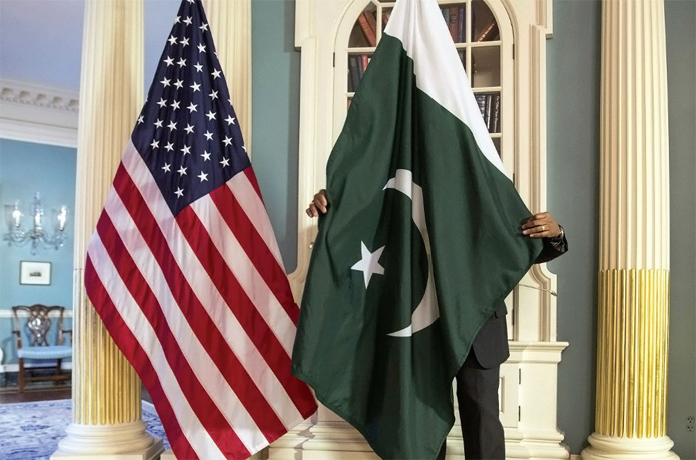
The US is planning to change its strategy for Central Asia and Afghanistan with a new approach just to bypass Pakistan which has been till recently dubbed as a frontline state in the fight against terrorism.
US President Donald Trump has instructed his National Security Advisor and Pentagon that too much liberty for Pakistan must stop and the US should rope in Central Asian states for providing logistics to NATO troops deployed in Afghanistan.
As the US is preparing for this showdown with Pakistan in a proper planning, Central Asian state Kazakhstan has figured as its key ally in the war against terrorism and ensuring peace and stability in Afghanistan.
This will create a void for Pakistan which is currently engaged in behind-the-scene talks with the US for release of US aid and pending money.
Indeed, Pakistan has always been in the minds of US strategists as a legitimate player for the US action plan after decades of close cooperation and trust. But now there is a change of thinking.
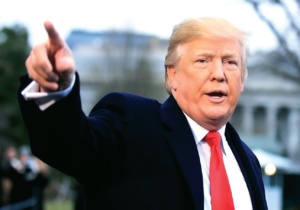 This is mainly due to Pakistan’s unwillingness to toe US line in any format despite taking Coalition Support Funds. That has not only angered Trump administration because the ego is hurt and rubbed, yet there is a sense of frustration as well leading to dismay.
The US is now keen to mend ties with Russia at least temporarily and court Central Asian states for its operations. In the whole strategy Kazakhstan has figured heavily.
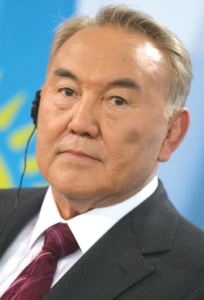
Kazakhstan President Nursultan Nazarbayev who visited the US in January this year has achieved many diplomatic applauses of more being a mediator than a statesman. There was less for Kazakhstan as such from this visit but the president has achieved lifetime rewards from the US on many fronts.
Now Nazarbayev will act as a go-between for US and Russia and he openly expressed hope for the normalisation of the dialogue between Washington and Moscow during his visit to White House when he met President Donald Trump in mid-January.
Nazarbayev has also agreed to host a meeting involving Russia and the US and his own country sometime later this year to sort out the differences between the two strong powers who have immense interests in the Central Asian region. Kazakhstan is now central point of US strategy towards Central Asia, including Afghanistan.
The US is planning to teach Pakistan a lesson only if Kazakhstan agrees to accept its demand and facilitate US requests without much delay. In fact, in coming months Trump policy towards Afghanistan is going to be more aggressive.
The US has also sought Kazakh support for the issue of Afghanistan. Since Pakistan issue is getting out of control, the US is thinking of alternate routes to Afghanistan for which Nazarbayev has agreed to open the routes – both air and sea.
On the top of it, Kazakhstan will host series of US military and intelligence operations in the region in coming months and years as President Trump has made a deal with him during his visit.
In return, Nazarbayev will get US recognition and play a larger role which will in turn legitimise his rule in Kazakhstan. Also, once Kazakhstan will be a strategic partner for the US, American opposition to Kazakhstan in various international forums will reduce.
In fact, Trump and Nazarbayev had first met in Riyadh on the sidelines of the Arab Islamic American Summit in May 2017 and before that Nazarbayev had attended Nuclear Security Summit in 2016.
It was the second time the two have met, the first time taking place in Saudi Arabia during Trump’s visit there last May. This was the first working visit by the head of state from a Central Asian republic to the White House since Trump’s inauguration almost one year ago.
Trump and Nazarbayev had first met in Riyadh on the sidelines of the Arab Islamic American Summit in May 2017
The Afghanistan issue had figured prominently as is non-proliferation issue of North Korea; both issues were perennial when it came to Central Asian leaders’ visits to the United States.
This pair of issues is also newly relevant, with the ongoing war in Afghanistan entering a new phase and the crisis of North Korea’s nuclear ambitions building throughout 2017. Non-proliferation is a cause near and dear to the Kazakh heart, given that the country relinquished the large Soviet arsenal of nuclear weapons it had inherited in 1991 when the Soviet Union collapsed.
On Afghanistan, the Trump administration’s South Asia strategy and the administration’s repeated calling out of Pakistan as a terrorist safe haven have the potential to resurrect Central Asia’s policy importance in Washington.
For better or worse, Central Asia, in the last two decades, has always been linked to the issue of Afghanistan in the American mind. Kazakhstan, as the region’s largest economy, is also the region’s most internationally active state.
 On top of that, Nazarbayev’s visit also came on the heels of the newly released national security strategy which the US is keen to pursue strongly.
As per this strategy, the US will seek Central Asian states that are resilient against domination by rival powers, are resistant to becoming jihadist safe havens, and prioritise reforms.
But in order to achieve these goals, the US must prove that it is a serious player in the region– not through words, but through actions. Kazakhstan is at the heart of a region where many of America’s global challenges meet, whether it be energy security, nuclear non-proliferation, an emboldened China, a resurgent Russia, Afghanistan on the brink, or the increasing threat of extremism.
Nazarbayev’s visit to US was timely, and offered Trump an opportunity to demonstrate America’s geopolitical, security and economic interests in Central Asia.
The US has developed good relations with Kazakhstan since the 1990s. Those ties are still going strong, but more can be done. Indeed, Central Asia is a region often ignored by US policymakers until it is too late.
In the early 1990s after the fall of the Iron Curtain, the US began to pursue relations with these newly independent republics. But after a few years, that initial enthusiasm for engagement in the region petered out.
This quickly changed, though, after the tragic events of 9/11. In the aftermath of the terrorist attacks, the US had to scramble to rebuild relations with the region. For several years, Central Asia became vitally important for US anti-terrorism operations in Afghanistan.
In fact, Central Asia has sat at a crucial geopolitical crossroads for the Eurasian landmass for centuries. Kazakhstan is located in the heart of Eurasia and is a regional leader in terms of economic security, counterterrorism and energy matters.
It is in America’s interests to have good relations with countries in the region– especially Kazakhstan, which is America’s natural ally there. Kazakhstan’s role as nonpermanent member of the United Nations Security Council has been appreciated in view of North Korea’s deadly nuclear aspirations.
Due to US request for a regional role for Kazakhstan, Nazarbayev wanted to meet Trump face to face seeking clarity on US policy towards China and Russia.
Both are hostile to the US in the region. Due to its geographical location and history, Kazakhstan is a balancing power. Kazakhstan has to balance its foreign and regional relations among Russia, the US and China– without antagonising any of these great powers.
 Another aspect of the national security strategy worth noting is that Central Asia is acknowledged as being important for the military mission in Afghanistan once again.
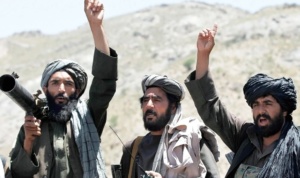
A key plank of the Trump administration strategy towards Afghanistan is pressuring Pakistan to end its support for the Taliban and associated groups.
A consequence of this approach with Islamabad might be that the ground and air re-supplies transiting Pakistani territory could be cut off or stopped altogether. If this happens, Central Asia could again become vital for the military effort in Afghanistan.
Already, the two countries recently concluded an air navigation agreement, which will strengthen bilateral ties by easing the travel of senior officials between the US and Kazakhstan.
This might lead to stationing of few hundred US military and intelligence officials in Kazakhstan to supervise Afghanistan operations. The US is planning to leave Paki territory for the purpose. Then the showdown with Pakistan can be inevitable.