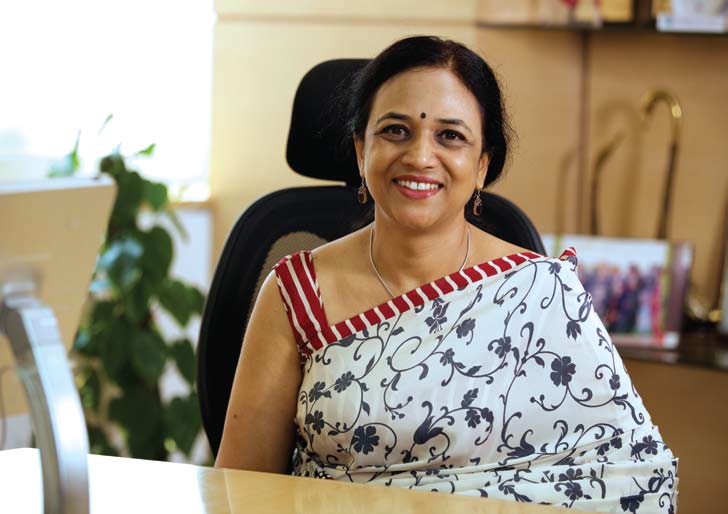
What has been your journey like as an HR professional?
A. With a qualification in Electronics & Electrical engineering from BITS Pilani, I started my career in a technical role. However, while managing teams and interacting with my team members, I realised my deep interest in people processes, hence I decided to harness this passion into being a HR professional. I then leveraged my learning orientation to transition my career from an Engineer to a Human Resource professional and worked in diverse areas such as Talent Management, Career/ Succession Planning, Organisation Capability, Change Management, Leadership Development, Employee Engagement, Compensation and Organization Design. In my experience, HR is an extremely rewarding profession, with opportunities to contribute to people’s careers and organization’s evolution.
Q. What were the biggest challenges you faced?
A. The challenges that I faced during my journey were no different from that of any other woman aspiring to grow in her career. I recognised the salience of setting and managing expectations, of always having self-belief and conviction and always aiming high. The biggest challenge that many women articulate and one that I faced as well, was to be able to juggle between work and home. During my journey, I understood that work life balance incorporates both family and work and not one pitted against the other. I also learnt that it takes hard work, discipline and passion to reach the goal one aspires for.
Q. What are the challenges HR faces in the new era of the ‘digital age’?
A. We believe that digitisation is an opportunity rather than a challenge. Today, HR as a function, has evolved into a strategic business partner, responsible for overall workforce management and talent development, aimed at achieving the core goals and business objectives of an organisation. HR is leveraging the fast paced digitalrevolution to make the best use of it and generate efficient solutions for its employees at all levels.
At Schneider Electric, digitisation is at the core of all our processes as well as services. There is a gamut of software tools that provide analytics for managing various stages of employee life cycle.In fact it’s a common practise in the industry today to use several predictive tools for sourcing profiles of candidates from the social media, for hiring the best talent and for developing, retaining and engaging talent.
That said, I believe, it completely depends on an organisation,as to how efficiently it makes use of the digital era to ensure utmost benefits in this imagination age.
Q. Any advice you would like to give on how to manage people/teams as the workforce becomes more diverse
Diversity is the need of the hour in this age of dynamic competition and market volatility. A diverse workforce brings with it a rich fabric of skills and innovative thought processes, varied talent, wide ranging perspectives and different experiences, which are the fundamental requirements for the success of an organisation. Diversity needs to be envisioned as a strategic business imperative that brings people with diverse perspectives together to deliver to common business challenges.
To uphold their commitment towards diversity, organisations need to integrate their people practices with diversity principles. Every organisation needs to have diversityin skill sets, perspectives, thoughts and attitudes, culture and at the same time support and encourage gender balance. To be able to manage diversity well organizations need to focus on employee friendly policies and processes that help in nurturing an open and inclusive culture. Its imperitive that they design interventions that help employees understand and support the organisation’s diversity objectives. It’s equally important to coach and sensitise managers to effectively lead diverse teams.
Q. How effective and how important are rewards and recognitions in strengthening employee engagement and retention?
A. Employees drive the success of an organization. Employee engagement is a result of a multi-pronged strategy of an organization, which not only has a well defined rewards and recognition plan, but also a number of other initiatives that ensuresthe well-being of its employees. It is important for organizations to createa work environment that is motivating, inspiring and employee friendly and provides psychological security to the people.
A robust and fair system that rewardsemployees for short term and long term contributions, as well as provides a continuous opportunity for consistent recognition, is the key to employee engagement and retention. To ensure that your best talent never leaves you create an environment that inspires creativity and innovative thinking. Make progressive policies that help encourage openess , that help in building trust andmake employees feel empowered.
Q. How can a company attract the best people? What is the secret to hiring the right candidate?
A. There is no one silver bullet for attracting the best people, there are multiple factors which come into play simultaneously. Today candidates live in what is called the‘Zero Moment of Truth’. This means that they get to know and virtually experience the culture of an organisation through various sources like Glassdoor, Jobvite, LinkedIn and more. This makes it extremely important for organisations to have a strong social media presence and focus on employer branding. In a world with easily accessible information and increased awareness, candidates choose organisations known for their brand, organisational culture, career development opportunities and competitive compensation.
Organisations must communicate to the candidate the importance of their role in contributing towards the overall organisational strategy and its benefits to the company. Sound talent management practices go a long way in attracting top talent. Candidates join organisations that help them meet their career aspirations by offering them growth, learning and development opportunities.
Employee referral is another mechanism that helps companies hire talent that has been pre-screened and recommended by their employees. Good people practices, constantly engaging your employees and having an open and inclusive culture automatically leads to a good brand building in the market and attracts the best people to your organization.
Q. What advice would you give young candidates if they want to stand out and get noticed during an interview?
A. Being well prepared for an interview incorporates a thorough research about the organisation as well as the interview panel. While subject matter expertise is a given, it’s important for candidates to have a positive attitude,good communication skills, ability to adapt, willingness to constantly learn and the ability to collaborate and work in a team. The world has become increasingly connected, competitive and change is now the norm. It’s important to take charge of your career growth, and to constantly learn and keep yourself updated with current affairs, industry trends and most importantly technology. Being relevant is the key to thriving and succeeding in today’s everevolving industry.