In the 2009 Greek Drama Film Kynodontas (Dogtooth), a couple forcibly keeps its three young adult children inside the confines of the house in order to keep them unaffected the “impurities of the outside world.” To achieve that they plan elaborate surreal arrangements which involve giving completely new meaning to new words that the children happen to listen by mistake, in order to make them believe that such a thing (which the word actually represents) does not exist. Or rather nothing else exists apart from what they see inside their premises. So when the son asks what ‘sea’ means, he is coolly explained that it is just a synonym for ‘chair’. Chilling!
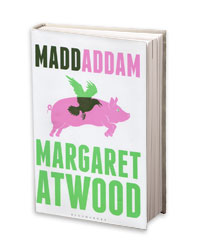
The dystopian world created by Margaret Atwood for her the apocalyptic trilogy that also contains Oryx and Crake and The Year of the Flood apart from the concluding offering Maddaddam, is on the similar lines. The scene where the innocent post-apocalyptic species (devoid of sexual jealousy) ask the remnants of the pre-apocalyptic humans what do they mean when they say “O! Fuck” and are categorically told a misleading explanation, Kynodontas comes into mind.
Dystopia is not a new subject for authors. Different forms and interpretations of the phenomenon have been adapted in various forms of arts with varying degrees of success. Of course George Orwell’s 1984 and Animal Farm can be considered as the representative works of this genre when it comes to fiction.
More often than not apocalypse of both the kinds, triggered by forces outside or under human control, makes the basis for such dystopian world. This is no different. And that also brings me to the point that someone who has not read the previous two books from this series should first read them before venturing into the concluding book. Theoretically speaking Maddaddam can also be read as an independent novel. But that would be a rather difficult task.
In the previous instalment of the series, the world as we see it had been destroyed because of the whims of a scientist who want to create a new, better post apocalyptic world. Maddaddam therefore focuses on the reconstruction of a civilization from the scratch that will in many ways be better that the one that has been destroyed. And there are many groups who operate here. So we have a group called the Gardeners, a sort of environment freaks who keep nature above anything else. They are also the only species from the pre-apocalyptic world and hence the link between the two worlds. Years of frugal and nature-dependent lifestyle taught them skills that helped them survive the apocalypse. Also, many from the group were assisting the mad scientist Crake who triggered the destruction at the first place.
Maddaddam is narrated by Toby, who the readers previously meet in the second instalment Year of the Flood. Toby’s lover Zeb and his brother Adam were the leaders of Gardeners and both of them had been severely abused forcing them to help Crake speed up the destruction of the race. In the concluding novel, Adam has vanished and Gardeners feel helpless. In the opening scene of the novel, Toby and her accomplice Ren saves Amanda, another girl, from two Painballers, feral rapists and cannibals, who want to crush Gardeners and Crakers. Much of the novel then deals with the love between Toby and Zeb and latter’s stories from the pre-apocalyptic world.
These stories offer glimpses to the mad world of yesteryears where Private Corporation ruled the world and conspiracy theories ruled the roost. The section dealing with Zeb’s father who is a “minister at the Church of Petroleum” and his fight against “the Enemies of God’s Holy Oil” is equal part hilarious and chilling.
The strength of the novel is in the way it combines surrealism with stark reality. Or in the way philosophy is injected through humour of all nature.
But the novel, or rather the series, is not without weaknesses. At times, Atwood ventures too close to the world of science fiction for the comfort of serious readers of dystopian genre who fiercely guard the space between the two. Parts of the novel do read like sections from sci-fi novels that come out in hundreds every year.
Also, there has been a bombardment of novels dealing with surrealism and dystopia in the recent times. And say whatever you want but there indeed are some ingredients essential to these novels. Unsurprisingly then, parts of all these novels appear similar in texture. May be it is time to give this genre a break for some years before fresh ideas start germinating.
Having said that I must add that Maddaddam is a just ending to a rollercoaster dystopian ride.