Everything changes, and then it looks as if nothing has changed in an ancient land like India. Just a few kilometers away, people have been vehemently protesting the scheduled arrival of the Pakistani women cricket team to practice and play a World Cup match. Just about a month and a half ago, thousands gathered nearby in the shadows of a majestic fort to celebrate what is called the Bali Yatra. This festival goes back at least two thousand years when brave traders ventured into the Bay of Bengal to travel to lands called Bali, Java and Sumatra (modern day Indonesia).
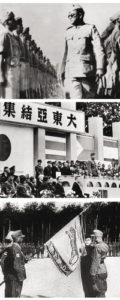
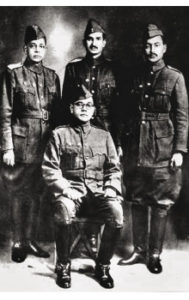
But for the motley crowd gathered in a neighborhood called Odia Bazaar in Cuttack (Odisha) on January 23, 2012 – the sense of history is neither as recent, nor as ancient. They have gathered to celebrate the birth anniversary of one of the most loved, most mysterious, most talked about and perhaps most tragically flawed heroes of 20th century India. Yes, we are talking about Netaji Subhash Chandra Bose, who was born in this very locality in 1897. Typical of how the state works in India, the government of Odisha has declared January 23 as a public holiday. And the sprawling L-shaped house in Odia Bazaar is now a museum that commemorates and celebrates Subhash Bose and his legacy. You can tread gently and gape at the bed in which he slept when he was a student of Stewart School. You can watch the uniform he wore as the Commander of the Indian National Army. You also look at sepia tinted impressions of women soldiers of the Rani of Jhansi Regiment of the INA. A self appointed guide points out how the swords carried by the women soldiers were smaller than those carried by the males. “You see, it was already difficult for the women to carry the heavy .303 Enfield rifles,” he says. The people running the museum have identified five surviving soldiers of the INA belonging to Odisha who actually fought along with the likes of Subhash Bose and Captain Lakhsmi Sehgal in Burma, which is now Myanmar. All are in their nineties and all five will be felicitated during a special function that will be held some days after the birth anniversary.
 These men have grown frail and their memories are failing. But some still have the fire smoldering in their eyes when they recall those ‘heroic’ days of battle against the British forces. Just a short distance away from the now sprawling capital city of Bhubaneswar, with its malls and Infosys offices is a village called Chimpello. This village is known in local folklore as the village of INA soldiers. Hear it from Bramhachari Uttaray, who says he is about 90 years old, “Due to poverty, a group of youths from our village had gone to Rangoon to work as labourers. At Rangoon, we came to know that Netaji had given a call to all Indians to join INA to fight against the British. Under the leadership of Biswanath Samant, 23 of us from the same village joined the INA at Rangoon. We all signed on a paper with our own blood in front of Netaji in a meeting at Mangla in Rangoon to fight for the country. Netaji also put ‘blood tilak’ on our foreheads and told us that it is impossible to get freedom without blood. We all joined the war and fought against the British between 1943 and 1945… my memory fails me now but I can never forget the fiery speeches of Netaji till I die.” These facts become folklore and then mythology with a hop, skip and jump of our collective imaginations!
 If nostalgia were a currency, you could be running a mint near this museum. The men and the women appear suitably awestruck, and some men whisper about how Netaji has always been given a raw deal by the Congress. Some of the louder ones talk of Rahul Gandhi being anointed the heir apparent ready to rule India. They talk of how the Nehru-Gandhi dynasty has always been insecure about the power and influence of Subhash Bose and his so called ability to mesmerise people. Wild conspiracy theories, as is wont with anything to do with Subhash Bose, fly thick and fast as nods and murmurs of encouragement lead to further criticism of dynastic politics practiced by the Nehru- Gandhi family. Incidentally, but for a five year spell when the Congress had won a surprise victory, the father-son duo of the late Biju Patnaik and Naveen Patnaik have ruled Odisha as chief ministers since 1990.
Even the most wildly optimistic of devotees (for that is what they actually are) of Netaji would accept that Subhash Bose is certainly not alive anymore. Had he been, Bose would have celebrated his 116th birth anniversary this year. But right till the 1990s and beyond, there have been a large number of Indians who refused to believe that he had died. Officially, Subhash Bose died after his plane crashed in August 1945 at what is now called Taiwan when the Japanese armed forces were getting annihilated by the Allies at the fag end of the Second World War. But so widespread has been skepticism about his purported death that successive governments have been forced to appoint three Inquiry Commissions to find out if he actually died or not in that plane crash in Taiwan. The first two commissions concluded that Bose had indeed been killed in that plane crash. But his devotees refused to accept the findings. Some said he was leading a retired life in Soviet Union. Some said he was a wandering mendicant who donned the robes of a sadhu and roamed around India. During the 1980s, there was a furore when a ‘Gumnami’ baba died in Faizabad near Ayodhya. Apparently, many possessions found in his room clearly established that Gumnami baba was none other than Subhash Bose. Neither the mainstream media nor the government paid much attention to these claims. But his devotees would eventually get their chance to take another shot at truth.
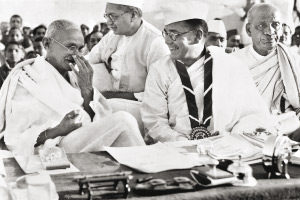
In 1998, an NDA government led by the BJP was in power in Delhi. The Calcutta High Court asked the government to conduct a vigorous enquiry into the claims and counter claims about the whereabouts, including death of Netaji. In 1999, the government under Atal Bihari Vajpayee formed a one member commission of enquiry under Justice Manoj Mukherjee, a retired Supreme Court judge. The Mukherjee Commission travelled to Taiwan, Japan, Russia and Britain to ascertain what it could through archives. According to the Commission, it faced brick walls of indifference, non cooperation and even hostility everywhere except in Taiwan where it was given full access to the archives. Eventually, the Commission came to three significant conclusions. The first was that Subhash Bose was indeed dead. The second was that he did not die in that plane crash in Taiwan. The third was that he escaped to Soviet Union during the end of the Second World War. The Commission also said that it could not say anything about the whereabouts of Subhash Bose after that because it could find no evidence. By the time the Mukherjee Commission submitted its report in 2006, the Nehru-Gandhi dynasty was back to ruling India, albeit from behind the scenes by appointing Manmohan Singh as the prime minister. The then Union Home Minister Shivraj Patil, notorious for changing his clothes before giving interviews about repeated bomb blasts, flatly refused to accept the findings. And so the controversy rages on. “There should not be any doubt that particularly from the late 1930s, the Congress has thoroughly tried to ignore Subhash Bose. In my opinion, in terms of love for the nation, both Netaji and Mahatma Gandhi have been very close to each other. But it is because of Nehruvian politics that Bose has remained nothing more than a forgotten hero in our history books. I do believe that if Gandhiji and Congress had given more attention to Netaji, the history of modern India would have been completely different,” says Dr Asim Chaoudhry, Editor of Samajbadi Bhabana, a Bengali bi-monthly.
 Let us forget about this unending controversy for the moment and try to understand the psychology behind this devotion to Bose. When it comes to ‘nationalist’ parties like the BJP, the motivation is very clear. Subhash Bose and Bhagat Singh were true nationalists, ergo they must join the pantheon of ‘genuine’ nationalists revered by these parties. But there is a deep irony here. By all accounts, Bhagat Singh would have been a card carrying member of either the CPI or the CPI(M) if he had not been hanged by the British. Even Subhash Bose, if one reads his writings and letters carefully, was in favour of the Soviet Union style autocracy for “at least 20 years” to transform India. Though he did visit Germany, meet Hitler and gave speeches against the British, his subsequent letters clearly signal a move towards the Stalin model of leadership and nation building.
But what about normal folk like us? The fact is, we love tragic heroes and their star crossed destinies. And we do not mind if our heroes were flawed. Just look at the Mahabharata. Do a straw opinion poll and you will discover that Karna is the favourite character for most Indians. His destiny was doomed right from his birth. Despite being the eldest of the sons of Kunti, Karna actually fought with the Kauravas against the Pandavas and died a tragic death at the hands of his younger brother. That is why we so deeply revere Bhagat Singh, no matter what Mahatma Gandhi and Nehru had to say about his tactics and methods. Some of the biggest hits of Bollywood have been those in which the hero dies in the end. The folklore and near mythology that surrounds the life and times of Subhash Bose reveals another aspect of India. The State, since the times of British rule, simply refuses to share information with citizens citing ‘public interest’. Netaji’s family and researchers allege that hundreds of declassified documents related to the death of Netaji are lying in the PMO and with various spy agencies in India. Their demand that these documents be made available to the public has remained unheeded.
When the State refuses to share information with citizens, folklore takes over. In Odisha, on January 23, people are also celebrating the 204th birth anniversary of Veer Surendra Sai, another forgotten hero. He resisted the British military might for close to five decades before succumbing to their superior power. For people of Odisah, and perhaps also of India, the tragedies of Bose and Sai reflect the tragedy of a civilization in decline. You cannot fight that emotion with logical academic jargon.
As another 90 plus survivor of the INA Kanei Behera says, “I joined the INA when Netaji gave a call to arms. I have seen him several times. No one can ever match what Netaji did for the country. He is like a God. He cannot die”. QED.