
When we watch the HCL TVCs or other promotions on billboards etc., we notice the clear message that the company wants to send out for HCL as a brand – ‘Technology that Touches Lives’. Mr. Kamal Chauhan epitomises this fact about the “3 Cs” of life, which when structured well, can do wonders for an individual. The 3Cs are – Chance, Choice, and, Change. So, when you get the ‘chance’, you should make the right ‘choice’, in order to ‘change’ your lives. Mr. Chauhan has had over 12 years of experience across various verticals of HR and is somebody who amalgamates his nature and attitude quite perfectly with different cultures. His diligent efforts for HCL Technologies in Israel, Japan, and currently Australia, are testimony to his ability to lead teams from different cultural backgrounds with the utmost efficacy. His specialities include managing of global workforce mobility processes and policies, high volume recruitment, employment laws, deployment models, relationship management, M&As, and he is presently loving his tenure in the island continent. Cult acknowledges the high spirit of Mr. Chauhan who has touched excellence in one of the leading brands on the global front and shall continue to inspire the aspirants at IIPM who look forward to make a career in International organisations.
He cherishes the journey that started from IIPM and shares “All that I learned in my two years of IIPM is to think beyond the obvious, including beyond principles of management and economics.” The simple man with high thoughts still keeps up to the old saying, honesty is, and will always be, the best policy.
The following are excerpts from an exclusive Q&A with Team Cult
 Q. Brief us on your corporate career which has been across different international businesses and also on your current role in the HR domain in HCL for the Australia and New Zealand region.
A. My first job was through campus recruitment at IIP M wherein, I was selected to work for Planman Consulting at their Mumbai branch. I think I was not prepared to go onto Mumbai due to my love for Delhi. So I opted to be back in Delhi and I struggled a bit to get my second job which was with a leading search and selection firm where my boss was Mr. Mohit Mohan. He was someone who seemed to be obsessed with perfection and was a kind of master blaster. He was also a subject matter expert and a perfectionist at his work and he demanded nothing less from his team. He made me slog, which pushed me to give my best, he turned out to be my coach & mentor for life. Even today, as and when I am stuck with anything, I always reach out to him and he guides me through my problems. Then I moved on to start my career in the IT industry.I worked with a few small IT companies before landing in HCL Technologies at their Noida office in Feb’03.
Q. How has your journey at HCL been?
A. I joined HCL as an Assistant Manager- Recruitment, primarily handling recruitments for the NCR region; I was involved in multiple HR and resource management projects. My first international experience was to work with one of our customers in Israel. We were setting up an offshore development center for a customer, and I was leading the project on manpower planning and fulfilment for all this ODC while enjoying my interactions with the customer and travelling to Tel Aviv, Jerusalem where I enjoyed my floating experience in the Dead Sea. I had a very successful tenure at Noida before getting a promotion to lead the HR operations for HCL Japan, China and Korea, from an office based in Tokyo in November 2005.
I was then moved on to lead the HR operations for our fairly large business operations in Australia & New Zealand (ANZ) based at Sydney in July 2009. We currently have over 2000 employees who are engaged in delivery services to our customers in the ANZ market.
Australia is a very friendly and open culture. The Australians expect one’s work to speak for itself, so they are not impressed with your position, title or status. So if you plan to work in Australia, don’t arrive in town wearing the latest status symbol to announce how important you think you are.
 “DON’T ARRIVE IN AUSTRALIA WEARING THE LATEST STATUS SYMBOL TO ANNOUNCE YOURSELF”
Q. How was the experience of working in a country like Japan?
A. As expected, it was a culture shock the moment I landed in Tokyo. The cultural difference is visible from the time you arrive at Tokyo’s Narita International Airport – the white-gloved baggage carriers carefully lining up your luggage on the conveyor belt, the incredibly polite customs inspectors, the cleaner standing at the top of the escalator (if you are going down to the Narita Express train station) making sure that the escalator hand rail is clean, the girl on the platform who politely bows to you as you board the train, the ticket inspector on the train who stands at the front of the carriage, removes his hat and bows before proceeding to inspect tickets etc. It is the same when you arrive at your hotel – when the bell-boy bows and opens the door, when the porter shows you more information about the buttons beside your bed than you can possibly remember, they are doing it for you – the customer. When you enter a Japanese store or even a bar, you will be greeted by shouts of ‘irrashaimase’ (welcome) and when you leave there will be shouts of ‘domo arigato gozaimashita’ (thank you) and you will notice that everyone, even the chef will join in the ‘chorus’! You also notice people smoking in zones marked as “manner station”, it is considered as a bad manner to smoke at public places. You also notice early morning Tokyo Metro trains running on time, each time and every time with a much disciplined crowd. The difference you should notice is that they are all very service oriented and of course service is a pillar of the Japanese business culture. Many foreigners confuse the service aspect of Japanese business culture as being simply a part of the Japanese social culture, i.e. people are just being polite. Agreed Japanese society is very polite but all of the people that I have mentioned above were doing their job when you encountered them – a big part of their job is keeping you happy and in Japan that entails good customer service. Unfortunately many foreign company executives doing business in Japan for the first time, do not recognise the differences noted above – primarily because when travelling they are ‘off duty’ – they consider their first encounter with Japanese business culture to be when they arrive at a Japanese customer for their first business meeting.
My stint in Japan, reassured my beliefs in the core values of having a strong business ethics, leading a disciplined life & a service orientation in business. In addition to my interesting innings in Japan, I had an opportunity to be a part of the core team to start our business operations in China. It was a great learning to do the due diligence with various internal and external parties on setting up our development centres in Shanghai.
kamal
Q. What are the various business operations that HCL carries out in Australia?
A. For more than 14 years, HCL in ANZ is helping its customers and industries in ANZ by providing value to their businesses through application development, maintenance and consulting services which helps industries increase productivity, reduce total cost of ownership and enhance customer satisfaction.
HCL was formally incorporated in Australia with independent decision making in 1997. The company is headquartered in Sydney with offices in Melbourne, Brisbane, Auckland & Wellington; servicing clients across Sydney, Melbourne, Brisbane, Perth, Auckland, Hamilton & Wellington.
The driving philosophy of HCL in ANZ is its commitment towards net addition to the local economy. The value HCL delivers to its ANZ customers is clear and measurable productivity, performance & process efficiency improvements through vertical focused approach and balanced portfolio of services.
HCL’s strategic partnership programs run by HCL help take Australian Innovations & IP to markets outside Australia. HCL Australia employs 2000+ professionals of which 30% is the local workforce.
HCL New Zealand is the largest Indiabased global information technology services company in New Zealand and has a local talent pool of 400 staff servicing the region.
The Transformation journey coupled with its employee first philosophy that HCL Technologies spearheaded in mid-2005 has borne fruit and as a result HCL’s ANZ business contribution has made it one of the fastest growing geography in HCL.
Our client base in ANZ includes some of the best known industry names in the Banking & Financial Services, Retail & Consumer Products, Hi-Tech, Manufacturing and State Government. HCL ANZ is proud to have annuity relationships with some of the Top 100 corporate in the region delivering Applications, Consulting, Technology, Operations, and Process & Infrastructure related services. HCL in ANZ is looking to leverage from its global experience in multi-year, multi-service and multi-million-dollar co-sourcing Partnership and offer its integrated services to customers in ANZ.
HCL in ANZ is focused in providing software-led IT solutions, remote infrastructure management services and BPO services.
 Q. How is human capital management different in ANZ viz-a-viz South Asia?
A. Australia has a strong labour market, and its continued low unemployment confirms the underlying strength of the Australian economy. Moreover the Australian Government continues to invest in skills, training and education. Its ongoing success in the face of a world in financial crisis is due to its effective skilled migration policy which has been used to bolster Australia’s economic growth and development. There has been a demand, supply gap in various sectors which pushes corporates in ramping up their offerings in a bid to attract and retain talented employees in today’s world where the playing field of competition for talent becomes increasingly global. Top HR issues here include talent attraction and retention.
Q. What prompted you to join the Masters course at the University of Sydney at this stage in your career?
A. I did not want to miss the opportunity of higher studies while being close to some of the best universities in the world and it always helps to study a specialised field of one’s interest. I am pursuing a Master of labour laws and relations degree at the University of Sydney. This helps me to get a good perspective on legal aspects of engaging with a global workforce.
Moreover, going to university keeps you young!
Q. Being associated with the world of HR on the international front, how do you feel HR will evolve in its role in international business?
A. To me, international business is a subset of globalisation which facilitates free movement of people, goods, capital, information and ideas across the borders at a lightning speed. It is a process which enables financial and investment markets to operate internationally, largely as a result of deregulation and improved communications. As individuals negotiate this new world order, their cultural, religious and national identities are forming new affiliations in the so called flat world. This provides challenges and opportunities to people managers in a global organisation. Today the global HR manager’s job is to facilitate a seamless process for change management when employees move across borders. As the “Global war for talent” intensifies, the acceptance of the importance of human capital will continue to grow. As managers of a global workforce, I think the role of HR has evolved to facilitate the development of “global” leaders, the creation of a high-performance global corporate culture & high-performing teams and managing talent (recruitment, retention, training, compensation & incentives). If HR professionals are to be seen to play a crucial role in strategy and operational results they need to pick up the gauntlet on these people issues and act as “functional leaders”. This means more time spent focusing on the business drivers and less on HR “programs and services”. Adopting the role of global, functional leadership is a great opportunity for HR professionals. They need to be perceived as being totally committed to improving the business – which they must understand as well as any other leader – by their expertise in “people issues”. For many years now, I have believed that the globalization of business presents an incredible opportunity to the HR profession. To succeed they absolutely need a “global mindset”.
“ANYTHING IS POSSIBLE IF YOU HAVE ENOUGH HUNGER, DESIRE AND PASSION TO ACHIEVE IT”
Q. What is your leadership style in getting results?
A. In today’s global business environment, it is imperative to listen to your teams, accept & respect the cross border cultural differences, build trust through transparency and remember, honesty is, and will always be, the best policy.
Q. For the young aspirants of today’s generation, what is your advice to succeed in the corporate world?
A. Each individual should first define the meaning of success, I am sure you would have multiple answers. Once you define this, ask yourself, ‘do I really want it’. I can assure you, if you really want something… and if you are passionate about it, you will achieve it. Anything is possible as long as you have enough hunger, desire and passion to achieve it.For God’s sake, don’t join the rat races as no one can win them.
Q. Kindly share with us how you like to spend time with your family and maintain a work life balance?
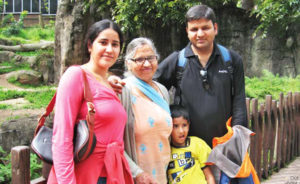
A. I am a strong advocate of work life balance; I spend lot of time with my family and friends. These days Preeti ( my wife), Bhavi ( my son) and I, are enjoying going for long drives and discovering outback Australia besides spending time on Aussie beaches. I am a health freak; I get up at 5 AM and enjoy jogging, gym, and swimming before heading for work every morning.
Cult wishes him a healthy life blended with success and triumphs.