Team India gets roasted 0-4 in the English summer. The top brass of BCCI shouts in unison – it’s a one-off. The stark reality is the exact opposite. The fact that a series was to decide India’s dominance in world cricket seemed lost upon the administrators. Instead of making sure a fighting fit unit embarked on the tour, the entire pool of players were sent on the IPL trip, six days after an emotionally and physically draining World Cup win.
India receives a 0-4 drubbing Down Under. Leave alone the acceptance of the rot and the need for remedial measures, the biggest name in the Indian cricket establishment delivers a tell-all statement. BCCI president N Srinivasan said: “Next New Zealand is coming to India and it will be followed by England and Australia. We will beat these three teams on our own soil. They cannot beat us here and we will feel very happy.”
Kolkata in March 2001 gave Indian cricket its self belief. The belief that battles could be won, even against the best, despite being pushed against the wall. Kolkata in December 2012 not only snatched that self belief but also the reputation of being a formidable force at home.
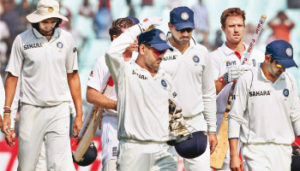
Victory and defeat follow teams from womb to tomb, but at Eden Gardens, England defeated India in batting, spin bowling and reverse swing in our own backyard. Kolkata to Kolkata, in 11 years, Indian cricket completed a full circle. The richest cricket board in the world is yet to acknowledge this and come out with a gameplan.
 Times are changing fast. And so is the sport. As former Pakistan cricketer and coach Waqar Younis said, “Battles in cricket are still won on the 22-yard cricket pitch. But now, lot of macro and micro level planning, integration between the supply and demand line, use of experts for different conditions and situations, scientific scheduling and itinerary are required. This is not possible without a holistic approach to the game.”
Having played and coached Pakistan, Waqar now lives in Australia and is keenly involved in understanding the system in that country. One thing that he would have learnt is that in these changing times, one can plan and fail, but simply cannot afford failing to plan.
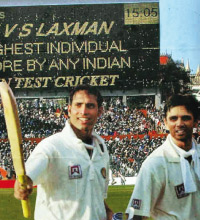
Geniuses come despite the system and Indian cricket was blessed to have quite a few of them at the same time. The exit of Sourav Ganguly and Anil Kumble followed by Rahul Dravid and VVS Laxman and the near-exit of Sachin Tendlkar has created a deep void and would have tested the best system. West Indies, Australia and England went into a slide for similar reasons. England and Australia managed to come out of it, as they had a proactive system to fight back. West Indies, on the other hand, struggled because of lack of this.
As cricketer and author Akash Chopra says “The faultlines in our system were there, but we were able to paper over the cracks because we had batting geniuses in our dressing room. Unless we devise a robust system, our present illness will become terminal and we will be permanently relegated to the middle, if not the bottom, of the cricket table.” If we compare the way we are approaching the transition phase with that of England and Australia, the signs are ominous.
 After the 2007 Ashes debacle, a committee headed by Ken Schofield was appointed to probe and give recommendations for the revival of English cricket. Ken, courtesy his golf credentials, had a worldview on how a major sport should be run in the country. The committee, which included amongst others former captain Nasser Hussain, came out with 19 steps. A new supremo for England team, a new national selector and a director for county cricket, making central contracts more heavily performance weighted, rebranding the academy as performance centre and an annual training program were some of its major recommendations.
Almost all except two of the suggestions were put into effect immediately. This in the backdrop of the fact that after Nasser Hussain, English cricket was on the resurrection path and realisation had dawned that emphasis should be on specialists and not bits and pieces player. “Genuine multi-skilled players could not be made, if one doesn’t have that” became the thumb rule in team selection.
Ditto with Australia. When Australia slid to number 5 in Test cricket, a committee headed by Don Argus and including Allan Border, Malcom Speed, Mark Taylor and Steve Waugh was formed. The committee recommended the creation of a new senior management position, the general manager responsible for the team, coaching, selection, centre of excellence and who will work with state cricket performance manager. This will be apart from general manager operations, responsible for scheduling, memorandum of understanding negotiations, security and anti corruption and umpires and coaches.
The committee asked for introduction of a five-member selection panel, including a full time chairman, two part time selectors monitoring state cricket, and the Australian team captain, injury management structure and a new coaching structure. But the preamble of the Argus review was its recommendation on private league carefully assessing Big Bash League private ownership implications to ensure private ownership does not incentivise BBL expansion in a way that could compromise Australia’s goal to be the No 1 Test team.
Being the owner of the costliest and biggest cricket league in the world, do we have a similar thought process? More importantly, even if we do decide to include one, is this workable in the present set up? The answer is a big no.
Former India captain and perhaps one of the most lucid thinkers of the game in the modern era, Rahul Dravid, stated his position on the Team India captaincy after defeat against Pakistan in the ODI series. In an interview to a website, Dravid said, “There’s a lot of talk of split captaincy these days. It won’t be a bad model for India to adopt, if only to keep Dhoni fresh as a Test captain. To start with, Dhoni could easily give up the India T20 and Chennai Super Kings captaincies.”
The million dollar question is, can Dhoni afford to leave the captaincy of Chennai Super Kings, when its owner happens to be the president of BCCI? Dhoni, as per Dravid, is the ideal leader, to take India out of the transition phase, when seniors are retiring and youngsters coming in.
The ideal way would have been to rest him as captain, if not as a player during the IPL. This looks impossible in the present set-up. Apart from this, IPL has thrown up many challenges if not problems and we have failed to address them.
As former cricketer Maninder Singh says, “There is nothing wrong with the Indian Premier League per se, but our priorities have got blurred after it has started. We need someone akin to a high performance manager, or call him what you will, to look after the holistic approach in cricketing matters. Ideally, he should be a former cricketer of repute and someone like Dravid or Sourav will be a good choice.”
The board needs to decide, more through action than words, as to how much it values Test cricket. Based on this, a balance has to be achieved. Akash Chopra says: “Sachin and Dravid came from the era when youngsters were exposed to day cricket. The present day cricketers’ exposure is to T20 cricket. Decline in skill standards is inevitable.”
The brand and monetary success apart, one of the primary objectives of IPL would have been to take Indian cricket to the next level. If we critically analyse the five years since its birth, it has failed in its area of core competence as well. India won the inaugural T20 World Series, much before the league came out. Post-2007, India has competed in three T20 World Cups and failed to reach even the knock out phase of any of them.
Former Pakistan cricketer and coach Aquib Jawed says: “After the launch of such a successful T20 league, we could have expected three parallel world class T20 teams from India. On the contrary, the performance of India’s T20 team has gone downhill since then.”
Jawed adds: “Pakistani players are not allowed in IPL since last four years, but they have reached at least the semifinals of all the T20 World Cups.”
Social media has drastically changed the nature and form of protests, but our government and bureaucracy tend to act in a manner that belongs to the past. IPL posed similar challenges to Indian cricket but cricket establishment failed to respond. Says Maninder: “Staying on the top for a longer span of time requires keeping your strength intact and constantly working on your weaknesses. We have a tendency to live in present glory and so our peaks will be few and far between.”
How we can stop the transition woes developing into a terminal illness? What should be the way forward for the Indian cricket? Firstly, for a more holistic approach, the cricketing structure needs to be changed immediately. Aqib Jawed says: “The problem with India and Pakistan is that we appoint a foreigner as coach or support staff and expect them to do wonders with the team. But since they have sensed that they cannot bring about tangible change with the present set-up, they become yes-men of the establishment and senior players.”
Sourav, Dravid and Kumble’s retirement should be seen as blessing in disguise and they should be entrusted with positions of authority and responsibility in the new structure. Secondly, the selection system needs to be changed drastically. Former selector Yashpal Sharma says: “I had raised the issue of coach and captain being given decisive rights in the selection committee and it should be done immediately to make them more accountable.”
Also, the five-member zonal selection system should be immediately done away with, both in the junior and the senior committees. A parallel talent recognition and development structure should be evolved in its stead.
Thirdly, a better injury management system especially for the pace bowlers is the need of the hour. Known sports medicine expert Dr Saranjeet Singh says: “Our current injury management system banks too heavily on orthodox methods and is unable to accept change. We need to inculcate holistic training and integrating the role of physical trainer, sports nutritionists and other specialists in our set-up. The emphasis should be on mentally and physically tougher players.” Those may be a few of the crucial steps needed for indian cricket to move forward, but where is the will?