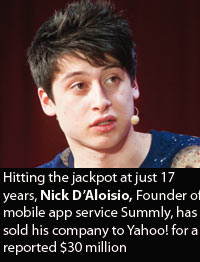
 MOBILE TECH: YAHOO BUYS SUMMLY
There’s a newly minted tech millionaire hitting the headlines. All of 17 years old, Nick D’Aloisio is a high school student in Britain who founded his company Summly when he was 15, launched it in December 2011, and has received financial backing from investors including Yoko Ono and Ashton Kutcher. Summly is an app service that lets users easily skim through news and articles on their mobile devices. The service sums up news articles in 400 characters, making it easy for users to scan for information and get to full articles if they want a more in-depth read. “It helps publishers reach out to a younger audience,” he said during a recent radio interview. “There is a generation of skimmers. It’s not that they don’t want to read in-depth content, but they want to evaluate what the content is before they commit time. Especially on a mobile phone – you don’t have the phone, or cellular data, or screen size to be reading full-length content.”
Now Summly has been snapped up by Yahoo for a reported $30 million in cash and stock. The acquisition is the latest in a string of small acquisitions intended to bolster the Web portal’s mobile services. But the Summly acquisition is a notable one for Yahoo, even without considering the young age of its founder. It shows that Yahoo chief executive Marissa Mayer is continuing to put a focus on mobile, which she has said should be the company’s main focus moving forward, something reflected in the company’s recent redesigns of Yahoo Mail and Flickr. With Yahoo repositioning itself to capture the growing mobile sector, Summly appears to fit right in. D’Aloisio will join Yahoo full-time while the firm integrates Summly’s technology into its own products — and as he prepares for his final school exams. The prodigy was born in London, but grew up in Australia, returning to the UK aged seven.
 SMARTWATCH: NEW TECH FRONTIER
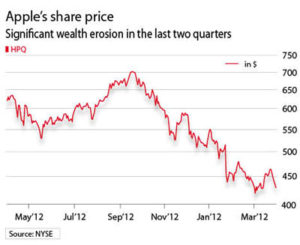
After the smartphone, the intelligent watch promises to become the latest hi-tech trend. In recent weeks, reports have surfaced about plans for smartwatches from tech giants Apple, Samsung and Google, with launches possible later this year. The idea of the connected watch has been around for at least a decade. Microsoft had one in 2003. And some devices are already on the market, including from Sony. But the likely entry of new heavyweight players like Apple is expected to catalyze the market for smartwatches. Speculation is rife that Apple, which has been losing market value, is working on an iWatch, even as other players including Japanese giant Sony are already fighting for a place on customers’ wrists. Unlike Apple, Samsung has confirmed that it is working on such a device. Even Google recently filed a patent for a touch screen wrist watch. Apple’s curved glass-based iWatch could prove to be a revelation in the wearable technologies market. The major question is whether the digital time piece will act as a complimentary device to the company’s iPhone smartphones or as a standalone product with other functionalities like health or activity tracking capabilities.
 CITIGROUP: courtcase disposal
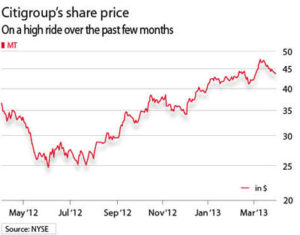
New York-based Citigroup has agreed to pay $730m to settle a class-action lawsuit on behalf of investors who said they were misled by the by the bank. The lawsuit involved investors who purchased the bank’s debt and preferred stock between 2006 and 2008 and have claimed there were misstatements and omissions in the disclosures. The investors accused the bank of understating loss reserves for its high-risk residential mortgage loans and falsely stating that risky assets were of high credit quality. Citigroup has maintained its innocence throughout the suit and denied the allegations. However, the bank, which has seen it market value climb up in recent months, has agreed to the $730-million settlement to avoid further expenses and uncertainties that can come from drawn out litigation. The proposed settlement, which will be reviewed by a US district judge, comes after more than four years of litigation. Citigroup said that the settlement money will be made from its existing litigation reserves. The class-action lawsuit is just one of many filed against Citigroup and other big US banks pertaining to the 2008 financial crisis. Citi suffered more in the aftermath than other big banks, like JP Morgan Chase.
 PORTS: NEW POLICY
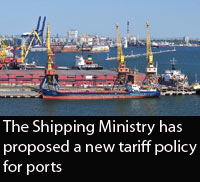
As per the Shipping Ministry’s new draft guidelines for setting tariff, all the 12 major ports in the country would be allowed to fix their own tariffs based on the market condition. This will allow them to compete with non-major and private ports. Major ports might be able to fix market-linked tariffs, which could be higher than the ones recommended by the Tariff Authority for Major Ports (TAMP). Presently, developers are not permitted to charge higher tariffs than what has been recommended by TAMP. The major ports would be allowed to revise their actual tariff once a year and the new rates would come into effect from April 1. Major Port Trusts would have to inform TAMP at least 90 days in advance if the proposed actual tariff is higher than the reference tariff. According to the Ministry, the developer would also have to share a part of the incremental revenue with the Port Trust in case of increased revenues by charging higher than stipulated tariffs.
 MOODY’s: RATING ALERT
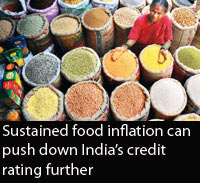
International credit rating agency Moody’s has said that rising food inflation is a negative for India’s sovereign rating and may hurt government finances and monetary policy flexibility. It recently warned that sustained food inflation is credit negative because it exacerbates India’s macroeconomic challenges of slowing growth, high inflation, and large fiscal and current account deficits. Even if the pace of non-food inflation is slowing, sustained food inflation over several quarters, as in India, can ultimately resuscitate non-food inflation if wages increase in response to a rising cost of living, Moody’s said. Moody’s is the only major international rating company that has a stable outlook on India. It has a Baa3 credit rating, the lowest investment grade. Earlier, Moody’s had warned that India’s widening current account deficit and the spurt in its external debt exposed the country to the risk of a negative credit rating outlook. A downgrade of the outlook to negative from stable would put the country’s rating on course for being cut to junk status. That may make it more expensive for Indian companies to raise funds overseas and hurt investment inflows into the country.
MONEY LAUNDERING: Banks Cleared
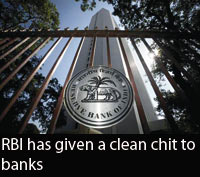
The Reserve Bank of India has given a clean chit to private banks named in the Cobrapost expose on money laundering. The country’s three largest private banks – ICICI bank, HDFC Bank and Axis Bank – were earlier accused of indulging in money laundering both within and outside the country by online portal, Cobrapost. The footage, taken in the sting operation, purportedly showed some executives of the three banks verbally agreeing to take huge amounts of cash from an undercover reporter and putting them into a variety of long-term investment plans so that the black money ultimately is converted into white. However, the central bank sought to downplay the money-laundering allegations, saying the country has a “perfect” system to prevent such offences and that not a single such transaction took place in the sting operation. “Allegations do not mean flouting norms. There is not a single transaction which has taken place. KYC violations will happen in any system. These are all transactional issues and have nothing to do with money laundering,” said RBI’s Deputy Governor K.C. Chakrabarty. He also sought to distinguish between money laundering and black money, saying they were two different things. On the likelihood of other irregularities like flouting of KYC norms and suspicious transactions, he said there are sufficient guidelines to prevent them and banks are following them.
 ELECOM: CAPEX TARGET
According to management consultancy firm Ernst and Young, the telecom sector needs about Rs 2.3 trillion investment for meeting the target of 100% connectivity in rural areas and 600 million broadband connections as envisaged in the National Telecom Policy. “Cumulative capex is estimated to be Rs.2,500 billion for 2013-20, by telecom operators to meet next level of growth, which can be utilised only by increasing rural tele-density, indigenous manufacturing and providing broadband connections to achieve 600 million subscribers by 2020,” says an analysis by Ernst and Young. The analysis further states that to achieve 100% tele-density by 2020 in rural areas, telecom operators will need to add 5.2 million subscribers a month which will involve investment of Rs 800 billion to Rs 900 billion. Referring to the government’s National Telecom Policy 2012, the study says that to meet broadband target as per the policy, telecom service providers will have to add 5.4 million broadband connections per month, which will involve capex of Rs.1,300 billion to Rs.1,400 billion by 2020. The telecom sector, which contributes about 6.9% of the country’s GDP is burdened with huge debt. Also, stagnating revenue of the sector is leading to to decline in operators’ investments, delay in network expansion and high tariffs.
 INDIA INC: DEALS ABROAD
India Inc is increasingly looking to invest abroad to accomplish its motives of resource-hunt or market-hunt or technology-hunt. Investments from India are no longer chasing just stressed assets in the US and Europe or for that matter mining resources in Australia but are largely placing focus on green-field projects around a larger geography encompassing the middle east, Africa, and south east Asia. Similarly, it’s not just the Tatas, Ambanis and the Ruias, who are scouting for opportunities in foreign lands, corporate groups of all sizes are also exploring options outside to get greater access to the global markets.
According to Kroll Advisory Solutions, an independent mergers and acquisitions (M&A) intelligence service, many Indian companies are engaging in ambitious outbound M&A, making “daring transactions across industries”, says In 2012, Indian companies made 72 acquisitions abroad worth $11 billion, a decline from 2007 highs of 125 deals worth $18 billion but an improvement over 2011’s deal value of $6.7 billion. In terms of outbound target sectors, over 2012 Indian companies made major acquisitions into energy, mining and utilities, with totals reaching $6 billion, accounting for 55% of deal activity for the year. Notable buys included ONGC Videsh’s purchase of an 8.4% stake in a major ConocoPhillips oilfield in Kazakhstan for $5 billion. That deal was the largest natural resource deal ever for an Indian business. “Outbound deals are likely to see an uptrend going forward as Indian companies have strong balance sheets, they understand international markets, and are thus engaging in ambitious outbound M&As,” says an analysis done by Kroll Advisory Solutions. Even the latest figures from the Reserve Bank of India suggest that Indian companies have invested close to $1.65 billion in February in overseas. This number follows the $3.3 billion of investment abroad in January and is higher than investments made by Indian companies in India as well as FDI in the country.
 Insurance: broking
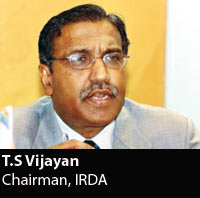
Insurance Regulatory and Development Authority has set up a seven member committee to review insurance broker regulations, existing practice and other matters related to insurance broking. Irda has taken a decision to review insurance broking in the wake of issues like violation of regulations by some brokers, proposal to let banks become insurance brokers and on account of the draft on sub-broking. The committee, headed by Suresh Mathur, Joint Director of Irda, will consist of members from Irda, General Insurance Corporation, New India Assurance, SBI Life and IBAI. The committee will submit its report on or before April 30, 2013.
The committee will also look into possibility of allowing the broker to apply afresh to the authority in case the authority has cancelled or refused the renewal of licence of an insurance broker as well as related matter in insurance broking. Irda has so far issued 345 insurance broker licences and the licence is valid for three years from date of issue.
 FINANCIAL SECTOR:REFORMS
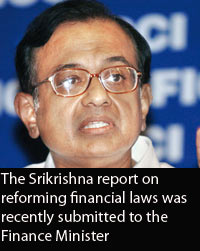
The government-appointed Financial Sector Legislative Reforms Commission (FSLRC) headed by Justice B N Srikrishna has submitted its report on reforming the financial sector regulations to the Finance Minister P. Chidambaram. In its report the FSLRC, which was tasked with the job of rewriting and harmonising various financial sector laws, has proposed Indian Financial Code Bill to pave the way for the creation of a unified financial regulator and limit the role of Reserve Bank to monetary management. Under the proposed regulatory architecture, Securities and Exchange Board of India, Forward Markets Commission, Insurance Regulatory and Development Authority and Pension Fund Regulatory and Development Authority would be merged into a new unified agency. The Reserve Bank of India, however, will continue to exist with modified functions, said the two-volume report of the Justice Srikrishna. But the FSLRC has also backed the creation of an independent debt management office to manage the government’s debt and borrowings, now overseen by the RBI. It has also suggested doing away with a multiple-agency structure for foreign capital inflows. Foreign direct investment (FDI) policy is now framed by the Department of Industrial Policy and Promotion.
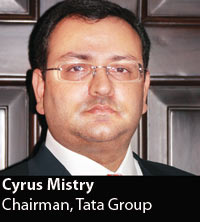 Tata steel: Ethics Award
Tata Steel has been awarded as one of the world’s most ethical companies for 2013 by the Ethisphere Institute, a leading international organization dedicated to the creation, advancement and sharing of best practices in business ethics, governance, anti-corruption and sustainability. Ethisphere reviewed nominations from companies in more than 100 countries and 36 industries through in-depth research and multi-step analysis. The assessment was done on a number of parameters, which included reputation, innovation and leadership, compliance and ethics programme, training and communication, corporate governance, corporate citizenship, sustainability and responsibility. The award was received by Ethics Counsellor of Tata Steel at a function held in New York. Tata Steel is the first integrated steel plant in Asia and is the world’s second most geographically diversified steel producers with an annual crude steel capacity of over 26.5 million tonnes. In another development, the steel maker said it was conferred with the Most Admired Knowledge Enterprises (MAKE) award for 2012 at Global and Asian level. The company has previously been recognised by the Indian MAKE awards on six accounts since its inception in 2005. Tata Steel is world’s second most geographically diversified steel producers with an annual crude steel capacity of over 26.5 million tonnes.