 In quest of a more shareholder-friendly board
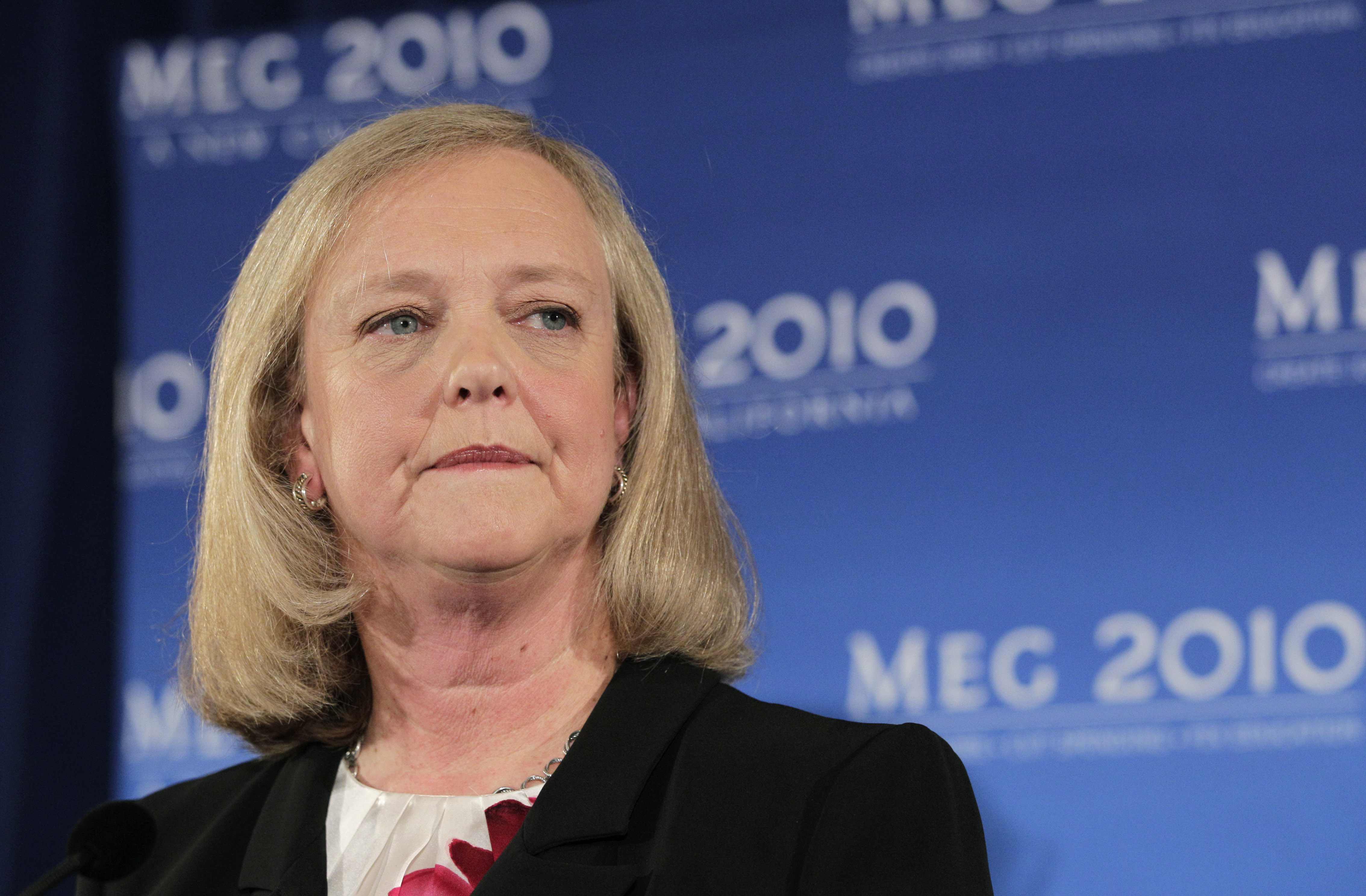
In yet another shake-up of Hewlett Packard’s Board of Directors, the company has announced that two of its directors (John Hammergren and Kennedy Thompson) will give up their positions effective May 24th, while a third, Ray Lane, has relinquished his role as Chairman of the Board (though he remains a director), with immediate effect. The latest decision surprised many as all the three had been recently reelected to the Board even though they received only 60% support, a level that clearly underscored the disappointment and dissatisfaction of shareholders with HP’s performance during their tenures. Shareholders held these directors accountable for recent missteps, such as the hiring of Leo Apotheker for the CEO role (from which he was fired within a year of the hire) and the Autonomy acquisition, which was written down by $8.8 billion within a year of the deal. Director Ralph Whitworth, a well-known activist shareholder, is filling in as interim chairman. In an open letter, Whitworth said that each of the three directors “considered the results of our recent shareholder meeting and made the personal decision to do what they felt was best for HP.” In a press release from the company, Lane stated, “After reflecting on the stockholder vote last month, I’ve decided to step down as executive chairman to reduce any distraction from HP’s ongoing turnaround,” Lane had joined the board about two years ago. Given HP’s financial situation, these resignations are not really surprising. The company’s revenue has been declining over the past few years, to $28.2 billion in the fiscal first quarter of 2013, down from $33.3 billion in the fourth quarter of 2010. Given the need to change the direction of the company’s financial position, a change in the board seemed inevitable. But the transfusion of new blood into the board could take the company in a different direction than that set by Meg Whitman, such as a break up, which may cause greater confusion among the investors.
 MCDONALD’S: FALL IN SALES
Business down at the fast food chain
McDonald’s, the world’s largest restaurant chain, saw underlying global sales fall by 1% in the first three months of the year, even though net income was slightly higher, at $1.27 billion. The company has blamed a “challenging” environment, which included a harsh winter in both the US and Europe. The fast food chain has also been facing increasing pressure from its competitors. Yum Brands, which owns Taco Bell, Kentucky Fried Chicken and Pizza Hut, has changed its US menus recently to appeal to the thrifty spender. Burger King and Wendy’s have also redesigned their offerings. McDonald’s said that underlying sales in the US fell by 1.2% in the first three months of the year, with operating income down 3%. In Europe, comparable sales fell by 1.1%, which the company blamed on the “ongoing economic uncertainty” in the region. But the company says it has outperformed the competition and increased market share. “We are confident that we have the right plans in place to differentiate the McDonald’s experience and strengthen our business momentum for the long term,” says McDonald’s president and chief executive officer Don Thompson.
 APPLE: DIMMING LUSTRE
Is the tech giant’s aura wearing off?
Apple posted a solid March quarter on the back of better than expected iPhone and iPad sales but the company’s profits declined year-over-year for the first time in a decade. Apple sold 37.4 million iPhones and 19.5 million iPads, surpassing analysts’ estimates by about 1 million on both fronts. Those device sales helped Apple bring in $43.6 billion in revenue for the quarter, beating the consensus estimate of $42.6 billion and setting a new record for March quarter revenues. Still, the company’s profit per share, at $10.09 for the quarter, is down from $12.30 in the same quarter a year ago. That marks the first time Apple’s profits have declined since 2003. Apple’s gross margin for the quarter was 37.5%, down from 47.4% in the year-ago quarter. Its guidance for the June quarter is also pretty weak. CEO Tim Cook has revealed that Apple has no new products planned until the fall. As a result the company’s earnings growth will continue to shrink, and its revenue could turn flat. Already, its stock is currently down more than 40% from the high of $705 a share that it hit when the iPhone 5 was released.
 ABB: big acquisition
Betting on solar power
Swiss industrial group ABB, the world’s biggest supplier of industrial motors and power grids, has agreed to buy U.S. power-equipment supplier Power-One Inc for about $1 billion, betting on a long-term growth in solar power. Solar energy, which has grown from marginal levels in 2000 to around 1% of global electricity capacity in 2010, could grow at nearly 12% a year to make up 6% of global capacity by 2035, according to latest estimates from the International Energy Agency. “I really feel the strong big disrupters in energy market in the next 10 years are going to be shale gas and photovoltaic power,” said ABB Chief Executive Joe Hogan on a conference call with reporters. ABB has agreed to pay $6.35 per share in cash for Power-One, the world’s second-largest maker of solar inverters that allow solar power to be fed into grids. The solar inverters market is forecast to grow by more than 10% per year until 2021, driven by increasing energy demand, rising electricity prices and declining costs.
 RBS: FACING INVESTOR ACTION
Fresh trouble for UK bank
Over 12,000 private shareholders have launched a a multi-million pound lawsuit against the state-owned UK bank for misleading investors at the height of the credit crisis in 2008. The RBOS Shareholder Action Group – a group of some 12,000 ordinary shareholders and 100 institutions – which has filed the lawsuit, claims the directors misled investors, missed out vital information and misrepresented RBS’s underlying strength during the lender’s 2008 rights issue. The action group has launched the proceedings against former chief executive Fred Goodwin, former RBS chairman Tom McKillop, former investment bank boss Johnny Cameron and ex-finance director Guy Whittaker and the bank itself. RBS launched a £12 billion rights issue in 2008 to shore up its balance sheet after its disastrous acquisition of Dutch bank ABN Amro, but just months later it was part-nationalised in a £45 billion Government bailout. The bank revealed bonuses of £607 million for staff in 2012 despite plunging deeper into the red with losses of £5.2bn after a “chastening” year. The losses widened from £1.2bn in 2011 after its £390m settlement for Libor rate fixing, while the bank revealed another £1.1bn in provisions to cover mis-selling claims.
 Nokia: NO TURNAROUND
Lumia phone sales not enough
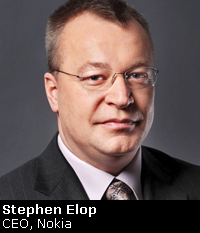
Nokia’s bid to challenge Apple’s iPhone and Google’s Android has failed to convince smartphone buyers. Telecom operators in Europe, where the phones have been on sale since before Christmas, find the new Nokia Lumia smartphones are not good enough to compete with Apple’s iPhone or Samsung’s Galaxy phones. Although sales of Lumia phones grew 27% in the first quarter this year, they are still a long way behind those of the Apple iPhone and the Samsung Galaxy range. Total sales of Nokia mobile phones were down by more than 30% to 1.59 billion euros in the first three months of the year. Although the Finland-based company managed to reduce its first-quarter net loss to 272 million euros from a loss of 928 million euros a year earlier, that was mainly thanks to cost-cutting. Revenue dropped to 5.8 billion euros from 7.4 billion euros. According to CEO Stephen Elop, Nokia achieved underlying operating profitability for the third quarter in a row but conceded that the company faced a “difficult competitive environment” in mobile phones. The company had hoped it would be able to acheive a quick turnaround by hiring former Microsoft executive Elop as CEO in 2010 and then teaming up with the U.S. software giant the following year to work on a range of Lumia phones based on the Windows operating system. However, the consumer response to its Windows phones has not been as anticipated.
 TELECOMS:RIL-RCOM PACT
Ambani brothers join hands for business
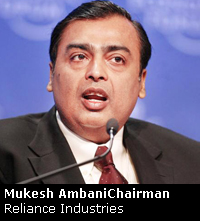
Reliance Jio Infocomm, the telecom arm of RIL Chairman Mukesh Ambani, has signed an intra circle fibre pact with Anil Ambani led Reliance Communications. The deal, valued at Rs 36-45 billion, is seen as a win-win situation for both companies. RJI will get immediate access to a readymade 120,000-km pan-Indian OFC network for the launch of its proposed 4G services, while RCOM, weighed down by debts of Rs. 370 billion, will get additional revenues from its network. “This agreement is the first in an intended comprehensive framework of business cooperation between Reliance Jio Infocomm and Reliance Communications to provide for optimal utilisation of the existing and future infrastructure of both companies on reciprocal basis, including inter alia, inter-city fibre, intra-city fibre, tower and related assets,” R-Com said in a statement. The telecoms pact comes nearly three years after the brothers called a truce in 2010, brokered by their mother Kokilaben Ambani, that did away with the non-compete clause, allowing Mukesh the freedom to start his own telecoms venture. That same year, Reliance Industries, whose main business is petrochemicals, made a dramatic return to telecoms by becoming the only company to gain nationwide 4G airwaves. While it has yet to start services, it is widely expected to begin operations in parts of India later this year.
 Pharma: NOVARTIS’ plea dismissed
Big win for generic players
In a landmark decision, the Supreme Court has rejected Swiss pharmaceutical giant Novartis AG’s attempt to patent an updated version of a prohibitively expensive cancer drug that health activists say will ensure that poor patients in India will continue to get access to cheap versions of lifesaving medicines. The Swiss drugmaker had argued that it needed a patent to protect its investment in the cancer drug Glivec, while activists said the drug did not merit intellectual property protection in India because it was not a new medicine. The company had tried to win patent protection for Glivec, a cancer drug. The two-member Bench of the Supreme Court ruled that Glivec failed to meet the standard of efficacy under Section 3(d), which does not recognise incremental innovations of a known medicine and requires a patented drug to show enhanced therapeutic efficiency. “When all the pharmacological properties of the beta crystalline form of imatinib mesylate are equally possessed by imatinib in free base form or its salt, where is the question of the subject product having any enhanced efficacy over the known substance of which it is a new form?” the judgment observed. The ruling is a blow to Western pharmaceutical companies who had hoped to target India’s large population as a new market. At the same time, the ruling is a victory for Indian makers of generic drugs, which could benefit in a country of 1.2 billion people, most of whom cannot afford to buy the name-brand medications. Generic Glivec is already on sale in India at around 10 percent of the regular price. The case was initiated by Novartis in May 2006 after the India Patent Office rejected in January of that year its patent application for imatinib mesylate on several grounds, including on Section 3(d) that it is simply a new form of a known substance. Since then the case has wound its way through the Madras High Court, the Intellectual Property Appellate Board (IPAB) and finally, the Supreme Court.
 MOBILES: Samsung
No. 1 in phone sales
Samsung has overtaken Nokia to become the largest seller of mobile phones in the country. According to market tracker GfK-Nielsen’s data, Samsung’s volume market share in urban areas in March rose to 31.4%, surpassing Nokia’s 30.1%. GfK-Nielsen urban panel tracks sales in 793 cities and towns with a population of over 50,000, which account for more than 70% of India’s total handset sales. This is the first time the Korean company’s volume market share has crossed that of Nokia’s in the GfK-Nielsen survey. Some months ago, Samsung’s market share, measured in value terms, had exceeded that of Nokia’s, and there is now a considerable gap between the two due to growing demand for the Korean firm’s smartphones. Last month, Samsung’s value market share in urban markets stood at 42.2% compared with Nokia’s 20.7%. Analysts say Samsung’s gain in volume market share is led by the recent introduction of the Rex feature phone series and strong demand for its smartphones.
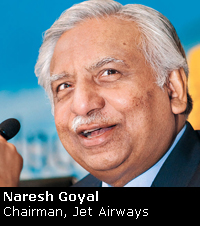 AVIATION: JET-ETIHAD DEAL
Game-changing alliance in skies
After eight months of hard bargaining, the Naresh Goyal-promoted Jet Airways and the Abu Dhabi-based Etihad Airways have finally sealed a deal, under which the latter will acquire a 24% stake in the country’s second-largest domestic airline for $379 million. The two airlines claimed that their combined global network would cover over 140 destinations and provide direct foreign connectivity to Indian passengers from 23 metro and non-metro cities. The deal is a lifesaver for Jet Airways as it has a huge debt of $2.6 billion. Jet will not only get $379 million but will have access to cheap loans, at 3%, from Abu Dhabi in addition to huge cost savings by way of cheap fuel. Aviation analysts believe that it’s a great deal for both Jet Airways and Etihad. Jet will now have adequate capital and a source for future capital needed for expansion at low interest rates. The deal could well help Jet wrest back leadership in the domestic market, which it had surrendered to IndiGo last year. In February, IndiGo continued to be the largest airline with a 27.4% marketshare, followed by Jet Airways group (including Jet Konnect) at 25.4%, SpiceJet at 20.4%, Air India (18.9%), and GoAir (7.8%), as per data provided by the Directorate General of Civil Aviation. On the other hand, Eithad will get a strong foothold in the Indian market and wil allow it to tap into India’s fast-growing 42 million strong travel market.
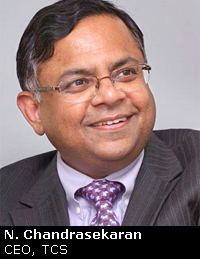 IT SERVICES: Q4 RESULTS
TCS, HCL exceed expectations
The top four IT companies have reported a mixed bag of results for the fourth quarter ended March. The largest software company, TCS, and the fourth largest, HCL Technologies Ltd., reported strong results, and were positive about the next few quarters. TCS said fourth quarter net profit rose 24.9% from a year earlier to Rs.36.15 billion in the three months on a 23.8% increase in revenue to Rs.164.30 billion. HCL Technologies’ net profit rose 72.6% in the March quarter to Rs.10.40 billion on a 23.2% increase in revenue to Rs.64.25 billion. On the other hand, Infosys and Wipro continue to struggle. Both Infosys and Wipro have been struggling with organizational changes in a tough macroeconomic environment. Infosys has projected that revenues this year would grow 6-12%, sharply lower than the growth estimate of 12-14% made by industry association Nasscom. While the Street expected Infosys to guide in the 12-13% US dollar revenue growth range, its results and forecast left markets disappointed. Infosys reported a revenue of $1,938 million in the March quarter, up just 1.4% over the preceding quarter. India’s third largest software exporter Wipro Ltd, also reported better-than-expected March quarter net profit of Rs.1,729 crore, up 17% y-o-y. However, the company provided a weak forecast for the June quarter in the range of $1.57-1.61 billion, which would mean a much lower growth than what analysts had expected.
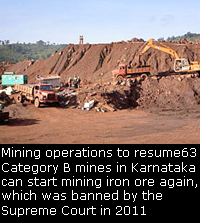 MINING: SC BREATHER
Partial lifting of mining ban allowed by court
The Supreme Court has lifted the ban on mining in 63 coal mines in Karnataka. In 2011 the court banned ore mining in Karnataka and in Goa in response to claims that illegal mining was damaging the environment. While mining ban in Goa will continue to be in effect, the court has allowed reopening of 63 Category B mines in Karnataka, where illegal mining was observed to be up to 10% beyond the mining lease areas or where waste dumps outside the sanctioned lease areas were found to be up to 15% of the lease areas. The apex court’s order essentially means the Category B mines can start operations after they successfully implement the assigned Reclamation and Rehabilitation (R&R) plans. These mines will take up to two years to again become operational. The move is likely to bring in fresh supply of over 15 million tonne (mt) of iron ore to feed the starving steel industry in the state, though it will be 12-14 months before production can be ramped up to full permitted potential, according to experts. The lifting of the ban will gradually ease iron-ore supplies to companies such as JSW Steel and Kalyani Steel, besides several sponge-iron units in Karnataka. Companies, including JSW Steel, have been reeling under the impact of the iron-ore shortage for over one year and have been running their plants at lower capacities.
 CHIT FUNDS: SARADHA SCAM
Ponzi scheme takes its toll
A raging controversy has rocked the country in recent days over the defrauding of hundreds of thousand of invetsors in West Bengal and its neighbouring states by the Kolkata-based Saradha Realty India. Saradha lured lakhs of investors to deposit money in its schemes with glossy brochures and the promise of abnormally high returns. The schemes were simple and attractive. An investor could invest as little as 100 rupees and there was no upper limit. Saradha promised returns unheard of – 15 per cent to 50 per cent. It also promised land and fancy holidays, always with the assurance that if it failed to deliver, it would give cash.
An official estimate says Saradha had mopped up about Rs. 12 billion through its chit funds, but some calculations put that the figure closer to Rs. 40 billion. An army of fund collection agents worked for Saradha; about 2.5 to 3.5 lakh people, many of who also invested their own hard-earned money. These agents got a commission ranging from 15 to 40 per cent. With the money it collected, Saradha did not create the assets it promised it would.
In a typical ponzi style scheme, it merely gave money collected from one depositor to pay off another. When the inflow of money began to dry up, Saradha simply did not have the cash to pay up. In early April, sensing the collapse of his fraudulent scheme, Saradha’s Managing Director Sudipta Sen vanished. He was later arrested in Kashmir and has been charged for fraud and criminal breach of trust under Sections 406 and 420 of the Indian Penal Code (IPC). Meanwhile market regulator Securities and Exchange Board of India has ordered Saradha to close all its collective schemes and refund the money it collected from investors within three months. It has also barred the firm from the securities markets till the company winds up all its chit fund schemes and refunds the entire money to investors. Various other agencies have also joined the probe to uncover the illegalities perpetrated by the firm.