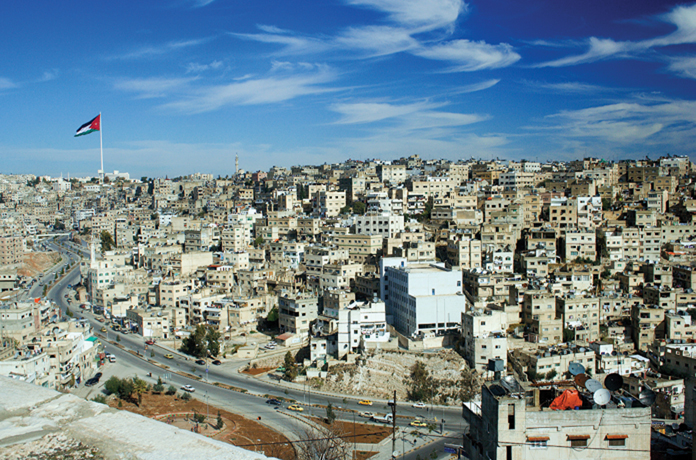
Six years ago, when the US and its Middle Eastern and European allies decided to destabilise Syria, they got a rather willing ally in the north in Turkey. However, this was not surprising. Prime Minister Erdogan had neo-Ottoman dreams and he saw in it a rather good opportunity to realise those dreams. What was surprising was the ally in the south: Jordan.
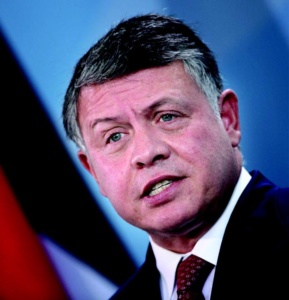
Dependent on the largesse of the United States, Jordan seldom had much room to manoeuvre when it came to foreign policy. However, agreeing to destabilise a country that shares its border was a different ball game. King Abdullah, like many of his peers, believed that the Baathist structure in Syria was hollow and would crumble with minimum effort. He was confident that it would not be a protracted war and thus there would be no chance of a spill over.
Like everyone else in his camp, he was proved wrong by the resilience of the Baathist regime.
As Damascus stabilises and Islamic State comes dangerously close to its border, it’s time for Amman to do a rethink. And rethinking it is.
As Russia intervened to save its most important ally in the Middle East, it also started sounding out other parties who were willing to rollback their meddling. The softest target was Jordan.
There’s a reason why Jordan is jittery. This was evident during this correspondent’s interaction with several journalists and analysts in the kingdom. As Damascus settles down and departure of Assad looks a distant dream, Jordanian intelligentsia is fearful that Syrians will go for retribution, and they will go for it big time.
The situation is particularly bad on account of the Islamic State, which has seen its empire shrinking rapidly in both Syria as well as in Iraq, and is looking for new areas to gain a foothold. Just few days after this correspondent left Jordan, the kingdom was rocked by a brutal attack by an Islamic State module. And that’s just the tip of the iceberg.
However, the king is not sitting idle. In June last year, he realised that something needs to be done. And that something was not possible without cooperation from Russia. Moscow, which was looking for an opening, happily barged in. As Moscow negotiated a pan-Syria ceasefire, it found success particularly in South Syria, where militants, with more than little help from Jordan, were willing to play ball unlike their brethren in the North Syria who were sowing little flexibility. Naturally, Amman had tightened the screw.
A lot has been happening between Russia and Jordan behind the media glare. Local sources told this correspondent that Russia and Jordan have both built upon their initial cooperation vis-à-vis Syria and have now expanded its horizon.
As far as cooperation on Syria is concerned, local sources confirmed that Jordanian intelligence has reached the conclusion that the Assad regime is here to stay, and have come to accept this situation, albeit begrudgingly. Jordanian intelligence considers it a zero-sum game now to allow more intervention to happen from its territories in South Syria.
I meet Ali (name changed) at a Sheesha bar in one of Amman’s most happening streets. Ali worked for Jordanian intelligence for several years before he was unceremoniously dropped in 2012 for not playing ball on Syria. These days he works as a stringer for some of the Western media houses. He maintains contacts with his sources who once acted as his eyes and ears.
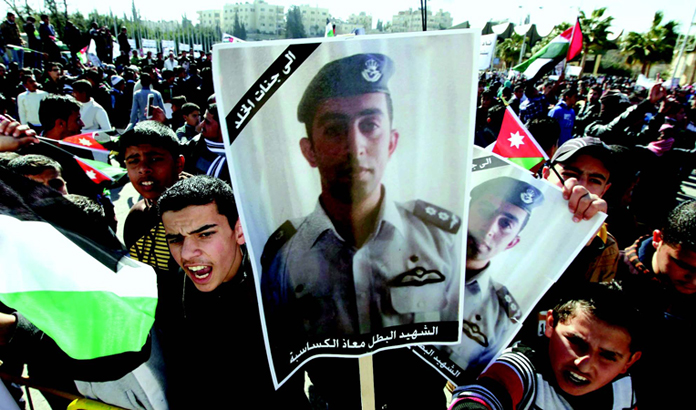
Jordanian Intelligence is of the belief now that prolonged control of the border by rebels would be detrimental
As he starts talking, one can easily catch the hint of a swagger in his tone. This is a swagger of a man who against the majority opinion of his peer maintained in the early days of Syrian crisis that the regime will stay, come what may. “They used to say that Assad will not last for more than two weeks. Some gave him three weeks. I was laughed upon by seniors and peers alike for not agreeing with their optimism. Who’s laughing now?” he asks rhetorically.
Ali confirms that Jordanian Intelligence is of the belief now that prolonged control of the border by rebels, and presence of Syrian refugees inside Jordan is a bad mix that can blow up anytime on their faces. Under the circumstances, Ali insists, it is cooperating with Russia to have a face-saving exit from Syrian crisis without overtly antagonising USA. It still believes that Donald Trump’s supposed aversion to intervention in Syria will give Jordan the exit strategy that it is looking for. Jordan is betting big on Russia, and with that extension, on Donald Trump. Other sources too confirmed to this correspondent that the cooperation that Jordan has now with Russia is “unprecedented”.
As far as other areas are concerned, sources confirm that Russia will eventually construct two nuclear reactors, possibly near Irbid, apart from the two the deal for which were signed some months ago. The deadline for the other two reactors is set for 2022. It has also been confirmed by a reliable source that Russia and Jordan have decided that the combined electric generation of these four reactors will be 25 per cent of all the electric consumption in Jordan by the year 2022.
Related to this is a possible deal for uranium. Russia believes that Jordan has huge amounts of untapped uranium which can be used. It is expected that in the next phase, when two more reactors are opened, there will possibly be a deal related to uranium as well. As of now, talks regarding this are in its initial, nascent phase.
But this is not all. Russia is looking to land some lucrative defence deals as well. Russia has already invested in an arms factory producing RPG 32. Talks are now in advance stage for expanding the same factory for the production of anti-armour Kornet Weapon System as well as two small arms, including possibly a pistol.
However, a journalist close to the defence set-up told this correspondent that progress is slow in other areas. For example, Jordan is still in two minds about buying new fighter planes. While it is looking towards China- Pakistan jointly manufactured JF-17, the aforementioned journalist said that Russia might offer a couple of Sukhois at discounted rates. There are also talks that Moscow might also extend a line of credit for such a purchase at a very convenient interest rate. Having said that this is just one of the many ideas that was discussed between officials of two countries, and is yet to be dealt at the highest level.
Another proposal in discussion is a possible assembling plant for Lada cars that will assemble Completely Broken-Down Units (CBUs). It must be mentioned here that the same proposal has been given to Egypt as well by Russia.
However, external threat is just one of the concerns for the King. Like any kingdom in the Middle East, the threat from inside can never be discounted. Jordan, for all its pretention, is a conglomeration of various tribes. They form around 25 per cent of the population. Palestinians form another 75 per cent.
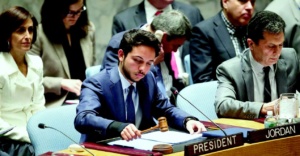
What is really worrisome for the King is that this delicate balance is being tested to its hilt. A discussion with a range of analysts from across both Palestinians and Jordanian population confirms that the relationship between the royal family and tribes is deteriorating. It might not appear overtly on the street but the anger is mounting and sustaining. This does not bode well for the royal family. However these sentiments are not homogenous across the tribes. Some tribes still maintain more loyalty than others, while others are feeling restless. An issue of particular concern is the accession of Prince Hussein as the next King. Prince Hussein is half-Palestinian, and this fact has touched the raw nerve of the East Bankers who, in spite of state largesse, are mostly jealous of the prosperity of a section of Palestinian refugees.
There is a widespread belief among all tribes that the monarchy is corrupt and so is the ruling elite. However, how they react to this is different. The only encouraging scenario is that among the East Bank tribes, none is overtly Islamist. Whatever support Islamic State and al Qaeda has in Jordan is mostly centred among the West Bank Palestinians. There used to be some sections of support for Islamic State among the tribes of the North and the North-East Jordan but it quickly vanished when Islamic State burnt the captured Jordanian pilot alive.
The situation is slightly different when it comes to Muslim Brotherhood. Muslim Brotherhood in Jordan is dominated by Jordanians and not Palestinians; however, unlike other countries in the region, Muslim Brotherhood does not believe in toppling the King. At least not for the time being.
 Among the tribes, Bararsheh still stands solidly behind the king, in spite of the fact that the burnt fighter pilot was from this tribe, and there was initial anger against the King for being unable to secure his release. The Majali tribe is also solidly behind the King. Although elders from both these tribes don’t particularly like the half-Palestinian Queen, sources confirm that they will stand with the King as and when Prince Hussein is declared the next King.
The Obeidat tribe is among the most pro- Palestinian of all and supports Prince Hussein. This tribe has lots of hope on the Prince, and is angry with the present King.
The Tay tribe is pro-Syrian and hence opposed the king in the initial days of Syrian war. With the withdrawal from active role by Jordan, this tribe has once again come to the king’s fold. However their support cannot be taken for granted. The same is true for Ahl al-Jabal tribe.
 Bani Sakher is one of the bigger tribes that is pissed off against the King and will surely raise issue against Prince Hussein too. They are anyways notoriously anti-Palestinians.
Bani Khalid is a large pro-Palestinian tribe in the North. They are also hopeful of Hussein as prince. They support the present king as well. Bani Sardiyyah and Bani Sirhan are most represented in intelligence, army and police. They stand rock solid with the King. They would go with king’s decision regarding Prince Hussein. In South Huwaytat and Nuyamat tribes dominates government service and army and hence stands loyal to the King. Their opinion on Prince Hussein could not be ascertained.
Bani Hassan is also a big tribe and entrenched in armed forces and police. They also have soft corner for Palestinians and hence support the accession of the Prince.
Islamic State has been trying hard to make inroads inside the Palestinian community who are discriminated against by the state, but as of now they have barely made any inroads worth mentioning.
Clearly, the situation in Jordan is not as stabilised as King Abdullah would like it to be. With so many factors involved, it is a prudent decision not to put all the eggs in one basket. Under the circumstances, this newfound friendship with Russia can go a long way in ironing out some of the problems that might come Amman’s way.