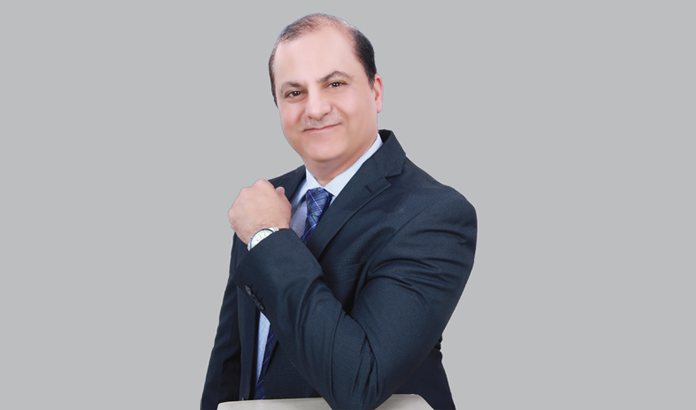
What are your most powerful leadership techniques?Arun Karna
(AK):I firmly believe in situational leadership. While most times I like to lead from the front, there are times when I would rather watch from the back of the room and encourage and applaud. In either case, I prefer to be in the thick of things.The leader’s role in today’s fast-changing world is to provide direction and encouragement, and then to let the team do its job, offering feedback and course correction as and when required.For example, technology is now evolving rapidly and the pace of change is accelerating with each passing day. So a technology business leader cannot play the role of an “expert”. Instead,here is what I think leader should do
- Provide a sense of direction in a rapidly evolving scenario.
- Foster a culture of learning and innovation.l Allow failure, but encourage the team to learn to “fail fast”.
- Encourage the team to embrace change by removing fear of uncertainty.
- Encourage the team to take smart and calculated risks.
Do you have any tricks or techniques that help you stay ahead and keep you abreast with the latest changes in today’s exceptionally fast changing world?
(AK):I am consciously training myself to be a better listener. Good listening is about listening to understand, rather than to respond. It brings clarity to the situation and helps drive objectivity. Also, it is amazing how other people’s attitude towards you changes when they feel that you are really “listening” to them and understanding their point of view. Another aspect of this is that one should be humble and keep shedding one’s ego. Ego negates objectivity and makes you a less effective leader.In terms of learning and keeping abreast with the latest developments, I find that one learns a lot by simply speaking with people – be it one’s seniors, peers or team members. I spend a lot of time travelling, and some of my greatest learning moments have come from striking up conversations with the person next to me on a flight. It is amazing what a ringside view it gives you of what’s really happening in the world. I have spoken to people from diverse fields: medicine, manufacturing, education,hospitality, IT, nanotech, aviation, material sciences, artificial intelligence and robotics,you name it. Of course, there are times when my fellow passenger is not inclined to talk, in which case I catch up on my reading.
What, according to you, is the one most important quality of a leader?
(AK):Every manager at AT&T is familiar with the Extraordinary Leader Model. Based on the Zenger-Folk man Model, the AT&T Model describes the qualities, attributes and competency areas of a leader.You could think of it as a tent with five poles:
1. Personal Capability
2. Leading Change
3. Character
4. Interpersonal Skills
5. Focus on Results Of these, character is the most important.It is the central pole of the tent. Character is something you inherently possess; everything else can be learnt.A leader should possess integrity and honesty and a deep sense of caring for the success of the company, its customers and its employees.So character is the core of leadership.
Can we teach people to become better leaders, or is it a skill you are born with?
(AK): I believe that some leadership traits are innate, like passion and the ability to energize and inspire people. Others can be learnt with training and experience. For example, we can learn skills that help us make better decisions and we can develop our ability to execute.
What is the secret to building a strong and efficient team?
(AK):Effective teamwork is at the core of our success. I firmly believe that the “whole is far greater than the sum of its parts”.
In this fast changing world, one has to encourage one’s team to embrace change and not fear uncertainty. For that to happen, we have to allow failure too.The AT&T Extraordinary Leader Model provides a great framework for team development and for priming the team for success:
1. Emphasizing personal capability, we call upon team members to continuously develop advanced and highly competitive skills, and then to apply these.
2. Under the banner of leading change, we encourage team members to enhance their awareness of global markets and competitive trends and then to ignite change through innovation and transformation.
3. Interpersonal skills are of vital importance in today’s globalized world and team members are supported to build relationships and collaborate across work groups.
4. Finally, there has to be laser-like focus on results, where we come together deliver industry-leading performance.
What is your secret of effective time management?
(AK):One technique that I have consistently followed over the past few years is the “Eat that Frog” approach popularized by Brian Tracy.I attack the most difficult, complex or unpleasant tasks right at the start of the day and get them out of my way. You might be facing a difficult conversation, situation, or problem, but once you have tackled it, it becomes relatively easy to plan the rest of your day.Of course, there will always be the occasional sudden emergency or unexpected development.You cannot really plan for those; they just have to be tackled as they come.
As a leader, how do you inspire and sustain motivation?l
(AK): Celebrate the success of the team and the individuals. Even small successes should be celebrated by way of appreciation on a team call, or a line in a team email commending a job well done.
- Allow failure and encourage the team to treat it as a learning opportunity.
- Encourage the team to take smart and calculated risks.
- Foster a culture of innovation and collaboration. Encourage the team to embrace change.
- Set stretch goals that are motivating yet achievable.
- Provide avenues for self-development.
- Provide constant feedback and be absolutely transparent.
- And, listen! People feel appreciated when they know they are being truly heard.
What is the secret to handling failure effectively?
(AK):Failure is the greatest teacher. I believe that every failure is a learning opportunity, and you will be much stronger for it. So you learn your lessons, and you move on.
How do you prioritize work and life?
(AK):I have built certain rituals into my daily life to help provide work-life balance.
When I am not traveling, I have dinner with my wife and six-year-old son – with the TV and other screens turned off. We chat and laugh and eat together. Afterwards, I’ll help my son with his homework and then I read to him, or tell him a couple of stories, before bed. In turn,he tells me a story and then I tuck him in. In the mornings, my wife and I have a cup of tea together before the day begins.On at least four days of the week, I find time to exercise for 90 minutes to keep myself fit.Most weekends are totally family time with outings, movies, socializing, and so on.
Which leaders do you admire?
(AK): Subhash Chandra Bose, Jack Welch, Narendra Modi, and AT&T’s very own Ralphde Vega, Vice Chairman AT&T Inc. and Chief Executive Officer, AT&T Business Solutions and AT&T International, LLC
What are your views on the leadership skills of the next generation of leaders?
(AK): I expect them to be fearless and outspoken. They will be willing to take risks and will not fear failure. Even so, they will not be reckless, but will have a sensible head on their shoulders. And they will break the age barrier;they will be a progressively younger lot!
What is the best advice you can give to the future leaders?
(AK):Learn to sense and adapt to change, be emotionally invested in whatever you do, and stay humble.